The Wiring of a Promise: How Kenyan Electricians Ended Up at the Center of a US Consulate Labor Scandal in Milan
Recruited in Nairobi for a flagship American building project, Kenyan workers say the wages they were promised never arrived. Now Italian prosecutors are listening.
The job offer that took a group of Kenyan electricians from Nairobi to northern Italy read like a door swinging open. Several of them had already worked on United States diplomatic sites in the Kenyan capital, wiring secure rooms and fitting out offices to American specifications. So when contracts arrived on company letterhead promising annual salaries north of 25,000 euros — close to 29,000 dollars, a sum that can reset a family's prospects back home — the leap to Milan felt less like a gamble than a graduation.
The building they were hired to help raise was no ordinary commission. It is the new United States Consulate in Milan, a secure diplomatic compound that the US State Department contracted out in 2022 to Caddell Construction, an Alabama-based firm with a long record of building American facilities abroad. By the account the workers later gave Italian investigators and the Associated Press, the promise on that letterhead and the money that reached their accounts were two very different things.
A salary on paper, a different sum in hand
According to interviews the Associated Press conducted with five former employees, and a review of their employment letters and pay slips, workers on the consulate site were paid less than two dollars an hour despite the figures written into their contracts. Two of them produced letters on Caddell stationery, signed by a company representative, pledging the 25,000-euro-plus salaries. What landed, they said, bore no resemblance to it.
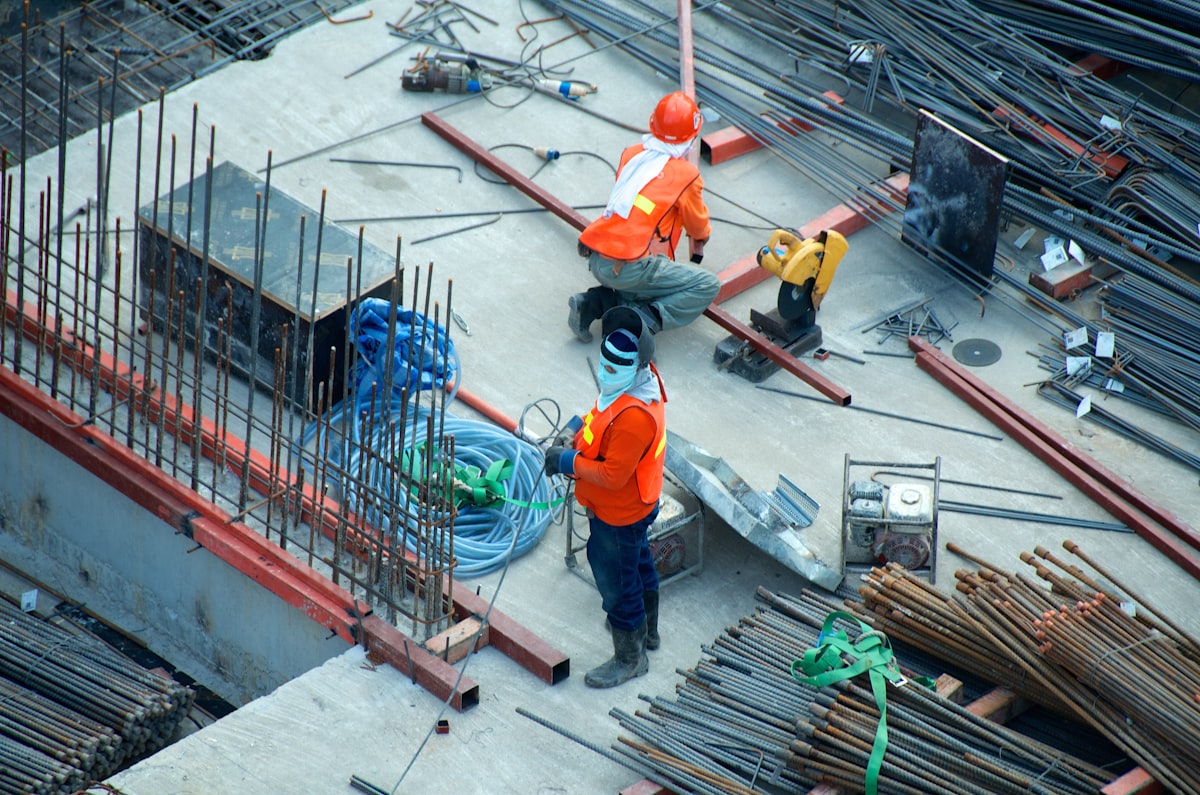
The gap, by the workers' telling, opened up through deductions. Charges for food, transport and shared accommodation were subtracted from their pay until the hourly rate collapsed. Several Kenyan electricians told investigators they had been left earning less than two euros an hour. They described long shifts — ten hours a day by the AP's account, with some workers reporting even longer — six days a week. When they raised questions, some said, they were met not with answers but with threats: warnings of dismissal, and, for migrant workers far from home, the more frightening prospect of deportation.
How Italian prosecutors entered the story
What might have stayed a private grievance became a criminal matter. Concerns about labour practices on the project first surfaced in 2024, drawing in the Carabinieri and prosecutors in Milan, who began examining allegations of abusive subcontracting and the underpayment of migrant workers.
The inquiry sharpened in May 2026, when prosecutors formally placed Caddell's Italian subsidiary under investigation, saying they had found evidence of widespread exploitation involving workers from Kenya, India and Egypt. In June, a Milan court upheld emergency measures that placed the company's local branch under judicial supervision and appointed an administrator to oversee compliance with Italian labour law. The court characterised the alleged abuses as systemic rather than the work of a few bad actors. Authorities arrested the company's Italian operations manager — detained at an airport as he tried to leave the country — along with a site supervisor accused of overseeing the conditions now under scrutiny.
Caddell Construction and the State Department have said they are cooperating with the Italian authorities and maintain a policy of zero tolerance for labour abuses. No findings have been finalised, and the legal process is still unfolding. But the testimony of the Kenyan electricians, complete with contracts and pay slips, has become central to the case the prosecutors are building.
Why the contracts came with Kenyan names on them
The presence of Kenyan workers on a high-security American site in Italy is not an accident of geography. It is the product of a recruitment pipeline that has been quietly widening for years. Kenya exports skilled and semi-skilled labour at scale, and tradespeople who have already passed the vetting required to work on US diplomatic projects in Nairobi are precisely the kind of pre-screened, English-speaking workforce that international contractors seek out for sensitive jobs elsewhere.
That pipeline is also official policy. Kenya's government has leaned hard into labour migration as an economic strategy, courting bilateral deals and framing the dispatch of workers abroad as a route to both household income and national foreign-exchange earnings. Diaspora remittances are now among the country's single largest sources of hard currency, outpacing traditional exports. For the state, every electrician or nurse who finds work overseas is, in a sense, a small economic instrument. The Milan case is a reminder of how exposed those instruments can be once they cross a border and enter a chain of subcontractors operating under someone else's rules.
The oversight question on a government's own project
There is an uncomfortable irony at the heart of the affair. The site in question is not a private development but a diplomatic facility commissioned by the United States government, the kind of project that is supposed to model the standards a country wants associated with its name. That alleged exploitation could take root on such a job points to a structural weakness: the layered contracting arrangements common to large overseas builds, in which a prime contractor sits atop subcontractors and labour brokers, can blur responsibility for the people actually holding the tools. When wages are squeezed several rungs down that ladder, the distance between the institution that signed the cheque and the worker who never saw it can be considerable.
For diaspora-sending countries like Kenya, that distance is where the danger lives. Workers recruited on the strength of a respected client's name may assume that name guarantees their treatment. The Milan investigation suggests the guarantee is only as strong as the enforcement behind it.
What the case may settle, and what it cannot
For the Kenyan electricians whose documents now sit in a prosecutor's file, the proceedings turn on a relatively narrow question: were they misled about their pay and conditions, and were they denied wages they were legally owed? Italian labour law and the appointed administrator may, in time, produce an answer, and possibly restitution.
The larger questions are harder to close. They concern how thousands of Kenyans recruited for overseas contracts — in the Gulf, in Europe, on projects flying the flags of wealthy governments — can verify that the promise on the letterhead will survive contact with the job site. Kenya's missions abroad and its labour-migration agencies face a test of whether their oversight can keep pace with the recruitment they encourage. Until it does, the story of the Milan consulate will read less like an aberration than like a warning that arrived, as warnings often do, only after the wiring was already in the walls.