The Fee Before the First Lecture: How a Global Visa Squeeze Is Pricing Kenyan Students Out of Their Dreams
Australia's student visa now costs more than anywhere on earth, and from Nairobi to Eldoret families are recalculating where — and whether — to send their children abroad.

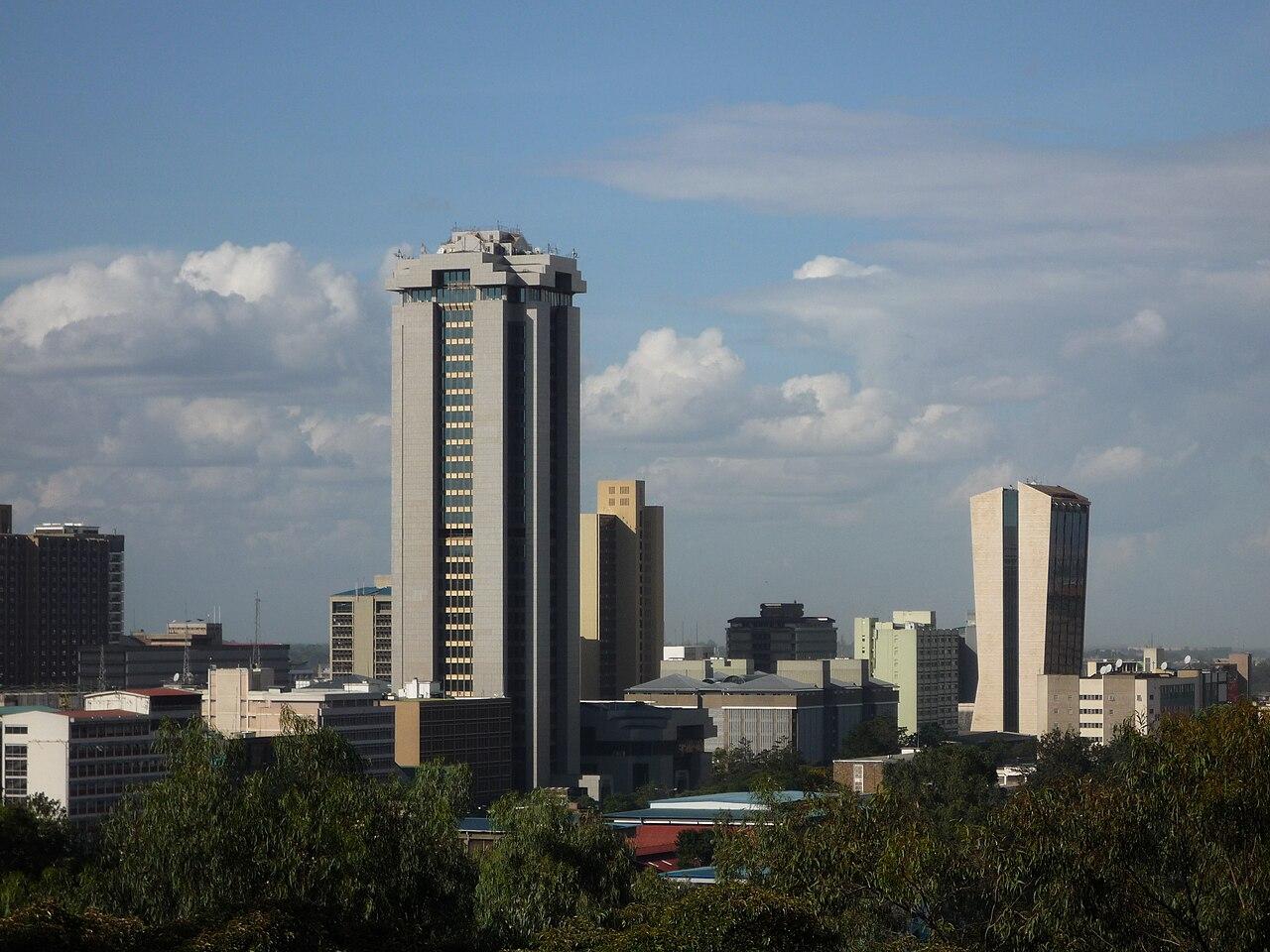
In a quiet office above a stationery shop in Nairobi's central business district, the calculations have changed. For years the education consultants who fill these rooms sold a single, hopeful arithmetic to Kenyan parents: scrape together the tuition, add a flight, and a child could trade a crowded local lecture hall for a campus abroad and, eventually, a foothold in a richer economy. That arithmetic is being rewritten this month, line by line, as one government after another raises the price of simply asking to come in — and, in some cases, makes the answer far more likely to be no.
The most striking change came into focus this week, when Australia confirmed that the application fee for its student visa now stands at AUD 2,000, the highest charged by any major English-speaking study destination. For a Kenyan family, that single non-refundable charge converts to well over KSh 160,000 — money handed over before a single textbook is bought, a deposit on a decision that may not be approved. It is a number that lands hard in a country where the same sum can cover a year of fees at a public university back home.
The World's Most Expensive Welcome
Australia's fee did not appear overnight. It has climbed in steep, deliberate steps as Canberra moved to cool a record-high intake of international students and to tighten what officials describe as misuse of the study route. The charge on the Subclass 500 student visa stood at AUD 710 in 2023, rose to AUD 1,600 in July 2024, and reached AUD 2,000 in July 2025 — nearly triple the figure of just two years earlier. It is paid whether or not the visa is granted. There is no refund for a refusal.
The scale of the gap becomes clear in comparison. Where Australia now charges AUD 2,000, the United Kingdom asks £524 for its student visa, the United States US$185, New Zealand NZD 850, and Canada just CAD 150. By that measure an Australian application can cost a Kenyan family more than ten times what the same paperwork would cost for Canada — before a single tuition instalment is paid.
The price is only part of it. Australia has also reduced the maximum age for its Temporary Graduate Visa from 50 to 35, narrowing post-study work options for older graduates, and now bars several categories of temporary visa holders from switching into a student visa while inside the country — they must leave and apply from overseas. Layered on top are stricter English-language requirements and closer scrutiny of enrolments. For the families who keep Australia on their shortlist — and many do, drawn by its universities — the message is blunt: the country still wants students, but it has decided they should pay handsomely, and qualify more strictly, for the privilege of applying.
America's Costly Lottery
If Australia has made the door more expensive, the United States has made it harder to predict. Kenyans applying for American visas pay roughly KSh 24,000 in non-refundable fees per attempt, and a substantial share walk away with nothing to show for it. Reporting on recent application cycles has pointed to refusal rates for Kenyan student visas that ran as high as roughly three in four, with tourist and business categories also rejected at elevated levels. Applicants describe the experience as a paid gamble: the fee buys an interview, not an outcome.
Layered on top of that uncertainty is a wave of policy change in Washington that threatens the deeper logic of American study for Africans. Proposals advancing through the US system would curtail the long-standing path that let international graduates work after their degrees and, over time, settle. Should those measures take full effect, the familiar sequence of study, then work, then residency — the very promise that justified the expense — would narrow sharply for Kenyan graduates. The country that has educated generations of the Kenyan professional class is quietly becoming a place to attend school and then leave.
The Northern Alternatives Hold, For Now
Not every door is closing at the same speed, and that is precisely why the map of Kenyan ambition is being redrawn. Canada continues to bundle work authorization into its study permits, allowing graduates a runway to gain experience and, in many cases, to stay. The United Kingdom's graduate route still offers a window of post-study work, and British universities remain a familiar destination for Kenyan families with relatives already settled there. New Zealand, meanwhile, has announced its own set of skilled-migrant reforms due later this year, signalling that the smaller economies of the Pacific are competing actively for the talent that the larger ones are turning away.
The consultants in Nairobi have noticed. Where conversations once began with America, they increasingly begin with Toronto, Manchester or Auckland — destinations judged not only on the prestige of the degree but on the honesty of the pathway that follows it. The decisive question parents now ask is no longer simply where their child can study, but where, after graduation, their child will actually be allowed to work.
What the Squeeze Means Back Home
The stakes reach well beyond the individual applicant. Education has long been one of the quiet engines of the Kenyan diaspora. Students who left for foreign campuses became the nurses, engineers and accountants whose remittances now form one of the country's largest sources of foreign exchange, and whose savings build homes and pay school fees for siblings left behind. When the cost of leaving rises and the odds of staying abroad fall, that pipeline thins.
There is a more immediate household cost, too. A family that spends KSh 160,000 on an Australian application fee, or repeated KSh 24,000 rounds on American attempts, is spending money that might otherwise have gone to a local university place or a small business. The new fees do not only deter; they extract. For every student who eventually boards a plane, others pay and are turned back, their savings absorbed by governments thousands of kilometres away with nothing to show for it.
The Choice Ahead
None of this means the dream of studying abroad has ended for Kenyans. Demand remains strong, and the prestige attached to a foreign degree has not faded. What has changed is the calculus, and the need for clear eyes. The cheapest application is no longer the wisest one if it leads to a near-certain refusal; the most prestigious destination is no longer the smartest if it offers no path to stay and work. Increasingly, the rational Kenyan student is the one who reads visa policy as carefully as university rankings.
For the consultants above the stationery shop, that shift is already reshaping the advice on offer. The honest pitch now is not about the glossiest brochure but about the surest route — a destination where the fee buys a real chance, and where the years after graduation are not a cliff edge. As governments across the wealthy world raise their drawbridges at different heights, Kenya's students are learning to measure not just the height of the wall, but whether there is a door on the other side.