The Stamp at the Gate: How a New UAE Rule Just Made Dubai Easier for Kenyans Living Abroad
From 25 June, Kenyans holding residence permits in eight wealthy countries can skip the pre-trip visa queue and clear UAE immigration on arrival.
For a Kenyan nurse finishing a night shift in Manchester, the trip to see family in Mombasa has long carried a small, irritating ritual at its edges. A stopover in Dubai — cheaper, faster, often unavoidable on the long haul south — used to mean filling in an online visa application weeks in advance, paying a fee, and waiting for an approval to land in the inbox before the ticket felt safe to book. Holding a British residence card counted for nothing at the UAE's electronic gate. The Kenyan passport set the terms.
From 25 June 2026, that calculation changed. The United Arab Emirates now allows eligible Kenyan citizens to obtain a visa on arrival, provided they already hold a valid residence permit from one of a defined set of wealthy countries. For a slice of Kenya's diaspora, the pre-trip queue has quietly disappeared.
What Actually Changed
According to the UAE Embassy in Nairobi, the directive took effect on 25 June and applies to holders of ordinary Kenyan passports who carry valid residence permits from a list of developed nations. Where travellers once had to secure a visa before departure — even when they held permanent residency abroad — they can now present their documents at a UAE port of entry and be processed on the spot.
The embassy framed the move as part of the UAE's broader push to cement its position as a global hub for tourism, trade and investment. In practical terms, it removes a layer of paperwork, cuts processing time, and trims the travel-related costs that come with applying, waiting and occasionally re-applying. Reporting in the regional press indicates the on-arrival entry comes in two forms: a shorter visit permit valid for roughly two weeks, and a longer one valid for about two months, each carrying its own fee payable at the airport. Travellers are advised to confirm the current rates and conditions with the UAE authorities before flying.
Who Qualifies, and Who Still Doesn't
The benefit is not open to every Kenyan. It is tied to residence, not citizenship abroad, and the qualifying list is specific. Per the embassy notice carried by Mwakilishi, eligible travellers are those holding valid residence permits from the United States, the United Kingdom, Canada, Australia, New Zealand, Japan, Singapore and South Korea. Some regional outlets reporting on the same expansion also include European Union member states among the qualifying jurisdictions, so travellers should verify their own permit against the official list rather than assume coverage.
Family members travelling together may also benefit, subject to meeting the stated conditions — a detail that matters for the many diaspora households that fly as a unit. Crucially, the embassy stressed that Kenyans who do not hold a residence permit from one of the named countries must continue to use the existing advance-application process. A Kenyan passport alone, in other words, still does not unlock the on-arrival gate. The change rewards those who have already built a documented life in a third country, and leaves the rules unchanged for everyone else.
Why Dubai, and Why Now
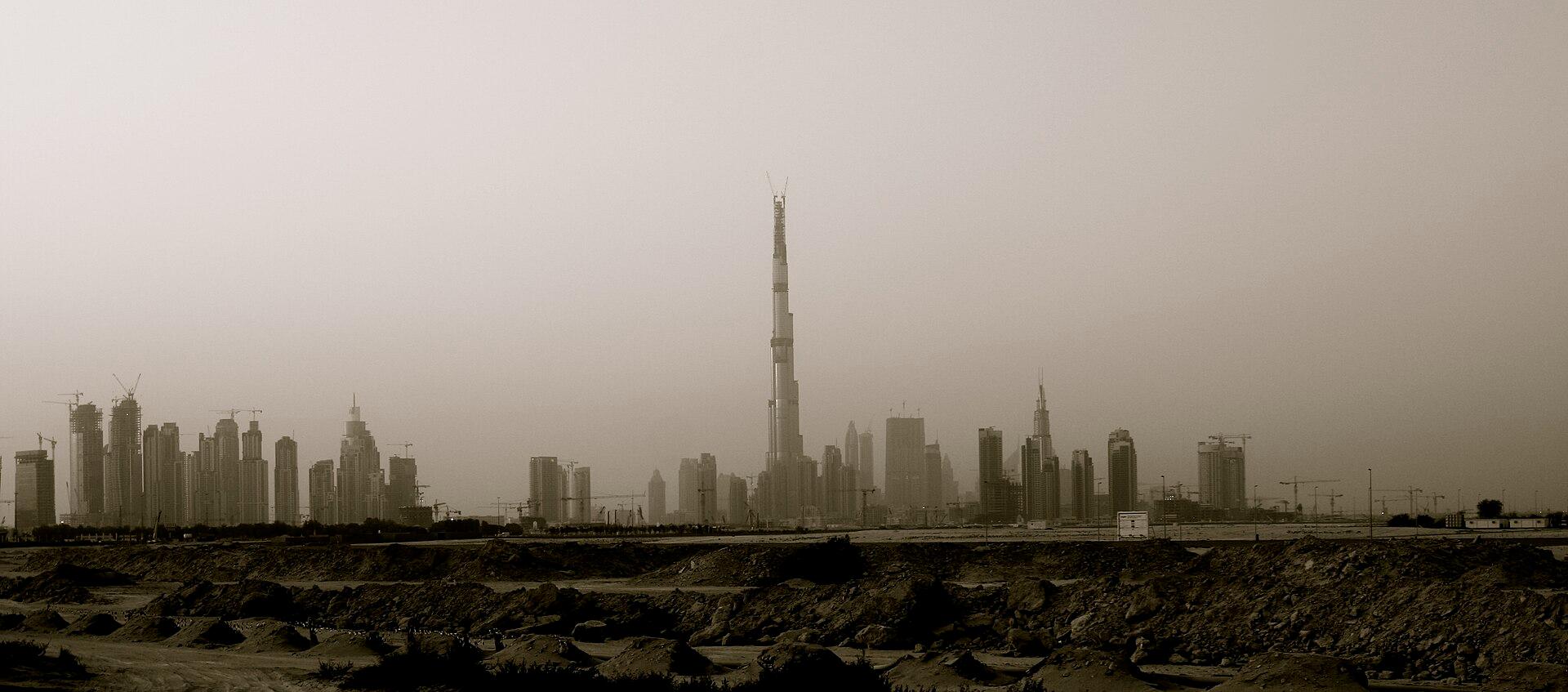
For Kenyans abroad, the UAE is rarely just a destination; it is a junction. Dubai and Abu Dhabi sit at the crossing point of routes linking Africa, Europe, Asia and North America, and their airports function as some of the busiest transfer points on the planet. A diaspora family routing from Toronto or Sydney to Nairobi often passes through the Gulf whether they intended to or not. Easier entry turns a forced layover into an option — a few days of shopping, a meeting, a break in a long journey — rather than a bureaucratic hurdle to clear in advance.
The timing also reflects warming relations between Nairobi and the Emirates. Mwakilishi notes that President William Ruto and UAE President Sheikh Mohamed bin Zayed Al Nahyan have held a series of high-level meetings in recent years, as the two governments deepen cooperation across trade, aviation and investment. The UAE has become an important market for Kenyan workers, traders and investors, and easing travel for the diaspora segment fits a pattern of the two countries lowering friction between their economies.
Part of a Wider Reshuffle
Kenya's inclusion did not happen in isolation. The same expansion of the UAE's visa-on-arrival programme extended the privilege to nationals of six countries at once — Indonesia, Vietnam, Thailand, the Philippines, Kenya and South Africa — all effective from 25 June. The common thread is residence in a wealthy economy: the Emirates is, in effect, outsourcing part of its vetting to the immigration systems of the United States, Britain, Canada and the others, treating an existing residence permit as a pre-screened seal of trust.
For Kenya, sharing the announcement with South Africa is notable. The two are Sub-Saharan Africa's most globally mobile populations, with large, established communities across the West and the Gulf, and both now gain the same smoother path through one of the region's most important transit nodes. It places Kenyan travellers, at least those with permits in hand, on a more equal footing with citizens of countries that have long enjoyed lighter-touch entry to the Emirates.
What It Means for Diaspora Families
The headline benefit is mundane but real: less time, less money, less anxiety. A diaspora professional can now book a Gulf stopover without first chasing an approval, and a family can plan a multi-leg journey home without the slowest member's visa holding up the itinerary. For frequent flyers who treat Dubai as a second base, the saving compounds trip after trip.
The caveats deserve equal weight. The rule rewards documentation, and the diaspora is not uniform; undocumented workers, students between statuses, and those on temporary permits that fall outside the list see no change. Fees and validity periods can shift, and an on-arrival visa still leaves the final decision with the officer at the desk. Travellers carrying the wrong paperwork can still be turned back.
Still, for a community that measures distance in visa queues as much as in air miles, a removed step is a removed step. The nurse in Manchester, residence card in her bag, can now book the Dubai layover and think only about the part that matters: the arrivals hall in Mombasa, and who will be waiting in it.