The Speeches He Asked Me to Gather: How Raila Odinga's Unfinished Plans Reach a Diaspora Still Mourning
Months before his death, the opposition icon set a publishing project, a Pan-African book and a school of democracy in motion. For Kenyans abroad, the question now is who carries it forward.
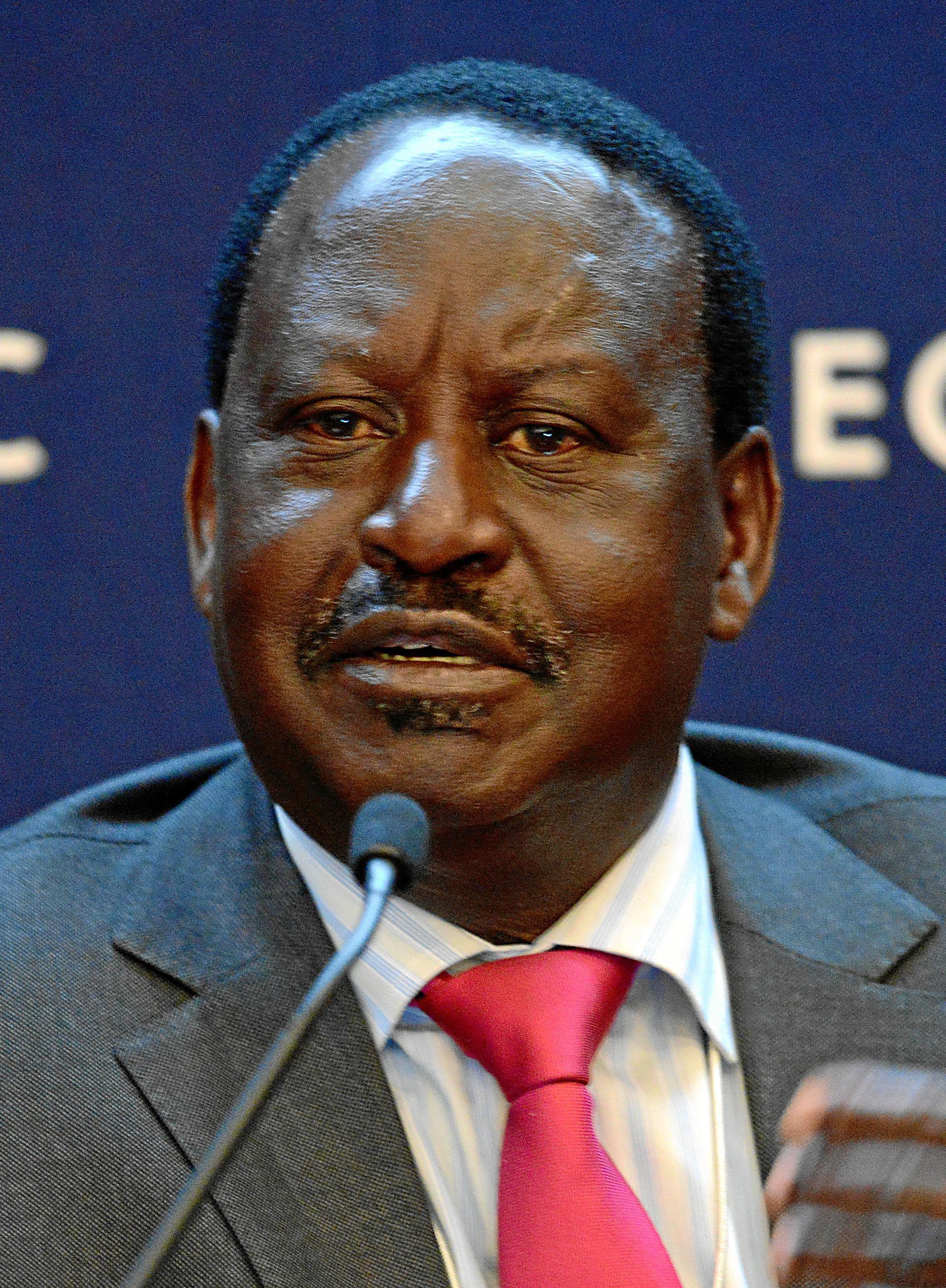
In living rooms from Lowell to Luton, the clip arrived the way most Kenyan political news now reaches the diaspora: forwarded into a WhatsApp group at an odd hour, watched on a phone propped against a cereal box before the school run. The man on the screen was Dennis Onyango, who for years stood at Raila Odinga's shoulder and spoke in his name. This time he was talking about the things his old boss never finished.
Onyango's interviews over the weekend of June 7 were not meant to break news so much as to take inventory. Nearly eight months after the former Prime Minister's death in October, his longtime aide laid out a set of projects Odinga had set in motion before he travelled to India for medical treatment: a collection of his speeches, a book on Pan-Africanism, a school, a foundation. For Kenyans abroad who built their political identities around the man, the accounting felt less like a press cycle than a reading of a will.
A Conversation Replayed Across Time Zones
The detail that travelled fastest was the simplest. Speaking to Citizen TV, Onyango described one of his final face-to-face conversations with Odinga at his Karen residence. The subject was a book of speeches the two had discussed for years and never managed to produce, always overtaken by the next campaign, the next crisis, the next handshake.
"He told me to collect all his speeches and I'm working on that," Onyango said.
It is the kind of instruction that sounds modest until you consider the archive it implies. Odinga's public voice spanned more than four decades, from detention under one-party rule to the floor of Parliament to five campaigns for the presidency. To gather those speeches is to assemble a parallel history of Kenya's democratic struggle, narrated by one of its most divisive and durable protagonists. Onyango said the compilation is expected to be completed before the end of the year.
The Archive of a Five-Decade Voice
For the diaspora, that archive is not an abstraction. Many of the Kenyans who now hold green cards, British residence permits and Gulf labour contracts came of political age listening to those very speeches, often in exile or near it. They filled church halls in Atlanta and community centres in Birmingham when Odinga toured. They argued over his decisions in the comment sections of the same outlets that now report his absence.
Onyango framed the book as a record for people who were not in the room, and political observers quoted in Kenyan media have suggested it could become a historical resource for a generation trying to understand how the country arrived at its present arrangements. That generation is heavily distributed abroad. The collection, if it appears on schedule, will land in diaspora book clubs and university reading lists as much as on Nairobi shelves.
A Book on Pan-Africanism, and a School Meant to Outlive Him
The speeches were only the first item. Onyango revealed that Odinga had also begun a separate book on Pan-Africanism, a theme that ran through his politics from the beginning. That project, he said, had been handed to another collaborator, with Onyango's own role limited to reviewing material and offering support.
Of everything Onyango described, the Pan-African book may speak most directly to Kenyans overseas. Pan-Africanism is, by definition, a doctrine of the scattered: a claim that Africans on the continent and across its diaspora share a single political destiny. Odinga returned to it often, and a finished volume would put his name into a tradition that diaspora intellectuals from Accra to Washington have spent a century debating.
Beyond the books, Onyango said, Odinga had spoken of building institutions to carry his ideas after him: a Raila Odinga School of Democracy and Governance, and a foundation bearing his name. According to Onyango, Odinga discussed these plans without dwelling on whether he would live to see them, insisting they could be pursued and developed once he was gone. It is the language of a man arranging a legacy rather than a campaign.
The Wish to Be Buried in Three Days
Some of what Onyango disclosed was more intimate, and more unsettling. He said Odinga had told him, months before his death, that he wished to be buried within 72 hours, an unusually compressed timeline for a prominent Luo elder. The conversation, Onyango recalled, followed the death of former Chief of Defence Forces General Francis Ogolla, who was killed in an April 2024 plane crash and whose own will reportedly requested a swift burial.
"When General Francis Ogolla died, Raila told me that the General had written in his will that he would like to be buried within 72 hours," Onyango said. "Raila then told me that is exactly how I would like to be buried."
At the time, Onyango dismissed it. "I told him nobody would accept those things. I told him no Luo would accept that," he said. Yet when the moment came, the wish was honoured without family objection, and Odinga was laid to rest in Siaya within days, in a ceremony President William Ruto attended. For diaspora Kenyans who could not fly home in time, the speed of it was its own kind of grief, a goodbye that happened before many had booked a ticket.
The Vacuum He Left in the Movement
The unfinished projects sit against an unfinished politics. The Orange Democratic Movement Odinga built is now navigating life without its founder, with his elder brother, Siaya Senator Oburu Oginga, stepping into a leadership role and rival factions arguing over the cooperation pact Odinga struck with Ruto. Onyango defended that pact, insisting his boss had embraced it willingly. "Raila believed in the handshake. He agreed with the agenda of the President," he said, adding that he could not imagine senior ODM figures joining the Cabinet without Odinga's blessing.
For the diaspora, the succession question is practical as well as sentimental. ODM's overseas chapters were among Odinga's most reliable fundraisers and loudest amplifiers, and the 2027 election, with its still-unresolved promises of expanded diaspora voting, will test whether that energy survives the man who summoned it.
Why the Diaspora Is Still Watching
There is a reason an inventory of books and institutions resonated so widely among Kenyans abroad. Migration is itself a wager on the future, on children who will grow up elsewhere, on a homeland watched from a distance. Odinga's plans, as Onyango described them, are wagers of the same kind: a school for students not yet enrolled, a foundation for causes not yet named, a book of ideas for readers not yet born.
Whether those plans are realised now depends on people he can no longer instruct. The speeches must be gathered, the Pan-African manuscript finished, the school funded, the movement held together. For a diaspora that spent decades treating Raila Odinga as the fixed point of its politics, the weekend's revelations were a reminder that the fixed point is gone, and that what he left in motion will only keep moving if someone abroad and at home decides to push.