The Northern Opening: What Ruto's Finland Visit Signals for Kenya's Diaspora and Its Jobs
Helsinki rolled out a state welcome for President Ruto this week. Beneath the ceremony lies a quieter question: whether the Nordic countries are becoming the diaspora's next destination.
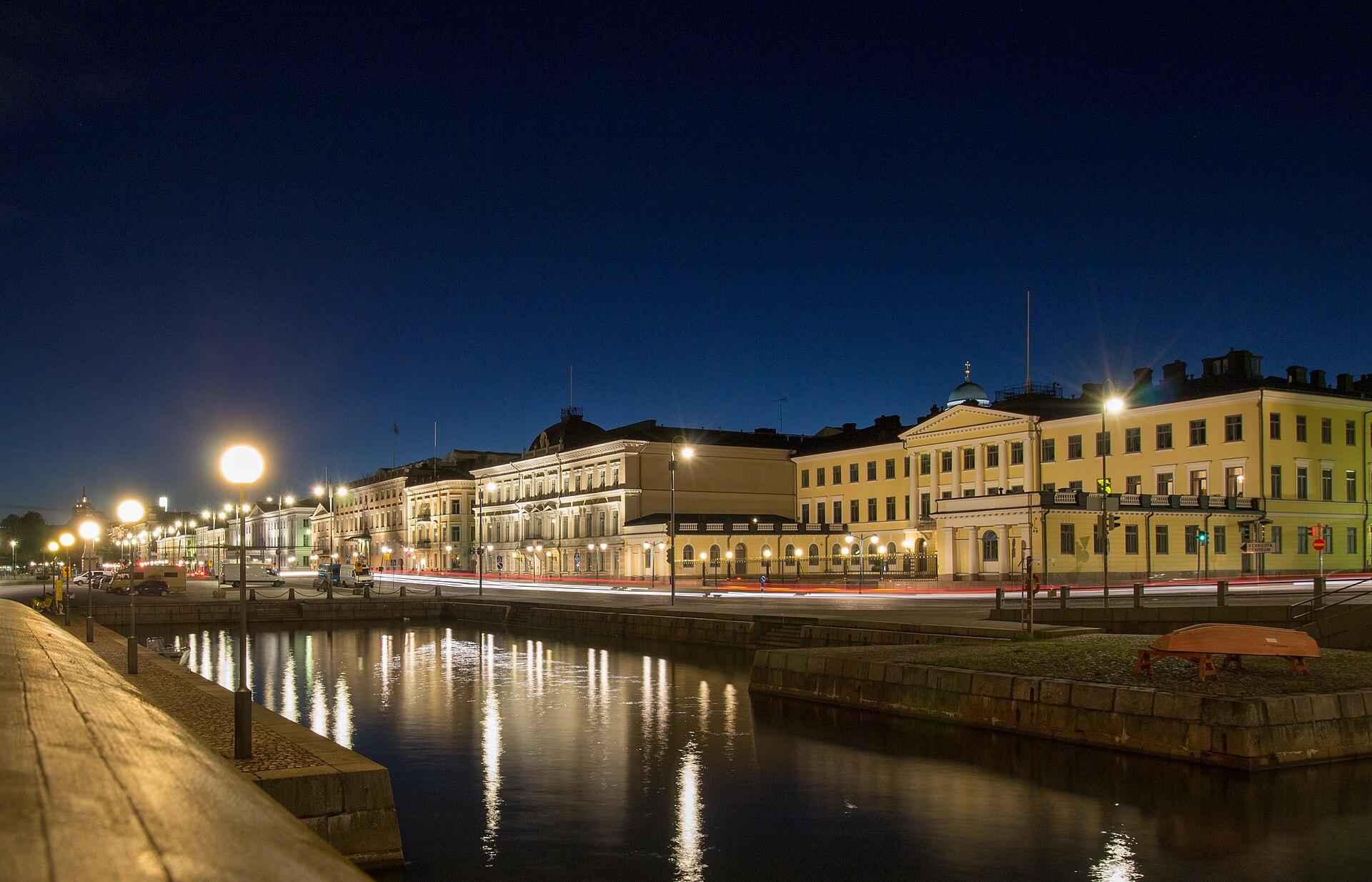
On the morning of 10 June, a small crowd gathered at the edge of Helsinki's Market Square, where the cobblestones meet the Baltic and the white-and-green Presidential Palace looks out over the harbour. They had come to watch a ceremony that does not happen often here: the formal welcome of an African head of state. President Alexander Stubb and his spouse, Suzanne Innes-Stubb, received Kenya's President William Ruto and First Lady Rachel Ruto in front of the palace, a building that has staged only a handful of such arrivals from the continent. The last time a Kenyan president came to Finland on a state visit, it was 1987.
For the Finns at the Market Square, it was a diplomatic curiosity on a bright northern morning. For the much smaller number of Kenyans who have built their lives in Finland, it was something more personal — a sign that the country they left and the country they now call home were, for two days at least, paying close attention to one another.
A visit built around trade, not aid
The official themes of the visit, as set out by Stubb's office, were deliberately forward-looking: deepening bilateral relations, strengthening cooperation in international forums, reforming the multilateral system, and promoting trade between the two countries. After the welcome ceremony, the presidents held talks at the Presidential Palace covering the development of the United Nations, mediation, regional issues in Africa and Europe, and the situation in the Middle East, before a joint press conference.
The framing matters. For years, Kenya's relationship with wealthy Northern partners was described in the language of assistance — grants, programmes, development funds. This visit was organised around something closer to a business handshake. On 11 June, the two presidents took that idea to its logical venue: a trade-promotion event at the Nokia Executive Experience Center in Espoo, bringing Finnish and Kenyan company representatives into the same room to talk technology, clean energy and investment.
Why the Nordic turn speaks to the diaspora
None of this would normally register as diaspora news. State visits are the stuff of protocol and communiqués. But the Kenyan diaspora reads these tours closely, because the corridors they open — or close — eventually shape where the next generation of Kenyans goes to work.
For most of the past decade, that map has pointed west and to the Gulf: the United States, the United Kingdom, Canada, and the labour markets of the Arabian Peninsula. Those routes have grown harder. Washington has tightened visa processing and widened removals; Britain has raised salary thresholds for skilled workers; Gulf states have repeatedly revised the terms under which they recruit domestic and care workers. Against that backdrop, a Nordic country actively courting Kenyan trade and talent is not a footnote. It is a possible new direction.
Ruto's own message on the tour leaned into exactly this. Before arriving in Finland, in neighbouring Norway, he announced a labour agreement intended to place at least 1,000 Kenyan seafarers in Norwegian shipping by 2030, with the first 120 expected to find work by the end of this year, according to reporting by the diaspora outlet Mwakilishi. The deal, struck with major shipping firms including Wilhelmsen Ship Management, was presented as part of a wider strategy to expand skilled jobs abroad and strengthen Kenya's maritime workforce.
The meeting that mattered most to Kenyans abroad
Tucked into the end of the Finland programme, almost as a footnote in the official schedule, was the line that diaspora Kenyans noticed first: before his return, President Ruto would meet members of the Kenyan community in Finland.
These gatherings have become a fixture of Ruto's foreign travel, and they are rarely purely ceremonial. The government has spent the past two years trying to convince Kenyans abroad that they are partners in national development rather than a distant remittance machine — a constituency to be consulted on investment, housing and policy. Money sent home by Kenyans abroad remains the country's single largest source of foreign exchange, outpacing tourism and traditional exports, and the diaspora has grown increasingly vocal about wanting a say in how that leverage is used, including the long-running fight over voting rights from overseas.
A meeting in Helsinki will not settle any of that. But for a community that is small and dispersed across the Nordic countries, the simple fact of appearing on the itinerary of a state visit carries weight. It tells Kenyans in Espoo, Turku and beyond that they are counted.
Soft power, women in tech and a quieter agenda
The visit's second track ran through its spouses. Mrs Innes-Stubb and Mrs Ruto visited a Helsinki gaming company to discuss women's opportunities in technology companies, along with the Oodi central library and the New Children's Hospital. In Turku, they were introduced to Women's Health Hub Finland, a nationwide innovation network focused on women's health, and a health-technology company specialising in prenatal and newborn screening.
These stops read as soft diplomacy, but they map neatly onto sectors — health technology, digital skills, maternal care — where Kenya is hungry for partnerships and where its diaspora professionals, many of them nurses, engineers and developers, already work. The afternoon of 11 June carried its own marker of status: Ruto joined Stubb at the Kultaranta Talks, Finland's annual foreign and security policy forum at the presidential summer residence, becoming the first African head of state to take part.
What to watch after the cameras leave
State visits are easy to stage and hard to bank. The test of this one will not be the banquet at the Presidential Palace or the photographs from Naantali, but whether the conversations held in Espoo turn into actual hires, actual investments and actual movement of people. The Norway seafarer agreement offers both a template and a caution: a concrete number, 1,000 jobs, with a deadline attached — the kind of commitment that can be measured, and missed.
For the Kenyan diaspora, the Finland visit is less a destination than a signal. The familiar doors to the West are narrowing; a set of colder, quieter, highly developed economies in the north are, for now, holding theirs open. Whether that opening becomes a genuine path — for seafarers, for nurses, for coders, for the students weighing where to build a life — will be decided not in Helsinki this week, but in the unglamorous follow-through of the months ahead.