The Newsroom That Said Nothing: How a Sydney Podcast Forced Australia to Hear Sheila Chebii's Name
Australian media had nearly two weeks to report on a young Kenyan student's death in a Sydney hotel. It took two podcast hosts to ask why they hadn't.

In a studio in inner-Sydney earlier this week, two journalists sat across a microphone and worked through a question that, on its face, looked like a media-criticism question and, beneath the surface, looked like something much bigger. Jan Fran and Antoinette Lattouf, the hosts of the independent podcast We Used to Be Journos, had pulled up a story they had been watching for weeks: the death of Sheila Jepkorir Chebii, a 25-year-old Kenyan student who arrived in Australia for a master's degree and was dead six weeks later. The case had filled bulletins in Nairobi. It had drawn a protest outside the Australian High Commission in Canberra. It had been raised in Kenya's parliament. In Sydney, where Chebii died, the major Australian newsrooms had said almost nothing. Fran and Lattouf wanted to know why.
That question, asked on a small podcast, has now become the story.
A short life in Sydney, a long silence at home
Chebii had been in Australia for about six weeks when she died. She had travelled from Kenya to begin a master's in accounting and auditing, and like a great many international students before her she had taken a part-time job to help cover the cost of living in one of the world's most expensive cities. Reports placed her work at a hotel inside a CBD tower owned by one of Australia's largest residential developers; her family was told she fell from an upper floor. New South Wales Police later ruled out suicide as the inquiry continued, but no public statement explaining the circumstances has been issued. Australian outlets did not, in any meaningful way, pick the case up.
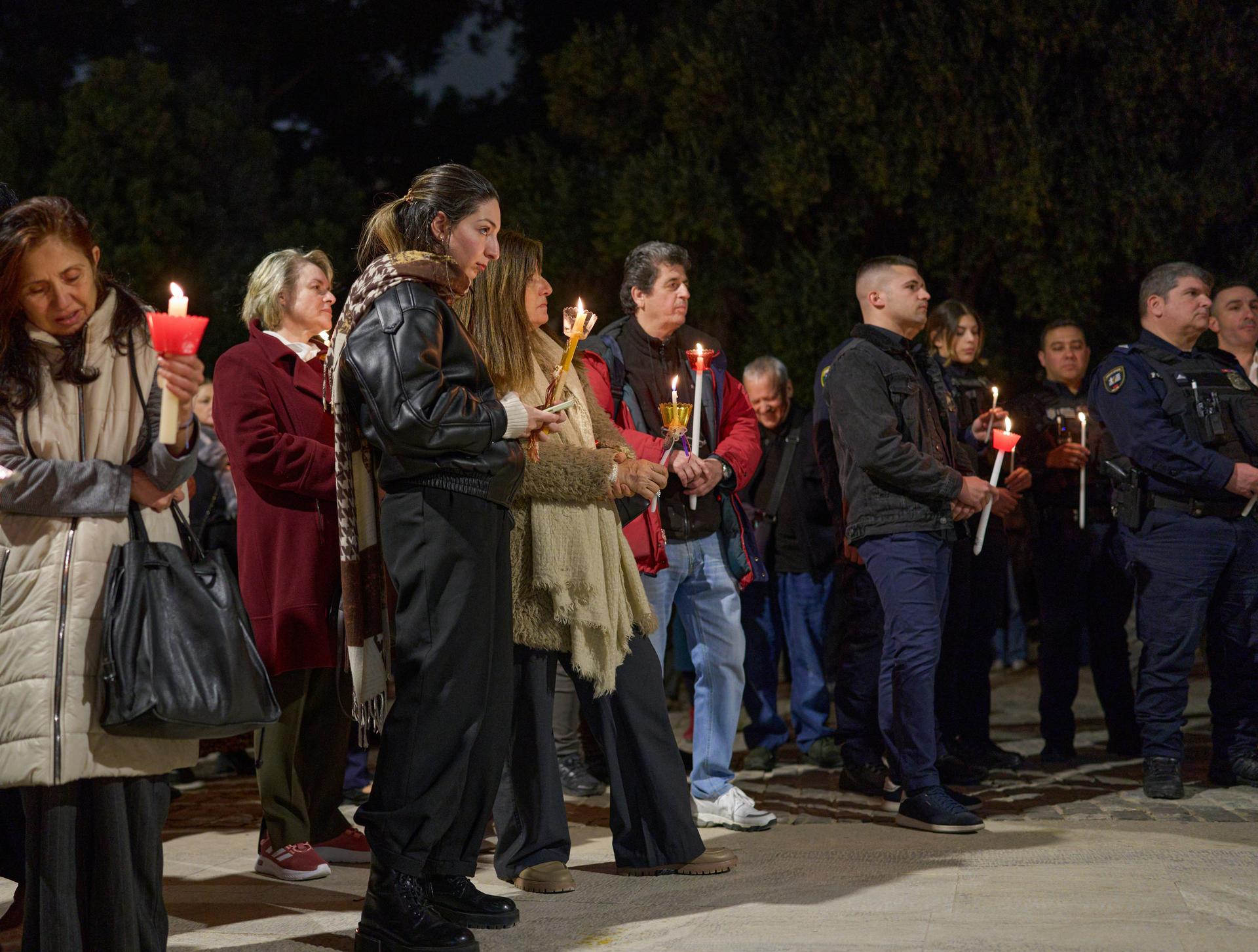
In Kenya, the story moved quickly. Daily Nation reported the family's demand for answers. Eastleigh Voice and Mwakilishi tracked the High Commission's involvement. Samrack carried updates for the diaspora in North America. A vigil and march took place in Nairobi. Demonstrators carrying placards calling for justice walked to the hotel in Sydney where Chebii had worked. Kenyans abroad shared each new development on WhatsApp groups in the way diaspora communities always have, a substitute for the front pages they could not find.
"Imagine if she had come from Norway"
It was that gap — the loud reporting in one country and the near-total silence in the other — that Fran and Lattouf put on the air. On a recent episode of We Used to Be Journos, the podcast they launched alongside their new independent media company, ETTE Media, the pair walked listeners through the international coverage and the absence of Australian coverage. Lattouf said the silence raised questions about whose deaths make the news. Fran put the same point in plainer language, asking listeners to imagine the response in Australia if a young student had come from a Western country — from Norway, she suggested, or Canada — and died in similar circumstances in a hotel in Sydney. Both hosts have built careers asking exactly those kinds of questions; Lattouf, an Australian-Lebanese journalist who won a high-profile federal court case against the ABC last year, is among the country's better-known critics of how mainstream media decides which stories matter.
The episode is not the only catalyst, but it has become a focal point. Australian community groups that have spent years arguing that incidents involving migrants and people of colour are underreported now have a tidy case study and two well-known broadcasters making it. Independent outlets covered the podcast's claims. The story of the silence has begun to move where the original story did not.
What the diaspora hears in the silence
For the Kenyan community in Australia, the silence has practical consequences that go beyond the question of which story leads the six o'clock news. When the broader Australian public does not know that a Kenyan student has died in a Sydney hotel, it does not write letters to its MPs. It does not call the police media line. It does not push the NSW coroner's office to fast-track a finding. Pressure that comes from inside the host country, the kind that local newsrooms create simply by reporting, is the pressure most likely to produce answers. The Kenyan High Commission can ask its questions through diplomatic channels, and it has. Families can hold vigils, and they have. But none of those substitutes for the slow, accumulating weight of domestic reporting.
It also signals something about belonging. The Kenyan diaspora in Australia is smaller than its counterparts in the United States, the United Kingdom or Canada, and it has spent a decade building visibility through cultural associations, professional networks, and a steady drumbeat of student arrivals. Being unseen in a moment of grief is, for many in that community, the kind of message that lingers. Several Kenyans in Sydney and Melbourne have written publicly that the question Fran and Lattouf raised on the podcast — whose death counts — is one they have been asking quietly in their own kitchens.
The accountability the family is still waiting for
The most concrete loss, however, is the one Chebii's family is sitting with. Relatives say they have received only patchy updates. They are still waiting for police to confirm publicly what happened on the night of her death and whether anyone, in the hotel or in the broader chain of duty-of-care, will be held responsible. An investigation that proceeds quietly, with no public pressure, can take years. Investigations that have to be conducted in front of a camera tend to move faster. That, in a sentence, is why the question of media coverage is not a side issue but the issue.
For now, what the family has is a Kenyan public that has not let the case fall away, a diplomatic process moving at the speed of diplomacy, and a podcast episode that has shifted what was once a private question into something Australian newsrooms can no longer ignore without comment.
A small intervention with a long tail
The week's developments will not, on their own, change the rules of which deaths make it onto Australian front pages. But they show, again, how the boundary of coverage has become contestable. A pair of hosts with a microphone, a diaspora willing to keep posting, a family that will not stop asking — those add up to a kind of journalism in themselves. For Kenyans in Sydney, in Nairobi, and across the diaspora reading the case from afar, the lesson is one they already knew: when an institution decides your story is not worth reporting, the work of telling it falls to you. This week, it just happened to fall to two journalists who used to share Australian newsrooms and now share a podcast.
Whether that proves to be enough to move an inquiry forward is the question Sheila Chebii's family is still waiting to have answered.