The Judge They Put in a Police Van: How 76 Acres of Nairobi National Park Became a Test of Kenya's Rule of Law
Former Chief Justice David Maraga was bundled into a police vehicle at a protest over plans to carve 76 acres from Nairobi National Park — then refused to walk free while fellow activists stayed locked up.
There is a particular kind of photograph that travels fast through a diaspora WhatsApp group. On Monday morning it was a grey-haired man in a dark suit, hands at his sides, being steered toward an open police van on Lang'ata Road. The man was David Maraga, the former Chief Justice of Kenya — the judge who, in 2017, did something no court on the continent had done before and annulled a sitting president's re-election. Now he was the one being loaded into the vehicle, arrested at a protest on the edge of Nairobi National Park.
For Kenyans watching from Maryland and Manchester, from Doha and Dandenong, the image landed with a strange double weight. It was about a stretch of grassland most of them had not walked through in years. It was also about something they think about constantly from a distance: whether the country they send money to, and may one day return to, still plays by its own rules.
A Familiar Face in an Unfamiliar Place
The demonstration on 8 June had gathered along the park boundary to oppose a development inside one of the few national parks on earth that borders a capital city. Witnesses said Maraga was forcibly placed into a police vehicle as officers moved to disperse the crowd. Journalists at the scene reported that their equipment was confiscated. Police detained him along with several other activists at Lang'ata Police Station.
By the standards of a man who has held the highest judicial office in the land, what happened next was telling. According to multiple Kenyan outlets, Maraga was offered release but declined to leave, insisting on staying at the station in solidarity with the others still held. The Law Society of Kenya said it had dispatched a team of lawyers to secure their freedom, and its president, Charles Kanjama, framed the arrests as a breach of Article 37 of the Constitution, which guarantees every Kenyan the right to assemble and demonstrate peacefully.
The 76 Acres at the Heart of It
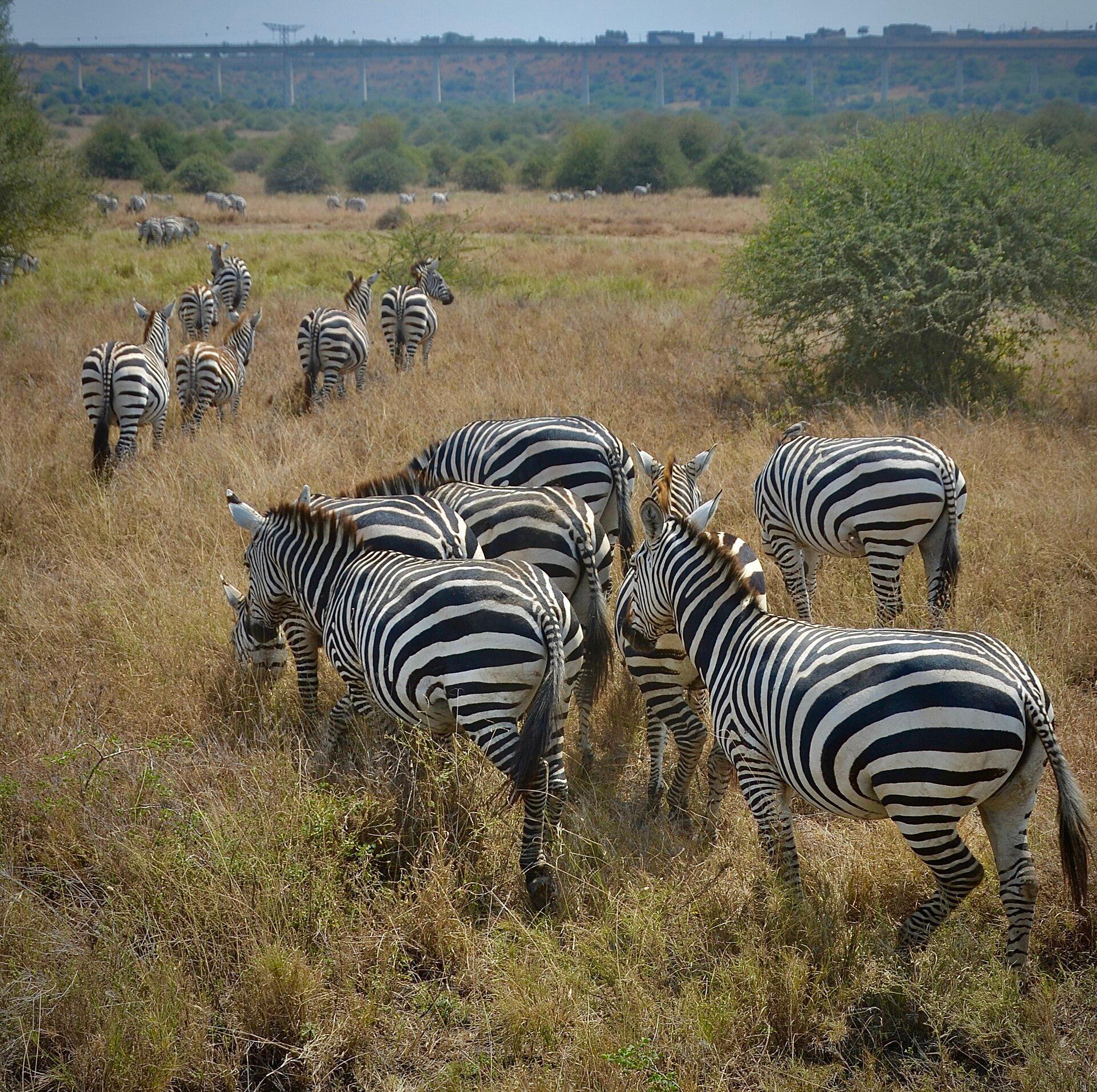
The protest was not abstract. At issue is a plan to excise roughly 76 acres of land from Nairobi National Park to make way for an expansion connected to the Bomas of Kenya, the state-owned cultural and conference complex on the park's edge, in a project reported to carry a price tag in the tens of billions of shillings. Conservation groups argue the move would shrink one of the country's signature protected areas, sever wildlife corridors, and clear indigenous habitat that cannot simply be replanted elsewhere.
The dispute is sharpened by process as much as by acreage. The development received approval from the National Environment Management Authority, the body charged with safeguarding the country's ecosystems. Opponents counter that the approval did not meet the threshold for genuine public participation — a requirement the Constitution treats as more than a formality. The Law Society has called for a public audit of the project and an end to the harassment of those questioning it. In other words, the fight is partly about zebras and partly about who gets to decide, and how.
The Man Who Annulled an Election
It matters who was in that van. Maraga is not a career activist; he is a former head of the Judiciary whose name is shorthand, at home and abroad, for the idea that institutions can outrank power. His 2017 ruling — voiding a presidential election over irregularities in the process rather than the raw vote count — is still cited in law lectures from Nairobi to North America as proof that an African court could check an incumbent and survive.
That history is exactly why his arrest reverberates beyond a land dispute. When the symbol of judicial independence is the one being detained at a protest, the story stops being about a single park and starts being about the space left for dissent. Maraga has also signalled national political ambitions ahead of the 2027 general election, which means his treatment by the police will be read by some as a barometer of how the state intends to handle critics in a charged election cycle. None of that requires assuming bad faith on any side; it simply explains why the diaspora's attention snapped to a roadside in Lang'ata.
What the Diaspora Sees From Afar
For Kenyans abroad, Nairobi National Park is not only a wildlife reserve. It is the backdrop of childhood school trips, the first thing many of them show visiting in-laws, the postcard that makes a sceptical colleague in Texas or Toronto understand where they are from. The prospect of carving acreage out of it touches a nerve that is part environmental and part sentimental, and it intersects with money: tourism remains a pillar of the economy the diaspora helps sustain, and a diminished park is, in the long run, a diminished draw.
The deeper diaspora stake is governance. People who have built lives in countries with predictable courts and enforceable public-participation rules tend to measure home against that yardstick. Many of them fund conservation campaigns, school projects and legal-defence drives through community networks, and the question of whether a NEMA approval can be challenged — and whether protest is met with lawyers or with police vans — shapes how much they trust those investments. The 2027 vote adds another layer for a diaspora that contributes heavily to Kenya's economy while still fighting for fuller voting access of its own. They are watching how the rules are applied to a man who once defended them.
A Question Bigger Than One Park
Kenya, like every fast-growing country, faces a real tension between development and preservation. A modern conference and cultural complex is not an unreasonable ambition, and reasonable people can disagree about whether 76 acres is a tolerable trade. The harder question raised on Lang'ata Road is procedural: whether big decisions about shared heritage are made transparently, with the public consultation the law demands, and whether those who object can do so without being bundled into a van.
By Monday evening the immediate drama had cooled — lawyers at the station, statements from rights groups, the familiar machinery of a Kenyan controversy turning over. But the image was already in the diaspora's pocket, forwarded and re-forwarded: the judge who once told a president the rules applied to him, standing in a police station because he would not leave the others behind. For Kenyans far from home, it was less a headline than a question they keep asking from afar — what kind of country are they planning to go back to?