The Jet Lag They Ran Through: How America's College Tracks Quietly Built Part of Kenya's Glasgow Team
Six Kenyan student-athletes flew from the NCAA finals in Oregon to the trials in Nairobi within days — and ran their way onto Team Kenya for the Commonwealth Games.

When Rosemary Longisa lined up at Nyayo National Stadium last week, her body was still keeping American time. Days earlier she had been racing at Hayward Field in Eugene, Oregon, a stretch of track that sits barely 150 metres above sea level. Now she was breathing the thin air of Nairobi, where the ground rises somewhere between 1,700 and 2,400 metres and every lap asks a little more of the lungs. She was tired, she admitted afterwards, worn down by the long flight home. She qualified anyway.
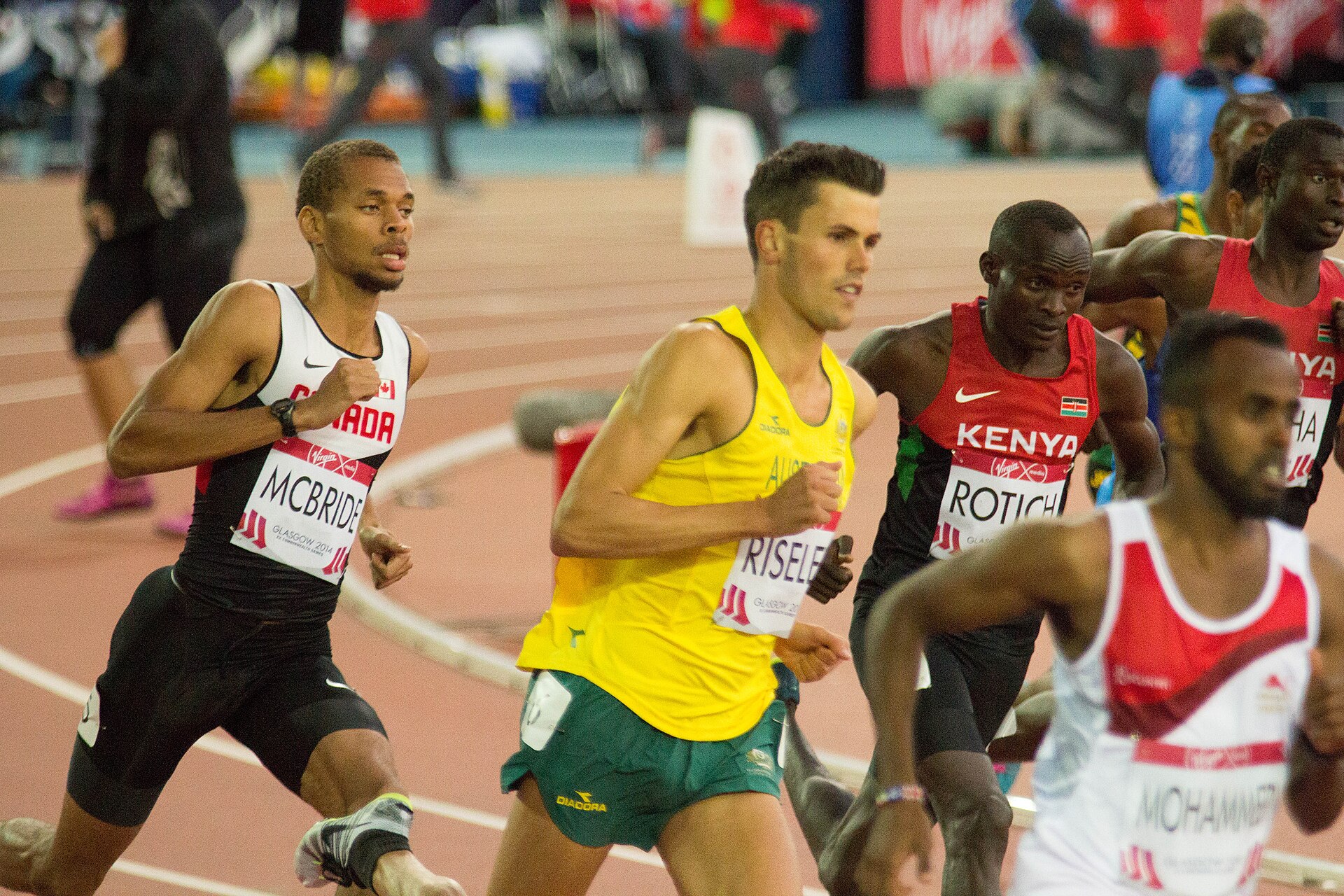
Longisa was not alone. Six Kenyan student-athletes based at universities across the United States arrived at the Athletics Kenya national championships straight off the back of the just-concluded National Collegiate Athletic Association finals, and all six walked away with places on Team Kenya for the Commonwealth Games in Glasgow next month. It was, in the language of the trials, a diaspora surge: a small cluster of names schooled on American collegiate tracks now stitched into a squad that will carry Kenya's colours to Scotland.
The Long Way Round to a Home Trial
The route these athletes travelled to make the team is a strange inversion of the usual story. Kenyan running has always been associated with the highlands, with athletes who grow up at altitude and carry that advantage abroad. This group did the journey in reverse. They spent their season at sea level on the American collegiate circuit, then flew thousands of miles back to compete against home-based rivals on the very terrain that should have favoured those who never left.
The trials at Nyayo, which doubled as the Athletics Kenya National Championships, were held over three days in the third week of June. There were no easy passages. Selection rules this cycle were unusually strict, with event winners earning automatic places only if they had also satisfied out-of-competition anti-doping testing requirements, and second- and third-place finishers left to the discretion of the selection panel. For athletes arriving jet-lagged and altitude-shocked, the margin for error was slim.
That they cleared the bar at all speaks to how seriously the collegiate athletes took the trip. "Although I was tired from travelling, I managed to qualify for the Games," Longisa said afterwards. "I love representing my country, and I will prepare well because I will be competing against some experienced distance runners."
Six Names, Six Universities
The contingent reads like a map of American track-and-field programmes. Longisa, the newly crowned NCAA 1,500 metres champion, recently transferred from Washington State University to Iowa State and earned her place in the women's one-mile squad. Janet Amimo of the University of Kentucky, who finished eighth in the NCAA 800 metres final in 1:59.82, secured a spot in the two-lap event. Her Kentucky teammate Vanice Kerubo booked her place in the 400 metres hurdles after a strong run through the rounds.
The most striking breakthrough belongs to Rukia Nusra, another Kentucky athlete, who has rewritten the Kenyan record book in the 100 metres hurdles. She became the first Kenyan to break 13 seconds in the event, clocking 12.96 at the NCAA East semi-finals before lowering it again to 12.88 in the final, and was handed a wildcard for Glasgow. In the field events, Kevin Kemboi of Oklahoma State University claimed a triple jump berth and Irene Jepkemboi of Texas Christian University earned hers in the javelin.
What unites them is not a single discipline but a single pathway. These are not the middle- and long-distance specialists Kenya is famous for exporting. They are hurdlers, jumpers and throwers, and their presence on the team is a quiet signal that the country's reach is widening beyond the events that built its reputation.
The Pipeline Few Talk About
Behind the six is a much larger population. Athletics Kenya estimates that more than 300 Kenyan athletes are currently on athletics scholarships at American universities, a diaspora within the diaspora that trains, studies and competes a continent away from the camps of the Rift Valley. For many young Kenyans, the NCAA has become a parallel development system: world-class facilities, a dense calendar of competitive races, coaching, and a degree at the end of it.
It is a pathway many of the country's biggest names walked before them, gaining seasons of experience on foreign tracks before stepping onto world and Olympic podiums. The arrangement asks something in return, though. An athlete on an American scholarship lives inside the American collegiate season, with its own peaks and its own geography, and synchronising that calendar with a Kenyan trial held at altitude in mid-June is its own kind of event. The six who made it through did so by absorbing the cost of two competitions on two continents in barely a week.
What Glasgow Asks Next
The work is not finished. The qualifiers were expected to report to the residential training camp at the Moi International Sports Centre in Kasarani, on the edge of Nairobi, to begin preparing in earnest for the Games. For the collegiate group, the camp is also a chance to acclimatise properly to home conditions after a season spent away, and to settle into a squad headlined by established stars.
Longisa, for one, will not arrive as a newcomer to the national vest. Glasgow will be her second appearance for Kenya this year; in March she represented the country at the World Indoor Championships in Poland, and she will line up in the one-mile alongside teammates with their own pedigree. For a 1,500 metres specialist still early in a breakthrough season, the Commonwealth Games are another rung on a fast-rising ladder.
A Different Kind of Homecoming
There is something fitting about a team being assembled this way in a week when Kenyans abroad are thinking hard about what ties them to home. The diaspora is usually measured in remittances and immigration queues, in the paperwork of belonging. Here it is measured in lane assignments and qualifying marks, in a handful of students who got on planes, ran through their exhaustion, and earned the right to wear the flag.
When the team walks out in Glasgow next month, the names on the start lists will not announce where their owners have spent the past year. But the story underneath is one the diaspora will recognise: of leaving in order to come back stronger, and of a country that increasingly finds its talent not only in the hills where it has always looked, but on tracks half a world away.