The Headstones of Tudor: Why Kenya Moved to Protect a War Cemetery Its Diaspora Never Forgot
A gazette notice has placed Mombasa's Manyimbo war cemetery under state protection, reviving an old question: who were Africa's war dead, and who still remembers them?
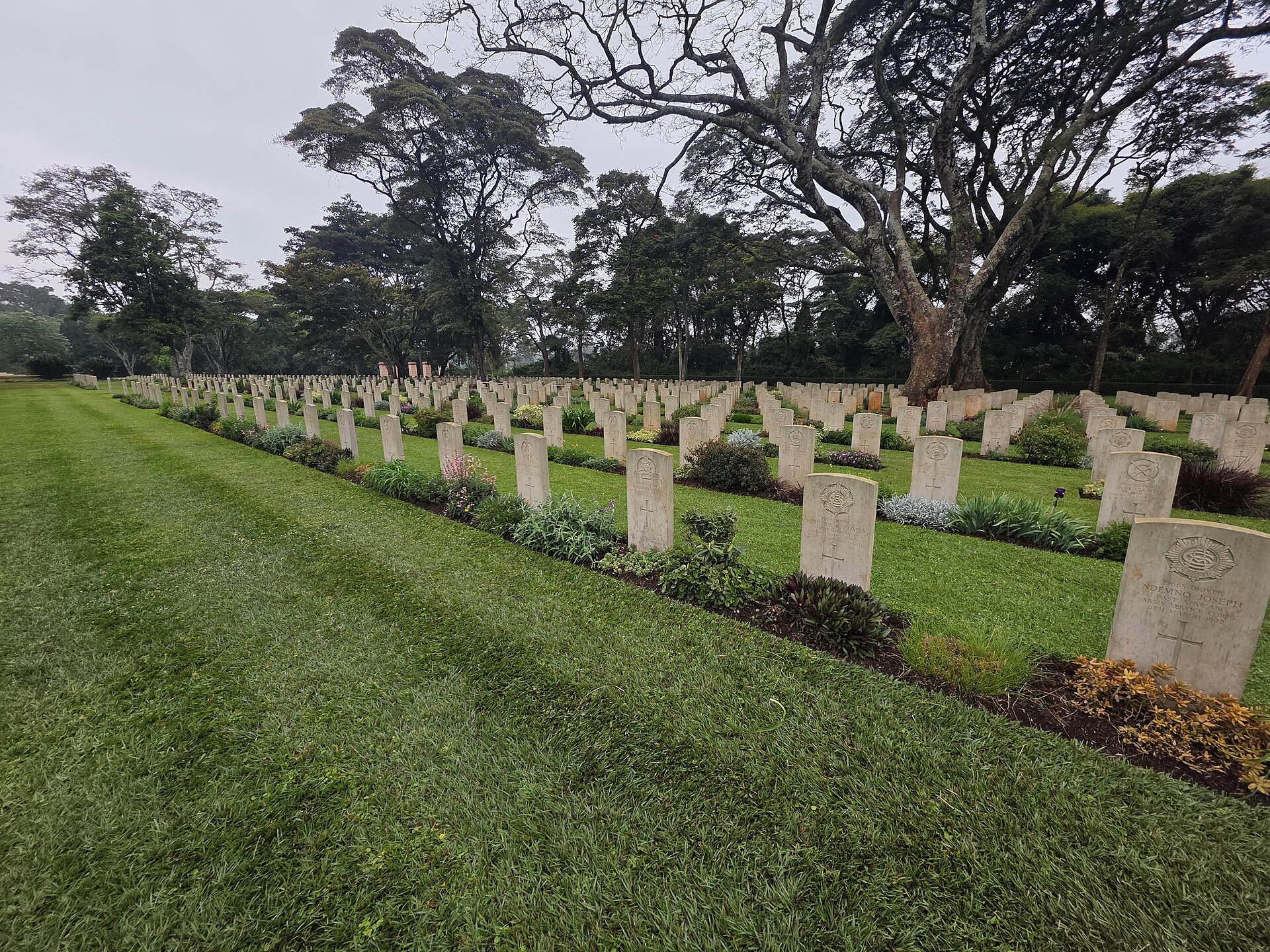
On the northern side of Mombasa island, in the crowded residential sprawl that locals simply call Tudor, there is a plot of ground so small you could walk its perimeter in a couple of minutes. Behind a low wall, away from the matatu horns and the smell of fried fish drifting up from the creek, stand rows of identical pale headstones. They are kept improbably clean. The grass between them is cut short and watered in a city where water is precious. For most Mombasa residents who pass it on the way to work, the cemetery is simply there, the way the old fort and the dhow harbour are there, a fixture too familiar to examine. This week, the Kenyan government asked the country to examine it again.
A Gazette Notice, Sixty Days to Object
In a notice gazetted on Friday, June 19, the Cabinet Secretary for Gender, Culture and Children Services, Hanna Cheptumo, moved to declare the Manyimbo World War Cemetery a national monument. The instrument is dry in the way such instruments always are. It invokes section 25 of the National Museums and Heritage Act and describes the cemetery as a "specified place" the Cabinet Secretary "considers to be of historical interest." Beneath the legal language is a simple act of preservation: once formally gazetted, the site will carry legal protection against destruction, encroachment and unauthorised alteration, the same shield that guards Kenya's most treasured heritage sites.
The notice opens a sixty-day window. Anyone who wishes to object to the declaration has until roughly mid-August to lodge their case with the Cabinet Secretary. It is hard to imagine who would. The plot occupies just under 0.15 hectares in Tudor Four sub-location, Mvita sub-county, and it is already maintained, quietly and meticulously, by the Commonwealth War Graves Commission. What changes is not the grass or the stone but the status: the Kenyan state is formally claiming this ground as part of its own story, rather than leaving it as a colonial-era inheritance tended by an outside body.
The Africans Behind the Headstones
The cemetery holds 225 Commonwealth burials from the Second World War, fourteen of them unidentified, alongside a small number of other graves. The numbers are modest. Mombasa was never a front line; it served the war as a minor naval base, a port through which men, fuel and supplies moved toward the campaigns in the Horn of Africa and beyond. But the headstones gesture at something far larger than this one harbour town.
East Africa supplied the British war effort with hundreds of thousands of men. They served in the King's African Rifles, marching through Ethiopia, Somaliland and as far as Burma, and in the labour and transport units that armies cannot function without. Many never appear in the grand narratives of the war that circulate in books and films; their names, where they survive at all, are inscribed on stones like these or recorded in registers held thousands of kilometres away. A cemetery in Tudor is, in that sense, a small correction to a large silence. It insists that the war was also African, fought and endured by people whose descendants still live a short bus ride from where the dead are buried.
Why the Diaspora Is Watching
For Kenyans abroad, news like this lands differently than it does at home. Distance has a way of sharpening the appetite for heritage. In London, Boston, Toronto and the Gulf, Kenyan families build their sense of who they are partly out of the places they can no longer visit casually, and the move to protect a war cemetery touches several of those nerves at once. There is the genealogical thread: a growing number of diaspora Kenyans are tracing family histories that run back through colonial service records, and a recognised, protected site gives that search a fixed point on the map. There is the matter of recognition, the long-standing argument that African contributions to the World Wars were undercounted and under-commemorated, a debate the Commonwealth War Graves Commission itself has acknowledged in recent years.
And there is the quieter pull of return. Heritage sites are part of the architecture of diaspora homecoming, the stops a returning family makes to show children where they come from. A cemetery that the state has chosen to dignify becomes, for a community scattered across continents, one more reason the journey back means something. It is the kind of story that does not trend the way a visa change or a remittance tax does, yet it speaks to the same underlying need: to remain attached to a country you have left, through its memory as much as its money.
A Monument Among Many
The declaration also says something about how Kenya is choosing to curate its past. The national monuments framework, administered through the country's cultural-heritage institutions, has tended to favour the obvious landmarks, the forts, the colonial-era buildings, the archaeological sites along the coast. Adding a war cemetery to that list is a deliberate widening of the lens. It treats a site of grief and service, much of it African grief and service rendered in someone else's war, as worthy of the same protection as a fort or a statue.
There is a gentle irony in a Kenyan ministry formally adopting a Commonwealth cemetery built under British administration. But it is the kind of irony that history routinely produces, and it resolves into something straightforward. The men buried in Tudor were, whatever uniform they wore, overwhelmingly of this land. Bringing their resting place under Kenyan law is less a break with the Commonwealth War Graves Commission, which will continue its maintenance, than an assertion that the memory belongs here too.
The Memory That Travels
None of this will change daily life in Tudor. The gates will still open at six in the morning and close at six in the evening. The grass will still be cut. Most passers-by will still pass by. But somewhere in the slow machinery of a gazette notice, a small plot of ground has been told that the country intends to keep it, and to keep what it represents.
For the diaspora, that is the part that travels well. You can carry a country's politics with you only so far before it tires you; its grief and its memory are lighter to hold. A protected cemetery in Mombasa is a promise that when the children of Kenyans abroad eventually come looking, the headstones will still be standing, the names still legible, the story still claimed. In a year crowded with louder news from Washington and the Gulf, it is a small and durable kind of homecoming.