The Farmer They Didn't Expect: How a Teenager From Kilifi Became Britain's Kenyan Pig Farmer
Flavian Obiero arrived in England at 15 planning to become a vet. Two decades on, his 61-acre Hampshire farm is a lesson in patient reinvention — one now being taught back to Kenya.
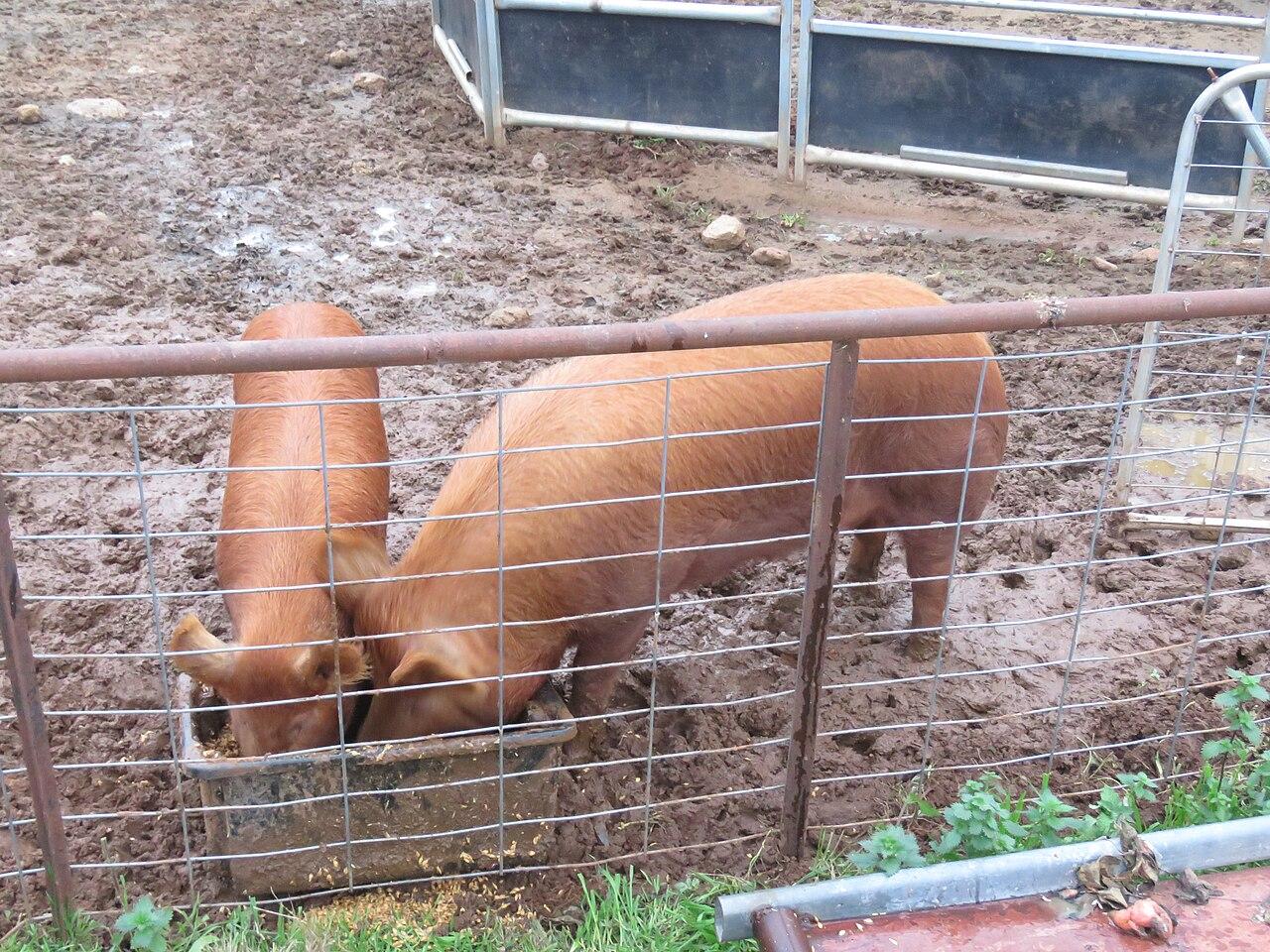
The morning begins the same way on the chalky edge of Hampshire as it has for years now: not with machinery, but with pigs. Ginger-red Tamworths — one of Britain's oldest and rarest breeds — push out across wet pasture, noses down, turning the ground the slow way. The man watching them grew up more than four thousand miles from here, in Kilifi and Kericho, and spent his first fifteen years assuming his life would be Kenyan. On Wednesday, Mwakilishi published a profile of that man, Flavian Obiero, and the 61-acre farm he now runs with his partner Nikki and their son Noah — a story that says as much about the quiet, unglamorous middle of diaspora life as any visa headline this week.
From Kilifi to a Hampshire Gap Year
Obiero was born in Mombasa and raised in Kilifi and Kericho before moving to the United Kingdom as a teenager, joining a father who had settled there ahead of the rest of the family. The plan, as he has told interviewers over the years, was respectable and familiar to any Kenyan household: veterinary medicine, a university degree, a title. What derailed it was a short work placement on a Hampshire pig farm. The farm offered him a job, he left his part-time hospital work, and the gap year became a vocation.
That swerve matters because of what it was not. It was not the story Kenyan families abroad usually tell about success, which tends to run through medicine, engineering, finance or law. British agriculture, moreover, is one of the least diverse industries in the country — an industry where land is overwhelmingly inherited and where a Black teenager from Kilifi with no farming background had no obvious way in. Obiero got in anyway, through the tenant-farming system: he now farms as a Hampshire County Farms tenant, one of the few remaining routes into agriculture for people who do not stand to inherit a single acre.
Sixty-One Acres, Built the Slow Way
The farm Obiero runs today is deliberately old-fashioned in some ways and deliberately modern in others. The Tamworths live outdoors and forage on pasture, alongside sheep and goats, in a mixed system built around animal welfare and soil health rather than volume. According to Mwakilishi's profile, the pasture-based approach reduces the farm's dependence on machinery and bought-in feed, improves the soil, and cushions the business against the cost shocks that have battered intensive pig production — feed and energy prices, disease outbreaks, supply chain failures.
The economics are stitched together the way small farms increasingly must be. There is direct retail of premium pork to local customers. There is an on-farm catering arm — Obiero has long run a spit-roast business serving weddings and festivals — that captures value a wholesale price never would. And there is the audience: posting as the Kenyan Pig Farmer, Obiero has built a following of thousands by showing the unfiltered daily work of breeding, farrowing and pasture management. In an era when most Britons have never met a farmer, and when most Kenyans abroad have never met one who looks like them, that visibility is itself an asset.
The Only Face Like His at the Market
Obiero's public profile has never been only about pork. He has spoken repeatedly — in Farmers Weekly, on industry platforms, and from the stage of the Groundswell regenerative agriculture festival — about the casual racism he has encountered in British farming and about the industry's failure to attract people from non-farming and minority backgrounds. He is routinely described as one of the UK's most visible Black pig farmers, a phrase that is both a compliment and an indictment: the category is small enough that one Hampshire tenant can be its public face.
His argument, made patiently across years of interviews, is that agriculture should be understood as a skilled, technical, innovative profession — a career someone from Kilifi, or Croydon, might choose rather than fall back on. For the Kenyan diaspora in Britain, concentrated in cities, health care and professional services, it is a genuinely unusual proposition: that the countryside, the most closed-seeming part of British life, might be a place to build something.
The Lessons Now Travelling Back to Kenya
The detail in this week's profile with the longest reach, though, points the other way — home. In 2026, according to Mwakilishi, Obiero partnered with a Kenyan agri-tech platform to deliver online training and practical demonstrations for pig farmers in developing markets, advising on breeding, feeding and pasture management, with a focus on cutting dependence on expensive imported inputs.
That is a textbook case of what economists call knowledge remittances — the skills, standards and networks that flow back alongside the money. Kenya's pig sector is small but growing, feeding demand from Nairobi's supermarkets and fast-food chains, and its smallholders face precisely the input-cost squeeze Obiero's pasture system is designed to escape. A farmer who learned his trade in Hampshire teaching foraging-based husbandry to farmers in Kiambu, over a phone screen, is the diaspora doing quietly what remittance statistics can never capture.
Pork remains the world's most widely eaten meat, accounting for more than a third of global meat consumption, and demand in East Africa is rising with urban incomes. The market Obiero is helping Kenyan farmers reach, in other words, is not a niche. It is the same one he serves in Hampshire, at a different point on its curve.
What One Farm Says About the Second Act Abroad
It has been a bruising week of diaspora news: visa fees rising in Australia and Japan, evacuation flights out of South Africa, students weighing whether Britain still wants them. Against that backdrop, a profile of a pig farmer might read as light relief. It is closer to the opposite. Obiero's story is what the second act of migration looks like when it works — not the arrival, but the twenty years after it, the slow accumulation of a tenancy, a herd, a family, a reputation, and finally the confidence to send the knowledge home.
None of it was the plan he carried from Kilifi. The vet degree never happened. What happened instead was sixty-one acres of Hampshire chalk, a rare-breed herd, and a teenage placement that became a life — proof, delivered one foraging pig at a time, that the diaspora's most durable successes are often the ones nobody back home would have thought to dream of.