The Gate at Wamunyoro: How Gachagua's Meeting With Wanjigi Sharpens the 2027 Question for Kenyans Abroad
Jimi Wanjigi is the latest visitor to Rigathi Gachagua's farmhouse consultations — and each handshake pulls Kenya's diaspora deeper into the arithmetic of a single opposition ticket.
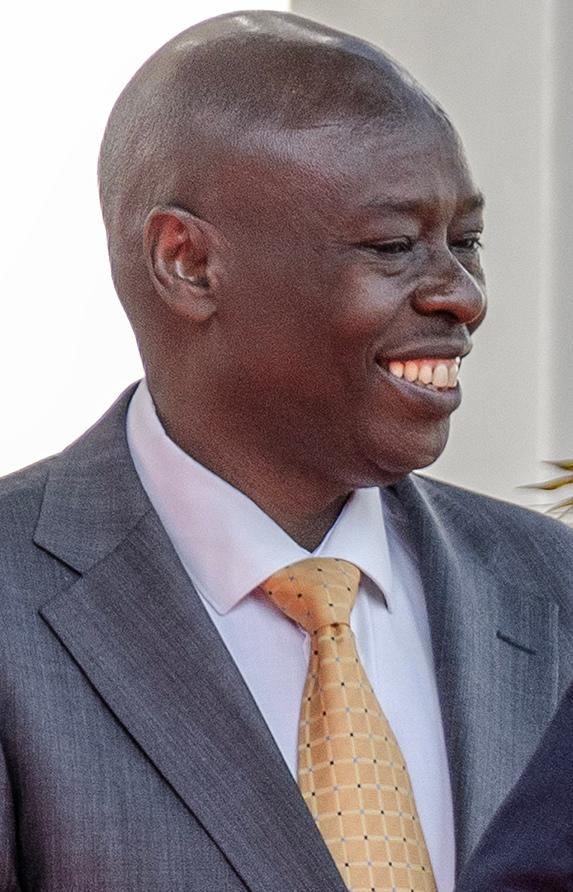
The driveway at Wamunyoro has become one of the most watched stretches of ground in Kenyan politics. Since Rigathi Gachagua suspended his public rallies in June and announced forty-five days of structured consultations at his rural residence, the country has learned to read the guest list the way it once read campaign posters. On Wednesday, the gate opened for Jimi Wanjigi — businessman, Safina Party leader, and one of the most persistent critics of President William Ruto's administration.
For the thousands of Kenyans scattered from Dallas to Doha who follow home politics on their phones between shifts, the image of the two men seated together carried a familiar charge. Another consultation. Another photograph. Another step, perhaps, toward the one thing the opposition has promised and never quite delivered: a single candidate to face the president in 2027.
A Meeting Announced in Careful Language
Neither man described Wednesday's meeting as a deal. Both described it as something that could become one. Gachagua said he was "pleased to have held consultations with businessman Jimi Wanjigi who called on me at the Wamunyoro residence," and framed the discussion around what he has taken to calling the country's liberation agenda. "The liberation cause of our country and the formation of the 6th Administration is so critical that we must get views from all," he said in a statement reported by Capital FM and Mwakilishi.
Wanjigi, for his part, said the talks put the country's interests ahead of party lines. "The liberation of Kenya demands that we all discuss ideas that put Kenya first," he said, adding that Kenya must pursue both political and economic freedom. "We must ensure Kenya becomes a sovereign state and economically liberated. It is good for kinsmen to gather. There is hope for Kenya."
Gachagua said he had benefited from Wanjigi's "insights and experience in formation of governments" — a nod to the businessman's long history as a behind-the-scenes operator in Kenyan coalition-building before he became a presidential aspirant in his own right.
The Farmhouse That Replaced the Rally
The meeting is best understood as one bead on a lengthening string. After the High Court upheld his impeachment, Gachagua announced that he would step back from the podium and spend forty-five days receiving leaders at Wamunyoro instead. He says the shift was recommended by a sixty-member advisory caucus of elders, professionals, clergy and young people, which concluded that targeted negotiation would serve the opposition better than crowds and slogans.
The caucus, by Gachagua's own account, has set him a single overriding assignment: build consensus around one opposition presidential candidate to face President Ruto in 2027. In recent days the compound has hosted a steady procession of political figures, and local reporting has linked the consultations to everything from by-election strategy in Ol Kalou to overtures aimed at former president Uhuru Kenyatta. Wednesday's guest simply had a higher profile than most.
The One-Candidate Problem
Kenya's opposition has been here before, and the diaspora remembers. Unity pacts have a way of holding right up until the moment nominations open, when the question shifts from whether to unite to behind whom. Wanjigi himself sought the presidency in 2022. Gachagua leads his own party and commands a base in the Mt Kenya region. Other visitors to Wamunyoro harbour ambitions of their own.
That is what makes the current round of consultations genuinely consequential rather than merely ceremonial. If the advisory caucus's assignment holds — one candidate, agreed early, backed by all — the 2027 race becomes a contest. If it collapses into the familiar scramble of separate tickets, the incumbent's path clears considerably. Every handshake at the farmhouse is being weighed against that binary, and both men on Wednesday seemed aware of it, talking less about themselves than about a process bigger than either.
Why Kenyans Abroad Are Counting Chairs
The diaspora's interest in this is not sentimental. Kenyans abroad send home more foreign exchange than any single export earns, and they have watched successive governments court their money while their political voice remains slight. In the 2022 general election, only just over ten thousand diaspora voters were registered across a dozen countries — a rounding error against the millions of Kenyans estimated to live outside the country's borders.
That gap is why every serious presidential campaign now includes a diaspora pitch, and why the question of who carries the opposition flag matters in Minneapolis and Manchester as much as in Nyeri. Diaspora professional associations, church networks and county welfare groups have become fundraising and messaging channels that campaigns cannot ignore. Whoever emerges from the Wamunyoro process will inherit not just a coalition of parties but a claim on those networks — and the burden of promising, once again, that diaspora registration and polling will be expanded before 2027.
The Distance Between a Handshake and a Ticket
What Wednesday did not produce is worth stating plainly. There was no joint declaration, no coalition agreement, no candidate. There was a conversation between two men who agree that President Ruto should be a one-term president and have not yet agreed on much else in public. Gachagua's own summary ended not with a pledge but with a benediction: "Consultations continue. God bless Kenya."
For now, the diaspora watches the gate. The forty-five days of consultations are still running, the guest list is still growing, and the only measurable output so far is momentum — which, in Kenyan opposition politics, has historically been the easiest thing to gain and the hardest to keep. The test will come when the talking stops and a name has to be written at the top of a ticket. Until then, Wamunyoro remains what it became this June: a farmhouse where the next administration is being imagined, one visitor at a time, in full view of a nation and its far-flung children who have learned to hope carefully.