The Memo That Almost Sent Them Home: How a USCIS Climbdown Buys Time for Kenyan H-1B Holders Eyeing the Green Card
A Sunday email from the agency softened a startling May 21 memo, easing the panic in tech offices from Seattle to Atlanta — for now.
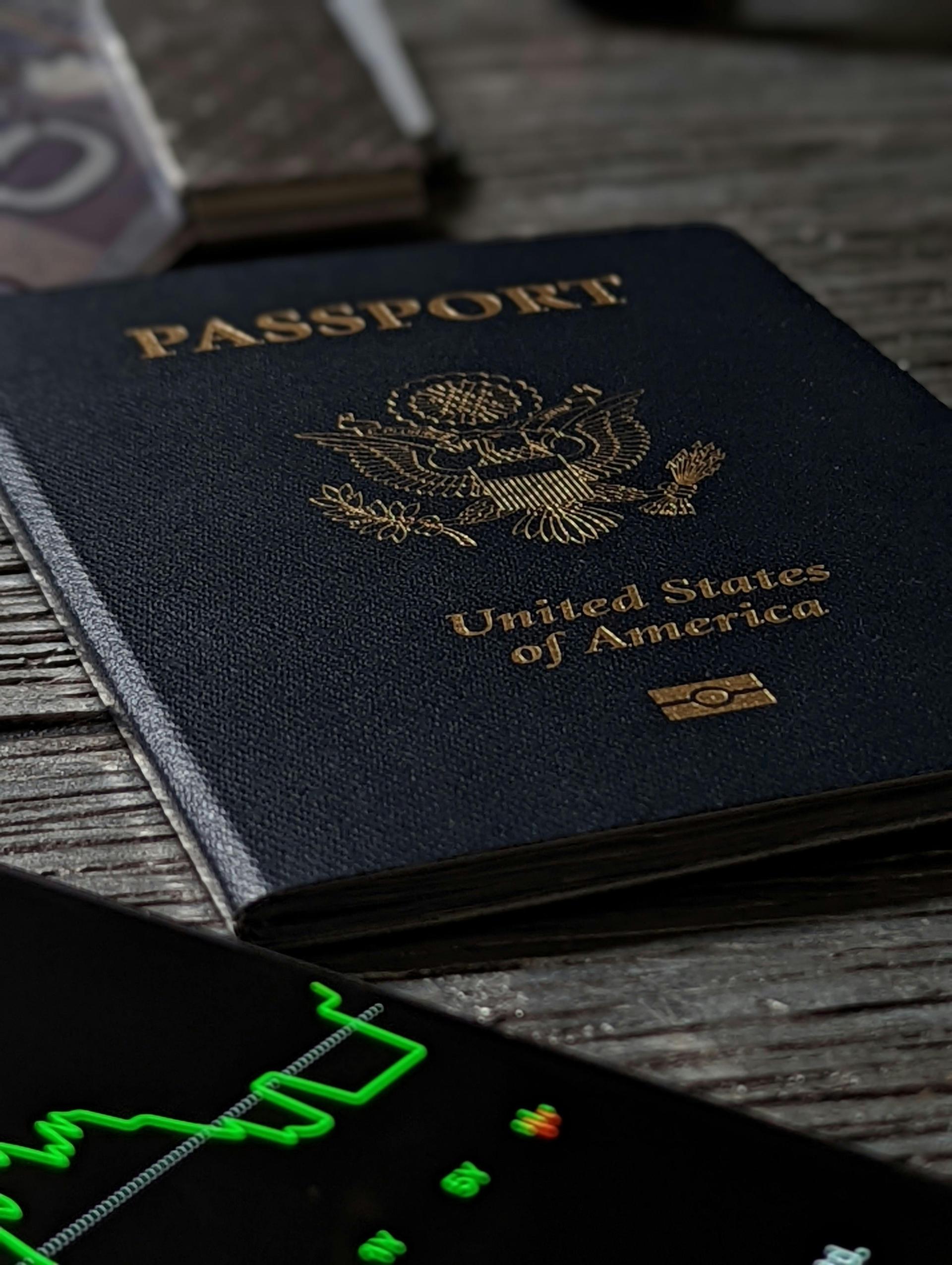
By Sunday evening, the messages were already moving through Bellevue and Bothell, the two small Washington-state cities where dozens of Kenyan-born software engineers cluster around Microsoft and Amazon. A Nairobi-born project manager who had spent the previous Thursday quietly rereading her I-485 receipt notice forwarded an email to her cousin in Atlanta. "It looks like they walked it back, at least for us," she wrote. She had not slept well since the news broke.
The "it" was a four-page policy memorandum that the United States Citizenship and Immigration Services had issued on May 21, recasting Adjustment of Status — the process that lets foreigners already inside the country apply for a green card without leaving — as a "discretionary and extraordinary measure." For Kenyan H-1B workers in Seattle, Charlotte, Dallas and the Maryland-Virginia corridor, the memo read like an instruction to start packing. By Sunday, an email from a USCIS spokesman to a major American newsweekly had begun to soften that impression, though almost nothing had been settled in writing.
A memo that landed on a Thursday afternoon
The May 21 memorandum redefined long-standing immigration practice in a single phrase. Congress, USCIS argued, had never intended Adjustment of Status to function as a default path for foreign nationals already in the country on temporary visas; the default, the agency wrote, was consular processing — flying home, sitting through an interview at the local embassy, and waiting for a stamp. Domestic adjustment was to be reserved, the memo said, for exceptional cases.
The categories named were the ones the Kenyan professional diaspora has come to rely on the most. Students on F-1 visas. Skilled workers on H-1B visas. L-1 intra-company transferees moved by Safaricom, Equity Group, KPMG and the African subsidiaries of multinationals. Tourists. Each, the memo said, had been issued temporary status, and a temporary visa should not become a quiet on-ramp to permanence.
For a community that has spent the last decade pushing children into US engineering and nursing programs, then watching those graduates transition through Optional Practical Training into H-1B sponsorship, the memo arrived as a small earthquake. WhatsApp groups in the Kenyan diaspora — the kind that normally trade tips on Tax Day, school enrollment and end-of-year tickets to Nairobi — turned overnight into discussions of consular wait times in Nairobi and Kigali.
The Sunday email that took the edge off
Three days later, Zach Kahler, a USCIS spokesman, sent a statement to Newsweek that took several pieces of the memo's hardest edge off. The agency, Kahler said, was "reasserting" what it considered Congress's original intent. Applicants whose cases could be shown to deliver an economic benefit, or whose work was deemed to serve the national interest, were "likely to continue" through the existing Adjustment of Status process. Others, he said, "may be asked to apply abroad depending on individualized circumstances."
The Department of Homeland Security followed with a brief line of its own — highly skilled workers, including H-1B visa holders, "are not expected to face immediate changes." Neither statement amounted to a formal rescission. Neither answered the question that Kenyan parents were asking each other on FaceTime over the weekend: when my daughter's I-140 is approved next year, will she still be able to file her I-485 from inside the United States?
The technical concession buried inside the Sunday statements is that USCIS continues to recognise the dual-intent exemptions written into the H-1B and L-1 statutes. Dual intent — the legal principle that an H-1B holder can simultaneously work on a temporary visa and pursue a permanent one — was put into law for a reason. Removing it by memo, as several immigration lawyers noted to American outlets including CBS 8 and the legal newsletter of Tafapolsky & Smith, would invite immediate court challenges. The Sunday email appears to acknowledge this.
What the H-1B route actually looks like for a Kenyan engineer
The pathway being argued over is not abstract. An H-1B visa allows an initial stay of three years, extendable to six. After that, an extension is possible only if the worker's employer has filed a Form I-140 immigrant petition under one of the EB-1, EB-2 or EB-3 employment-based categories. Once that petition is approved and a visa number becomes available, the worker files Form I-485 — the Adjustment of Status application — and waits, often for many months, to be summoned for biometrics and an interview at a local USCIS office.
For Kenyan H-1B workers, who fall under the rest-of-world allocation rather than the heavily backlogged Indian or Chinese categories, the wait has historically been manageable. Many Kenyan engineers in tech and many Kenyan registered nurses in the Mid-Atlantic and Texas hospital systems have moved from H-1B to green card without ever leaving the country. If the May 21 memo were applied literally, that route would narrow sharply, and a class of workers who had bought houses on the assumption of green card adjudication in two or three years would suddenly be asked to plan around a flight back to Nairobi.
Why the silence from the agency still matters
What worries immigration attorneys is not the Sunday email but everything that has not been said. USCIS has yet to publish detailed implementation guidance for the May memo. The agency has not defined what it means by "economic benefit" or "national interest" in this context. Field officers, who exercise enormous discretion in adjudicating Adjustment of Status cases, have not been told publicly how to weigh those terms against the new presumption that consular processing is the default.
In practice, that means a Kenyan biomedical engineer in Boston and a Kenyan caregiver in Phoenix could file identical paperwork through different USCIS service centres and receive opposite outcomes. Until the agency publishes guidance — and until that guidance is tested against the dual-intent provisions of the Immigration and Nationality Act — every adjudication carries new uncertainty.
This uncertainty arrives at a moment when Kenyan H-1B holders are already navigating a wider tightening. Recent weeks have produced rolling changes to in-country green card processing, a denaturalization push aimed at certain naturalized citizens, and a temporary travel restriction on green card holders returning from a handful of African countries tied to disease-outbreak concerns. The May 21 memo, even partially softened by Sunday, fits into a pattern that the diaspora has begun to read as systemic rather than episodic.
Practical advice circulating in the diaspora this weekend
In the absence of clear federal guidance, Kenyan immigration attorneys in the United States have begun to converge on three practical pieces of advice for H-1B clients. File pending I-485 applications as soon as a visa number is current rather than waiting for the priority date to comfortably mature. Document every aspect of an "economic benefit" or "national interest" case — salary, specialized skills, role in critical infrastructure, contributions to American patents or hospital staffing shortages. And avoid international travel until USCIS issues implementation guidance, because any consular interview triggered by re-entry could now be a different conversation than it would have been a month ago.
For families, the advice is more emotional than legal. The community that built a quiet bridge from Nairobi's Strathmore and JKUAT campuses to Seattle's tech corridor over twenty years is being asked, again, to plan around an agency that has not finished writing the rules. The Sunday email from USCIS bought time. It did not buy the certainty that Kenyan workers — and the American employers who depend on them — will need before this story ends.