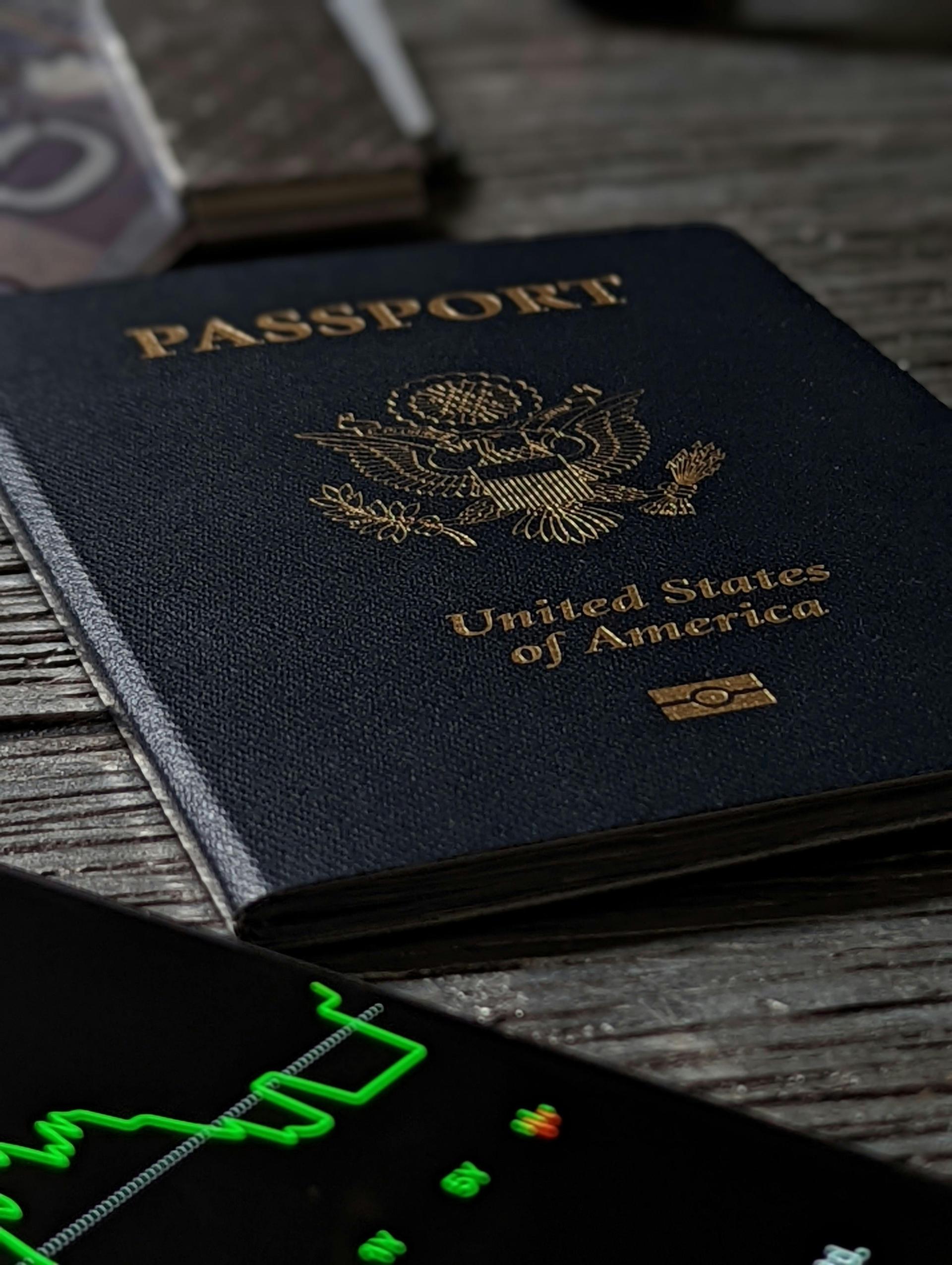
The Plane Ticket Hidden in a Memo: How a May 21 USCIS Rule Sends Kenyan Students in America Back to Nairobi for Their Green Cards
A quiet USCIS memo has redrawn the path from F-1 to permanent residence — and Kenyan students from Houston to Boston now ask whether the green card still waits in America, or back at the Nairobi embassy.

The memo that may have ended the longest-running shortcut in Kenyan student immigration is only a few pages long. It does not name a country. It does not single out a school. But on Thursday morning in a small one-bedroom near the University of Houston, a 26-year-old electrical engineering graduate from Eldoret read it twice and then opened a fresh browser tab to check the cost of a one-way KQ ticket back to Nairobi.
She is one of an estimated six thousand Kenyan F-1 visa holders studying in the United States this year, a population that has spent the past decade quietly building a pipeline from Kenyatta Avenue to Cambridge, from Strathmore to Stanford, from JKUAT to Johns Hopkins. The pipeline always ended the same way: a degree, then a year of Optional Practical Training, then an employer petition, then — for the lucky ones — an Adjustment of Status filing that turned a student into a permanent resident without ever leaving the country.
On May 21, US Citizenship and Immigration Services published a policy memorandum that, in the language of immigration lawyers across three continents this week, "rewrote the default." The memo did not change the underlying statute. What it changed was the agency's posture. Adjustment of Status, the in-country green card pathway most Kenyan students used, is now to be treated as "extraordinary relief," a discretionary favour granted only in unusual circumstances. The standard route, USCIS now says, runs through consulates abroad.
For a Kenyan student in Texas, Maryland or Minnesota, that consulate is at United Nations Avenue in Nairobi.
What the memo actually says
The new guidance instructs USCIS adjudicators to view I-485 applications — the form that for decades has converted student and worker visas into green cards from inside the United States — as a discretionary grace rather than a routine option. Consular processing through the State Department in the applicant's home country is now described in the memo as the standard pathway. Officers are directed to apply heightened scrutiny, issue more Requests for Evidence, and ask interviewees to explain why their case warrants in-country handling at all.
USCIS framed the shift as a matter of resource allocation and statutory intent, noting that nonimmigrant visas are designed for temporary stays and that the system was never built to function as a runway to permanent residence. The agency emphasised that the policy took effect immediately and may be applied to pending applications as well as new ones, meaning that a Kenyan student who filed an I-485 in March can still be told, in June, that her case should have gone through Nairobi.
Why this lands harder on F-1 students than on H-1B workers
Immigration lawyers writing this week pointed to a technical detail that makes the memo bite harder for students than for tech workers. The H-1B visa permits "dual intent," meaning its holders can openly plan for permanent residence without violating the terms of their stay. The F-1 visa does not. Students have always been expected, on paper, to leave when their studies end.
For years, the gap between paper and practice was bridged by the OPT-to-employer-sponsorship-to-AOS chain. A Kenyan student graduated, worked for twelve months on OPT, found a company willing to sponsor an H-1B or EB-3, and filed for adjustment of status while continuing to live in Phoenix or Philadelphia. The memo does not abolish that chain. It re-routes its final link through a consulate that is, for most Kenyans, eight thousand miles and one Atlantic away.
The Nairobi calculation
Nairobi's US embassy is not a small operation. It processes tens of thousands of nonimmigrant visa interviews a year, runs one of the busiest American Citizen Services counters in East Africa, and is one of only a handful of African consulates equipped to handle immigrant visa packets at scale. But it is also a building with finite interview slots, and the immigrant visa unit in particular has historically been slower than the nonimmigrant side.
A Kenyan student who must now exit the United States to receive a green card faces a different kind of cost stack. There is the flight, often booked at short notice once the National Visa Center signals an interview. There is the time away from a US-based job that may not survive a multi-month absence. There is the risk that the consular officer, applying the heightened scrutiny the memo encourages, finds something in the file that triggers a delay or a refusal. And there is the quiet anxiety that has always hovered over a Nairobi visa interview: the possibility, however small, of being told that the door does not open this time.
Immigration counsel are already warning clients that the memo will likely lengthen the practical green card timeline by months. Several firms have begun advising Kenyan F-1 graduates with strong employer sponsorship to consider whether they have a viable argument for the "extraordinary circumstances" exception that USCIS has retained, rather than betting on a smooth consular trip.
The community already watching this play out
In WhatsApp groups that connect Kenyan students from the University of Texas to Northeastern, the memo became the dominant conversation within forty-eight hours of its release. Students who had filed I-485 packets in the past six months traded screenshots of their case numbers. Older alumni who had walked the adjustment pathway in 2018 or 2021 offered reassurance and lawyers' contacts. A handful of graduates with pending consular cases in Nairobi said they had received friendly emails from the embassy this week asking them to confirm interview dates — a small detail that, in the new climate, suddenly mattered.
For Kenya's diaspora affairs office, which has spent the past year courting the Kenyan-American professional class as a remittance and investment pipeline, the memo introduces a new variable. A consular pathway means students physically returning to Kenya, even if briefly. Some will use the visit to register property or quietly explore whether the green card is still worth the wait. Others will simply pack and fly back.
What the memo does not change
It is important to be precise about what the memo leaves alone. The employment-based categories — EB-1, EB-2, EB-3 — remain intact. Employer sponsorship is still the central engine of the green card system for Kenyan professionals. The Diversity Visa lottery, a separate Kenyan obsession for two decades, is governed by other legislation and is not touched by this memorandum.
The memo also retains the legal possibility of in-country adjustment in "extraordinary circumstances." Lawyers are still mapping what that phrase will mean in practice. Early indications from the first round of agency briefings suggest national interest cases, medical emergencies, and certain family-unity arguments may qualify. The vast majority of routine F-1-to-EB-3 transitions, however, are expected to fall outside that bracket.
A familiar shape
For the diaspora reading immigration headlines weekly since April — the Diversity Visa bill, the May 24 pause on green card holders from several African nations, the H-2B cap reached in record time — the May 21 memo fits a familiar shape. It is not a wall. It is a procedural redirection that adds cost, time and uncertainty to a pathway that used to be straightforward.
The Kenyan student in Houston closed her browser tab without booking the ticket. Her employer's lawyer had asked her to wait a week, to see whether USCIS would publish supplementary guidance softening the "extraordinary" language. By Friday afternoon, no such guidance had appeared. The phone in her hand carried two messages: one from her mother in Eldoret saying the rains had been good, and one from a senior Kenyan engineer in Dallas, who had walked this same pathway in 2019, with three words and an emoji.
"Bring patience. Sasa."