The Card You Cannot Board Without: What Every Green-Card Kenyan Should Know Before Flying Home
A lost wallet in Nairobi or a holiday that ran a few months too long can strand a lawful permanent resident an ocean away from the American life they built. The rules are unforgiving, but they are navigable.
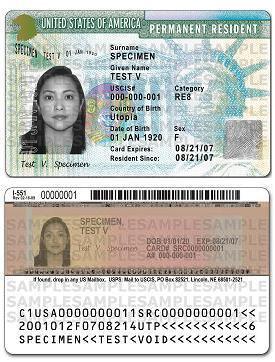
Picture a Kenyan nurse who flew out of Maryland in March for a funeral in Murang'a, certain she would be back at her ward within three weeks. Then came a sick parent who could not be left, a probate hearing that kept being pushed, a cousin's wedding she could not miss. The weeks folded into months. Now it is June, her green card is sitting in a drawer back in Baltimore, and the check-in agent at Jomo Kenyatta International Airport is shaking her head. The woman has lived lawfully in the United States for a decade. Tonight, without that small plastic card, she cannot board the plane that would take her home.
It is one of the quietest anxieties in the Kenyan diaspora, and one of the least discussed at the kitchen table: the gap between holding permanent residence in America and being allowed to travel back to it. A green card confers the right to live and work in the United States indefinitely. It does not, on its own, guarantee a smooth return at the airport. That distinction has become sharper in 2026, as lawful permanent residents report heavier questioning at ports of entry and, in some cases, denial of admission after long stretches abroad.
A Status That Travels With Conditions
Permanent residence is not a passport. The card most people call a green card is formally Form I-551, and U.S. Customs and Border Protection treats it as evidence of status rather than an unconditional ticket. For trips of less than twelve months, a valid card is generally enough to re-enter, and immigration specialists are blunt about the first rule: carry the physical document at all times when you travel. A photograph of it on a phone, or a card left at home for safekeeping, is not the same thing in the eyes of an airline or a border officer.
The reason is practical. Airlines bound for the United States can be fined for carrying passengers who lack proper documentation, so the clerk at the counter has every incentive to refuse boarding when the paperwork is incomplete. The decision that strands a traveller is frequently made not by a U.S. official at all, but by a private carrier an ocean away from American soil.
When the Card Is Lost, Stolen or Left Behind
For the resident whose card is gone — lifted from a bag in Nairobi traffic, lost in a house move, or simply forgotten in another country — the route home runs through a document called a transportation boarding foil. It is obtained by filing Form I-131A, the Application for Carrier Documentation, with the nearest U.S. embassy or consulate.
The requirements are specific. Applicants pay the fee online before filing, and the name, date of birth and A-Number entered during that payment must be correct, because they print directly onto the foil. They must present a valid passport and evidence of permanent resident status, such as a copy of the green card or an I-551 stamp, along with passport-style photographs and, where a card was stolen, a police report. If the application is approved, the foil is placed inside the traveller's passport. It is valid for a single use within thirty days, long enough to board one flight and present oneself for inspection at a U.S. port of entry.
There is an important caveat that can save time and money. A resident with a ten-year card that has merely expired, who has been outside the country for less than a year, may be allowed to board without filing anything, under CBP's standing policy. But airlines do not always honour that allowance, and a traveller can be refused at the gate even when technically eligible. The safe move is to confirm with the carrier first; if there is any doubt, file the I-131A rather than gamble on a same-day departure.
The One-Year Line
The hardest cases involve absence, not paperwork. Once a permanent resident has been outside the United States for more than a year, the green card alone stops working as a re-entry document, and the question shifts from "where is your card" to "did you abandon your residence." That is a far more dangerous conversation to have at a border.
The instrument designed to prevent it is the re-entry permit, which a resident is meant to obtain before leaving for an extended stay. The permit is typically valid for up to two years and signals that the holder intended to keep their American home while away. Without it, a returning resident who has been gone a long time may face pointed questions about jobs, homes, tax filings and family ties — and about whether, in law, they have quietly given up the status they are trying to use. Permanent residency, immigration practitioners warn, can be eroded by procedural lapses as surely as by any formal revocation.
Why This Lands Hard on Kenyans
The Kenyan diaspora is unusually mobile between two homes. Families maintain land and aging parents in Kiambu or Kisumu while building careers in Dallas, Atlanta and Boston. Funerals, weddings, harambees and the slow business of estates routinely pull people back for stays that stretch well past what they planned. Each of those open-ended trips brushes against the very rules that turn a green card from a guarantee into a conditional document.
The climate makes the margin for error thinner. Diaspora reports through 2026 describe sharper scrutiny of returning residents and tighter enforcement generally, the kind of environment in which a forgotten card or an overlong absence is more likely to become a crisis than a footnote. For a community that prides itself on showing up — at the burial, at the bedside, at the wedding — the lesson is uncomfortable but concrete.
The Practical Takeaways
The advice that emerges is unglamorous and worth repeating to every relative planning a trip. Travel with the physical card, every time. If a stay abroad might cross the one-year line, apply for a re-entry permit before leaving, not after. If a card is lost or stolen overseas, go to the nearest U.S. consulate and file Form I-131A for a boarding foil rather than improvising at the airline counter, and build in the days a consulate needs to issue it. And once back on American soil, replace the lost or expired card promptly, because the boarding foil only gets a traveller through the door — it does not restore the document itself.
None of this is new law. What has changed is the cost of forgetting it. For the nurse stuck in Nairobi, and for the thousands of Kenyans who move between two countries every year, the difference between a smooth journey home and a stranded one increasingly comes down to a few small pieces of paper, carried — or not carried — in a passport.