The Notice That Grounded a Region: How Israel's Ebola Travel Ban Reached Kenya's Departure Gates
A one-page directive to airlines, dated June 10, now bars travellers from Kenya and four neighbours from boarding flights to Israel — the latest door to quietly close on African mobility.
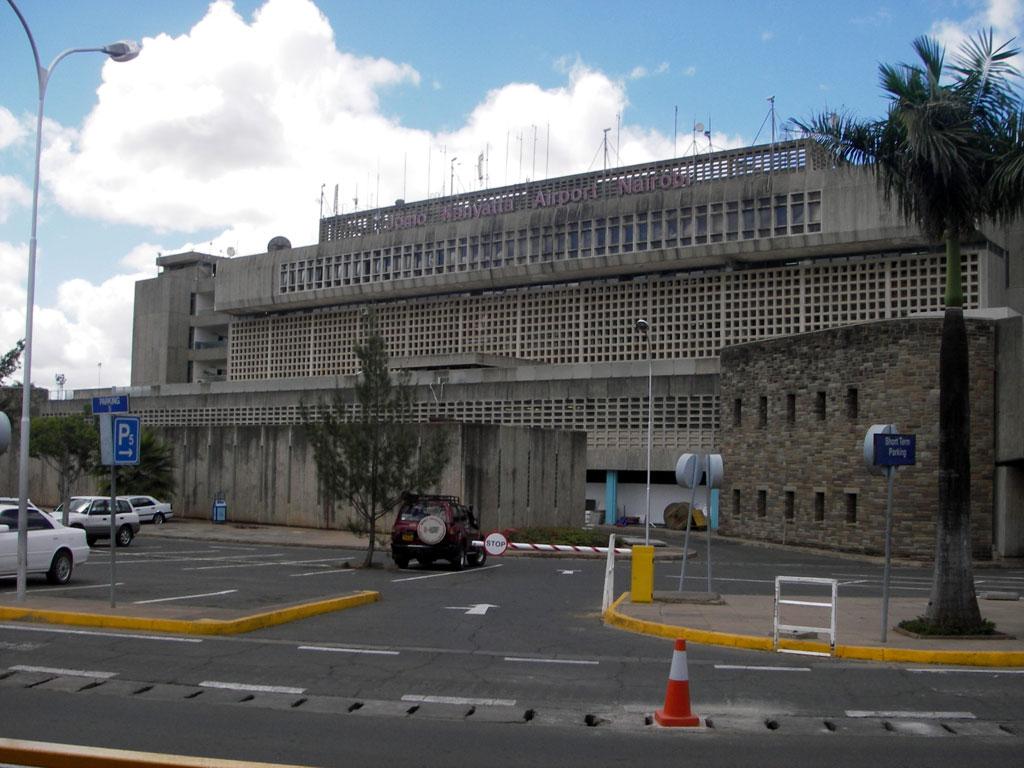
The queue at the late-evening check-in desk inside Jomo Kenyatta International Airport moves the way it always does on a weekend night: slowly, patiently, a procession of suitcases wrapped in cling film and hand luggage stuffed with farewells. For the travellers booked toward Tel Aviv, the routine of the past few years has been familiar — a visa stamped, a seat confirmed, a long flight north to jobs, classrooms, pilgrimages and family. This week, some of them learned that none of that paperwork mattered. A single page, circulated to airlines days earlier, had quietly rewritten the rules of who gets to board.
The page came from Israel's Border Control Department. Dated June 10, 2026, it instructed carriers to stop boarding foreign passengers travelling from, or recently through, five African countries — Kenya, Uganda, Rwanda, South Sudan and the Democratic Republic of the Congo. The trigger was the Ebola outbreak spreading through Central and East Africa. For the Kenyan diaspora that shuttles between Nairobi and the Middle East, it was the moment an epidemiological crisis several borders away turned into a locked gate.
A One-Page Notice With a Long Reach
The directive is short, and its language is blunt. "Following the outbreak of the Ebola virus, effective from the receipt of this notice, you are prohibited from boarding foreign passengers who meet the criteria specified below on flights bound for Israel," it tells airlines, according to the text reported by Kenyan outlets. Carriers were ordered to screen travellers before departure and verify whether they had stayed in, or passed through, any of the listed countries within the previous 21 days.
That 21-day window is what gives the notice its long reach. It does not only catch a Kenyan flying directly from Nairobi. It catches a Nigerian consultant who spent a fortnight in Kampala, a European researcher returning from Goma, a businesswoman whose itinerary happened to route through Kigali. Anyone, of any nationality, who has touched the affected region within three weeks can be turned away at the gate.
There is one explicit exemption. "For the avoidance of doubt, this directive does not apply to Israeli citizens or Israeli residents," the department wrote. The carve-out is standard in public-health border measures, but it sharpens the asymmetry that diaspora travellers feel most keenly: the same flight that carries an Israeli passport-holder home will refuse the Kenyan seated beside them.
Why Israel Says It Acted
Israel's stated reasoning rests on prevention rather than any domestic emergency. Health officials in Tel Aviv have acknowledged there are no known Ebola cases inside the country and that the overall public risk remains low. The Ministry of Health's epidemiology division, in a statement also dated June 10, said it was monitoring the situation closely and holding regular professional assessments, and that the entry restrictions followed a formal risk evaluation intended to reduce the chance of importing the disease.
The backdrop is real and grim. The current outbreak, centred on the DRC's Ituri Province and now reaching into Uganda, has killed well over a hundred people by mid-June, according to tallies carried in Kenyan media. Kenya itself has not recorded a confirmed case, but it sits on the busiest air corridor in the region, and its Health Ministry has been visibly preparing — among other steps, observing a rapid-response training programme for an Ebola response team in Nairobi the same week the Israeli notice went out. For Israel's planners, geography and traffic, not Kenya's own case count, appear to be the deciding factors.
The Diaspora Caught in the Middle
It is the people in transit who absorb the cost of a measure like this. Kenya has built a steady, if quiet, human bridge to Israel over the past decade: caregivers and home-health workers recruited through labour programmes, agricultural trainees on fixed-term placements, students, and pilgrims drawn to the holy sites. Add the wider East African presence and the broader African diaspora that uses Nairobi as a hub, and the notice's footprint widens well beyond one nationality.
For those already abroad, the immediate anxiety is less about getting in than about the uncertainty of getting back out and returning — about contracts that assume free movement, family emergencies that cannot wait three weeks, and travel plans built months in advance and now suspended in the air. The directive offers no end date. Israel has said only that the measures will be reviewed in line with how the outbreak develops, which leaves affected travellers planning around a calendar nobody controls.
There is also the blunt financial reality. A denied boarding is not a refunded ticket. It is a missed shift, a forfeited deposit, a rebooking fee, and sometimes a visa appointment that took months to secure. Those costs fall on individuals and households, many of whom are the remitting backbone of families back home.
A Pattern, Not an Exception
What makes the Israeli notice resonate is that it does not stand alone. In recent weeks the United States issued a travel advisory tied to the region, and the United Arab Emirates — a far larger destination for Kenyan and East African workers — introduced its own enhanced monitoring and entry measures. Several governments have tightened screening at once, and the cumulative effect is a thickening wall around travellers from a defined slice of the map.
For diaspora communities, the experience is wearily familiar. Outbreak-driven travel bans tend to be drawn around nationality and itinerary rather than individual risk, sweeping up the healthy and the exposed alike. They are easy to announce, slow to lift, and disproportionately felt by people whose lives already straddle two countries. The 2014 West Africa Ebola epidemic produced the same pattern of blanket restrictions, many of which the World Health Organization later argued went beyond what the science justified.
Nairobi and Kampala Weigh Their Response
The reaction across the region has not been silent. Ugandan officials have pushed back on what Kampala has framed as unfair restrictions, arguing that the bans risk punishing the very countries that are cooperating most transparently with global health systems — and that penalising openness can discourage the early reporting outbreaks depend on. That argument echoes a long-standing complaint from African governments and the WHO: that movement curbs imposed faster than evidence warrants tend to stigmatise without containing.
For Kenya, the diplomatic calculation is delicate. Nairobi maintains warm ties with Israel and a growing labour relationship with the Gulf, and it has an interest in keeping those mobility channels open for its citizens. The likeliest path is quiet engagement — pressing for the measures to be narrowed or lifted as soon as the epidemiological picture allows, rather than a public confrontation.
In the meantime, the advice for travellers is practical and unglamorous. Anyone booked toward Israel, or routing through it, should confirm their status directly with their airline before heading to the airport, keep documentation of recent travel history close, and watch for official updates from both the carriers and Kenya's foreign affairs ministry. The notice can be reversed as quickly as it was issued. Until it is, the safest assumption at the check-in desk is that the one-page directive, not the visa in the passport, is the document that decides.