From Social Work to a Sworn Oath: How Kenyan-Born Idris Maloba Became Ottawa's Quiet Bridge to Its Newcomers
A Kenyan immigrant who once counselled troubled teenagers now wears the Ottawa Police uniform. A national equity award marks how he rebuilt trust between officers and the city's diaspora.
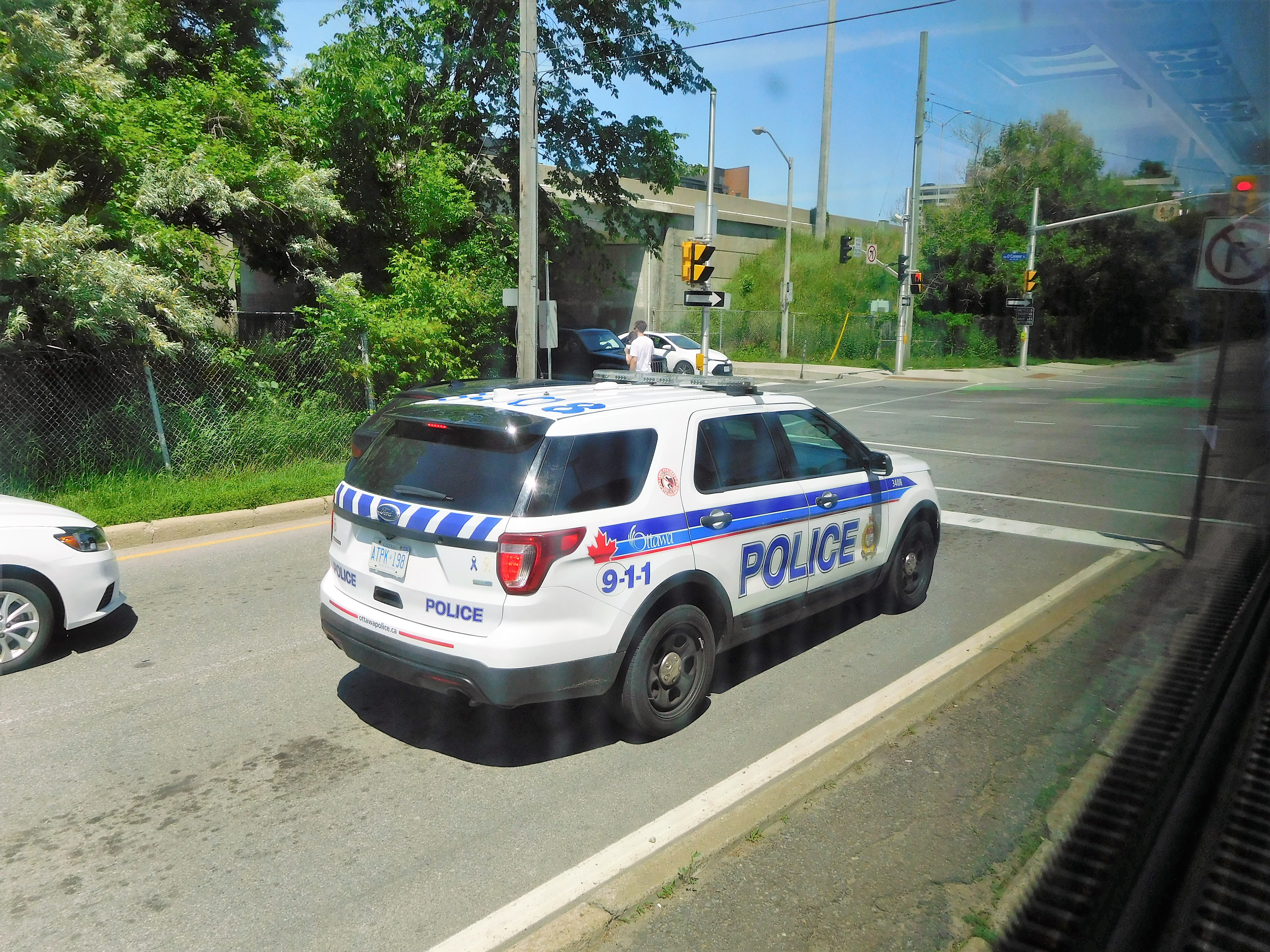
There is a particular kind of conversation that decides whether a young newcomer in a strange city will trust the person in the uniform standing in front of them. It usually happens away from cameras, on a quiet street or in a community hall, and it turns less on procedure than on whether the officer seems to understand where the young person has come from. In Ottawa, a Kenyan-born constable named Idris Maloba has spent the better part of six years making sure those conversations go well — and this month, the country he migrated to decided that work was worth a national award.
Maloba received recognition at the 2026 Thomas G. Flanagan First Responders Awards for promoting equity, diversity and inclusion, a citation that honours his efforts to strengthen the relationship between police and the multicultural communities that now make up a large share of Canada's capital. For a man who joined the Ottawa Police Service only in 2020, it is an unusually fast ascent into the ranks of officers held up as a model. For the Kenyan diaspora watching from both sides of the Atlantic, it is something more pointed: proof that an immigrant can enter one of a host country's most scrutinised institutions and reshape how it treats people who look and sound like him.
The Long Road From Casework to the Cruiser
Maloba did not come to policing the conventional way. Before he was sworn in, he worked as a social worker with the Youth Services Bureau, an Ottawa organisation that supports young people navigating mental health struggles, family breakdown, poverty and the ordinary turbulence of growing up. The job placed him in living rooms and shelters rather than patrol cars, and it taught him to read a situation through the eyes of the person in crisis rather than the system responding to them.
That background is the throughline of everything colleagues now praise. Where some officers are trained first to assert control, Maloba arrived already fluent in de-escalation, patience and the slow work of earning confidence from people who had reason to be wary. He has described his approach as one built on empathy and trust rather than authority for its own sake — a philosophy that sounds simple until you consider how rarely policing institutions reward it. By bringing the instincts of a caseworker into law enforcement, he effectively imported a different idea of what an officer is for.
An Award With a Telling Name
The award Maloba received carries its own quiet history. It is named for Thomas G. Flanagan, a late Ottawa chief of police remembered for insisting that the force reflect the city it served, and for championing the perspectives of women and officers from racialised and Indigenous communities. Honouring a Kenyan-born constable under that banner is not incidental; it is a deliberate echo of the values the award was created to protect.
That symbolism lands differently for diaspora families. Across North America and Europe, the relationship between African immigrants and the police is often fraught, shadowed by stories of misunderstanding and worse. An award that explicitly celebrates an African-born officer for building bridges rather than walls offers a counter-narrative that communities rarely get to claim. It does not erase the tensions, but it complicates the assumption that the uniform and the immigrant are destined to stand on opposite sides of a line.
Pitches in Africa, Trust in Ottawa
Maloba's work does not end at the edge of his patrol area. He is involved in Project Chance Africa, an initiative that channels fundraising and volunteer energy toward underserved communities on the continent. Among its concrete outputs are sports facilities — football pitches built to give young people safe, organised spaces to gather, play and stay out of harm's way.
The logic connecting a constable's beat in Ottawa to a pitch in Africa is not as distant as it first appears. In both settings, the goal is the same: to give young people a reason to trust the adults and institutions around them, and a structure that pulls them toward opportunity instead of risk. A football pitch in an underserved neighbourhood and a frank conversation with a wary teenager in Ottawa are, in Maloba's framework, two expressions of the same conviction — that prevention is cheaper, kinder and more durable than punishment.
It is also a vivid example of a pattern that defines the modern Kenyan diaspora. The most effective members do not choose between their adopted country and their country of origin; they build in both at once, treating the resources and standing they earn abroad as tools to lift the communities they left behind. Maloba's badge funds his pitches; his pitches deepen the credibility he brings to his badge.
What the Diaspora Sees in a Badge
For Kenyans abroad, stories like this perform a specific kind of work. They counter the steady drumbeat of harder diaspora news — the labour disputes in the Gulf, the visa walls going up in Washington and London, the funerals of community members who died far from home. A constable honoured for inclusion is a reminder that migration is not only a story of loss and obstacle. It is also a story of arrival, contribution and, occasionally, of an immigrant becoming the person who helps the next newcomer feel less alone.
There is a practical dimension too. Representation inside institutions changes how those institutions behave. When a young Kenyan-Canadian, or any newcomer, encounters an officer who shares some piece of their journey, the encounter carries less fear and more possibility. Multiply that by the daily interactions of a single dedicated officer over years, and the effect on a community's relationship with the police becomes measurable rather than sentimental.
The Quiet Model
What makes Maloba's recognition resonate is precisely its lack of drama. He did not break a record or survive a crisis on camera. He chose, repeatedly, to do the unglamorous work of listening, translating and building trust across lines that institutions often find easier to police than to cross. The award acknowledges that this work is real labour, deserving of the same recognition usually reserved for more visible feats.
For the broader African diaspora, his path suggests a template. The professions that shape how newcomers are treated — policing, healthcare, education, social services — are also the professions where diaspora talent can have the most leverage. Maloba's story argues that the most lasting contribution an immigrant can make is not always measured in remittances sent home, but sometimes in the quiet reshaping of an institution in the country that took them in. In Ottawa this month, that argument earned a name on an award, and a community an example worth keeping.