Eighth Lane at the Olimpico: What Omanyala's Hardest Night in Rome Says About Kenya's Sprint Summer in Europe
Africa's fastest man left Rome with 10.11 seconds, a $1,000 cheque and a promise to show up again. For Kenyans who follow him across Europe's stadiums, the night carried more than a result.
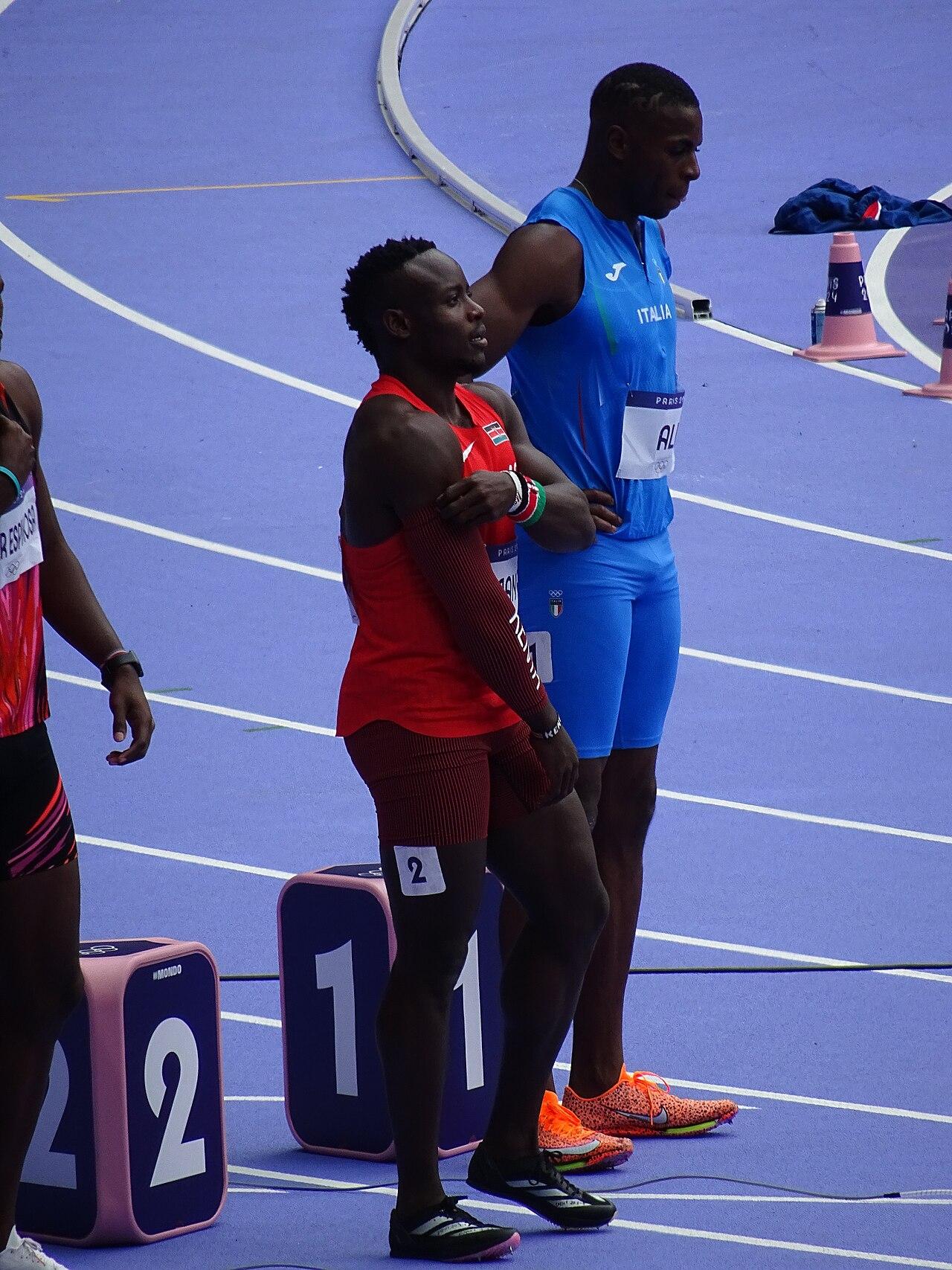
The lights at the Stadio Olimpico on Thursday evening found Ferdinand Omanyala where no Kenyan fan is used to seeing him: at the back of the field. Ten point one one seconds after the gun, Africa's fastest man crossed the line in Rome's Diamond League 100 metres in eighth place — last among the finishers, two strides adrift of a podium that belonged to other continents' champions. For the Kenyans scattered through the stands in Rome, and the far larger number watching on phones from Milan to Manchester to Minneapolis, it was a strange and quiet way for a loud season to stumble.
The race itself was won emphatically. Noah Lyles, the American Olympic champion, powered away in a season's best 9.88 seconds. Cameroon's Emmanuel Eseme produced a national record of 9.94 for second, and Botswana's Letsile Tebogo — the Olympic 200m champion — took third in a season's best 9.95, according to results carried by Tuko and the Eastleigh Voice. Omanyala, whose explosive start has long been his signature weapon, never found it. He came off the blocks slowly and spent the race chasing a field that would not come back to him.
A Cheque for a Thousand Dollars
The arithmetic of the night was unsentimental. The Diamond League distributes 500,000 US dollars in prize money at each of its fourteen regular meetings, and in Rome the men's 100m was staged as one of the elevated "Diamond+" disciplines, which lifted the winner's share to 20,000 dollars — roughly 2.5 million Kenyan shillings, money that went home with Lyles. Eighth place, Tuko reported, pays 1,000 dollars, or about 129,000 shillings.
For a professional sprinter, the figure is less a payday than a parking receipt. But it is a useful window into the economics that govern Kenyan track athletes working the European summer. Unlike footballers on contracts, sprinters and distance runners earn meeting by meeting — appearance fees for the established names, prize money tiered steeply toward the podium, and bonuses tied to times. A bad night is not only a sporting setback; it is a smaller wire transfer in a profession where the season is short and the body's window shorter.
The Season That Came Before
What made Rome jarring was everything that preceded it. Omanyala arrived in Italy carrying one of the most consistent stretches of his career: five consecutive sub-10-second performances this year, by Tuko's count. He opened in Addis Ababa, reclaimed his Kip Keino Classic title in front of a home crowd in Nairobi, ran at the World Relays, then opened his Diamond League account with second place in Shanghai before winning in Xiamen in 9.94 — his season's best.
He skipped the Rabat meeting, which had no 100m on its programme, and instead sharpened up at the Triveneto Meeting Internazionale in Trieste, where he won in 10.11. The same time, in Rome, was worth seven places less. Sprinting at this level is a sport of hundredths, and the difference between a win in Trieste and last place at the Olimpico is the difference between a regional meeting and a final assembled from the fastest men alive.
His response came quickly and without varnish. "Tough outing in Rome. 10.11. I will take the hit, but will always show up. Thanks to Team Ferdy for always making sure I show up ready," the 29-year-old posted afterwards, in remarks carried by the Eastleigh Voice.
A Kenyan Workplace Called Europe
There is a reason nights like this resonate beyond athletics pages. From June to September, Europe effectively becomes a seasonal workplace for Kenyan track and field. The circuit Omanyala is running — Trieste, Rome, then the Dromia International Sprint and Relays Meeting in Greece on June 13, the FBK Games in Hengelo in the Netherlands on June 21, and the Paris Diamond League on June 28 — is a migration route as much as a calendar. Athletes live out of kit bags, chase visas and lane assignments, and send their earnings home the way other Kenyans abroad send salaries.
For the diaspora itself, these meetings are among the few fixtures where Kenyan identity is performed in public, in person, on a weeknight in a European capital. Kenyans in Italy have long turned out at the Golden Gala when compatriots are on the start lists, flags over the railings of the Olimpico's curva. Distance runners have traditionally carried that flag; Omanyala's rise gave the sprints — events Kenya watched other nations own for generations — a Kenyan face too. That is why a single 10.11 can feel personal in a living room in Brescia or Birmingham: he is not just running for a cheque, he is running an argument that Kenyan speed belongs in the same frame as Lyles and Tebogo.
The Field Is Not Waiting
The uncomfortable truth of Thursday is that the men's 100m is deepening around him. Lyles looks sharper in early June than he did last year. Tebogo, still only midway through his ascent, is treating the sprints as a personal project. Eseme's national record is a reminder that the next generation of African sprinting is no longer a one-man story — Cameroon, Botswana and South Africa all have claims on the lanes Omanyala once occupied alone among African record holders.
At 29, Omanyala is not old by sprinting's modern standards, but he is at the age where starts, his great gift, must be protected with everything else: health, racing rhythm, and the confidence that comes only from finishing in front. The encouraging detail buried in a discouraging night is that his season's best of 9.94 still places him squarely in the global conversation, and the major championships that define 2026 remain months away.
What June Still Holds
The schedule offers him a quick path back. Greece on June 13 is a Continental Tour Silver meeting — a softer field and a chance to rebuild the start under race conditions. Hengelo on June 21 has been kind to African athletes for decades. Paris, at the end of the month, returns him to Diamond League depth with three weeks of corrections in his legs.
For Kenyans abroad, the instruction is simple enough: keep the evening free, find the stream, and watch the blocks. Omanyala has built a career on showing up — he said as much himself within hours of the worst result of his European summer. One slow start at the Olimpico does not end an argument he has spent five years making. It just moves the next hearing to Greece.


