Collect Your Child by Six: How Kenya's Wave of School Fires Tests the Diaspora Parents Who Cannot Be There
As dormitory fires and walkouts empty boarding schools across Kenya, parents working abroad face an old question made suddenly urgent: who brings the child home?
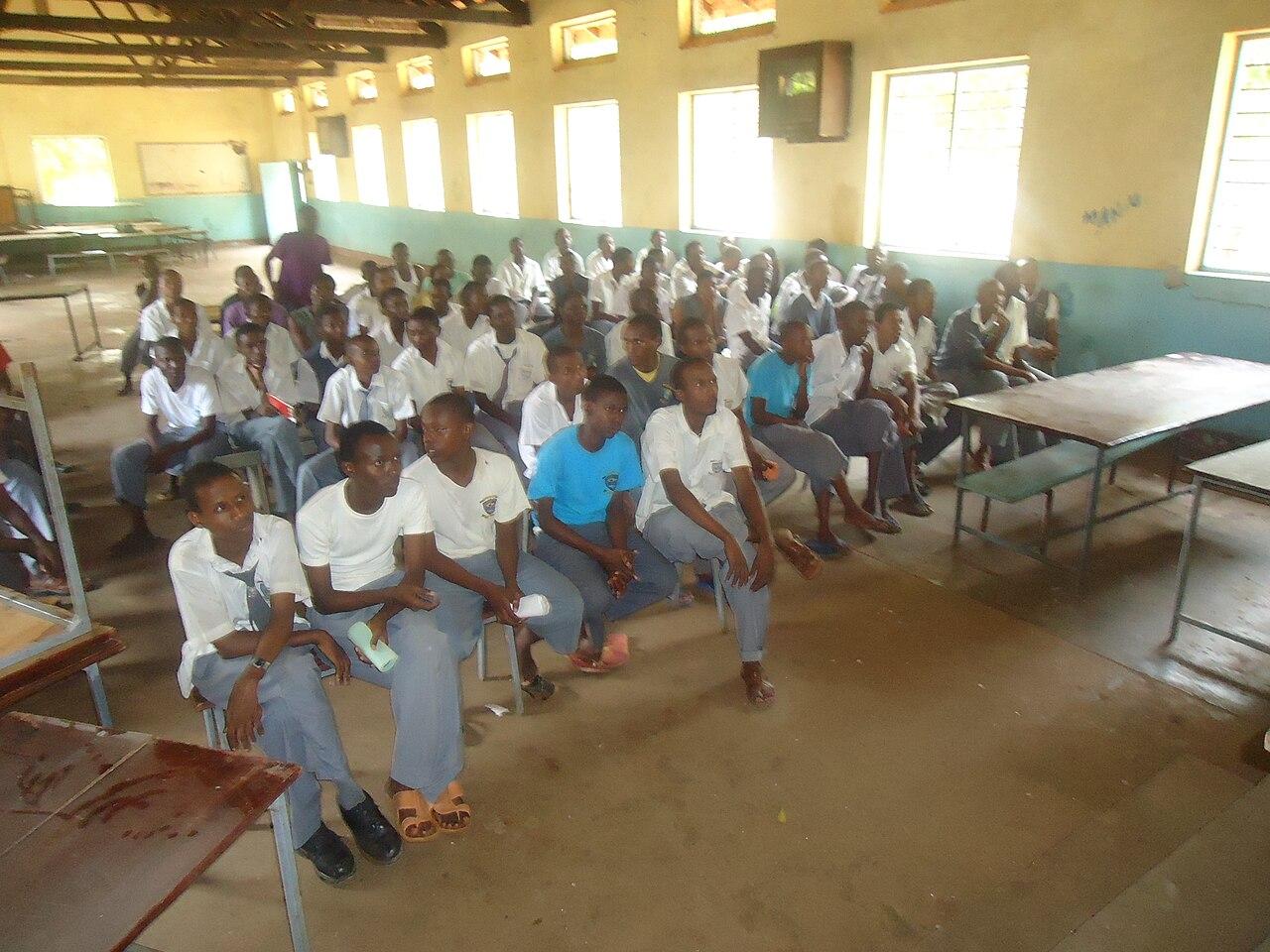
The message that reached Kakamega High School parents was eleven words long and left no room for delay. "You are required to pick your son from school tomorrow, 6th June 2026, from 6:00 am," wrote the chief principal, Dr Elphas Luvaso, hours after a fire tore through a Grade 10 dormitory during evening prep. For families in Kakamega town, the instruction meant a short, anxious drive before dawn. For a mother on a night shift in a Dallas care home, or a father checking his phone between deliveries in Doha, the same handful of words opened a far harder problem: the child has to be collected by six in the morning, and home is eight thousand miles away.
That gap, between a school's urgent notice and a parent who cannot answer it in person, is the quiet story inside a very loud week in Kenyan education. Since late May, a wave of dormitory fires, walkouts and precautionary closures has swept secondary schools across Nairobi, the Rift Valley, Western, Nyanza and the Mt Kenya region. The government insists the system remains stable. Yet for the large community of Kenyan parents who live and work abroad while their children board back home, the disruption has revived an uncomfortable question that no audit can quickly answer.
A wave, not a single fire
This is not one tragedy but a pattern. The trigger came on 28 May, when a dormitory fire at Utumishi Girls Academy in Nakuru killed 16 students; several others have since been arraigned in connection with the deaths. In the days that followed, what began as grief curdled into something harder to contain. Fires and unrest were reported at a roll-call of well-known institutions, among them Alliance High School, Lenana School, Loreto Girls Limuru, Mang'u High School and Moi Girls Nairobi, with many sending learners home as a precaution rather than waiting for trouble to arrive.
By Friday, 5 June, the closures had become a daily tally. At Kakamega High School, the Grade 10 dormitory was set ablaze around 7:30 in the evening while students sat in prep; no one was hurt, the school said, because the boys were in class when the flames took hold. Elsewhere the administrations did not wait at all, releasing students the moment restlessness stirred. The Ministry of Education has been firm that less than one per cent of schools are affected, that there will be no early national break, and that the official calendar still holds, with the second-term half-term due in late June. That reassurance is real, and it matters. It also does little to calm a parent reading the news from another continent.
The diaspora's particular bind
For Kenyan families abroad, boarding school has long been a practical answer to an awkward arithmetic. A parent earns in Boston, Birmingham or Abu Dhabi; a child is schooled in Kiambu or Kakamega, often under the eye of a grandparent, an aunt or a paid guardian. The model works because boarding schools are designed to hold a child steadily for a whole term. A sudden, same-day instruction to "collect your son by six" breaks that design, and it breaks it hardest for the household whose decision-maker is in a different time zone.
The logistics cascade quickly. Someone local must be reached, persuaded and dispatched, sometimes across counties, sometimes at a cost that was never in the month's budget. A child released into a half-empty school may need a bus fare, a phone, a place to stay. None of this can be arranged from afar with a single tap, and all of it has to happen before a deadline set by a school acting, understandably, in haste. Parents who chose boarding precisely so that distance would not disrupt their children's education now find distance turning a manageable scare into a scramble.
Why now, and why fire
The causes being cited are familiar to anyone who has followed Kenyan schools over the years, which is part of what unsettles diaspora parents: the problems are old, and they keep returning. Officials and administrators point to examination pressure, with mock papers concentrated in the second term and recent changes to the exam calendar raising the temperature. They point to complaints about food and boarding conditions, to overcrowding linked to the 100 per cent transition policy that pushes every primary leaver into secondary school, and to a copycat dynamic in which one fire seems to invite the next.
The concern has reached Parliament. On 3 June, Embu Senator Alexander Mundigi warned that unrest was spreading through schools in his county and disrupting learning, naming several affected institutions. "The recent surge in unrest has caused anxiety among parents, teachers and the wider public," he said, calling for investigations into the causes. For a parent watching from abroad, that anxiety carries an extra edge, because the usual reassurance, that you can drive over and see for yourself, is the one thing they cannot do.
What is being done, and what helps
The official response has leaned on supervision and inquiry. Authorities have ordered investigations into the dormitory fires, increased safety inspections in boarding schools, and pressed institutions to strengthen counselling and internal discipline. A separate directive has called for an audit of boarding facilities. Whether these measures address the deeper grievances or merely the symptoms is a debate Kenyan lawmakers themselves are now having, with some arguing the boarding model is overstretched and others insisting the trouble runs to wider social and disciplinary pressures.
In the meantime, the most useful advice for families abroad is also the least dramatic. Schools are communicating directly with parents, often by text and WhatsApp, and those messages, not social media rumours, are the reliable source on whether a particular school is closing and when. Diaspora parents are leaning on the networks they already maintain, the relative who can reach the gate, the parents' WhatsApp group, the guardian who holds the spare key, and discovering how much those quiet arrangements matter when a notice arrives at two in the morning.
The longer question
None of this is a verdict on boarding school, which remains, for most Kenyan families abroad, a considered and loving choice. But a week like this one asks them to look again at the contingency behind the choice: who, exactly, answers when the school calls, and how fast can they move. The fires will be investigated, the term will most likely run its course, and the great majority of schools will carry on untouched. For the parent refreshing a news feed from a city where it is still yesterday, though, the reassurance that only one per cent of schools are affected offers little comfort if the one happens to be theirs. The distance that makes the sacrifice worthwhile is the same distance that, this week, has felt unbearably long.