The Uniform After the Apron: How a Nairobi Woman's Two Years in Saudi Kitchens Led Her to the US Army
Nancy Njoroge spent two years as a domestic worker in Saudi Arabia. This week she told Kenyans how that hard chapter carried her all the way into an American uniform.
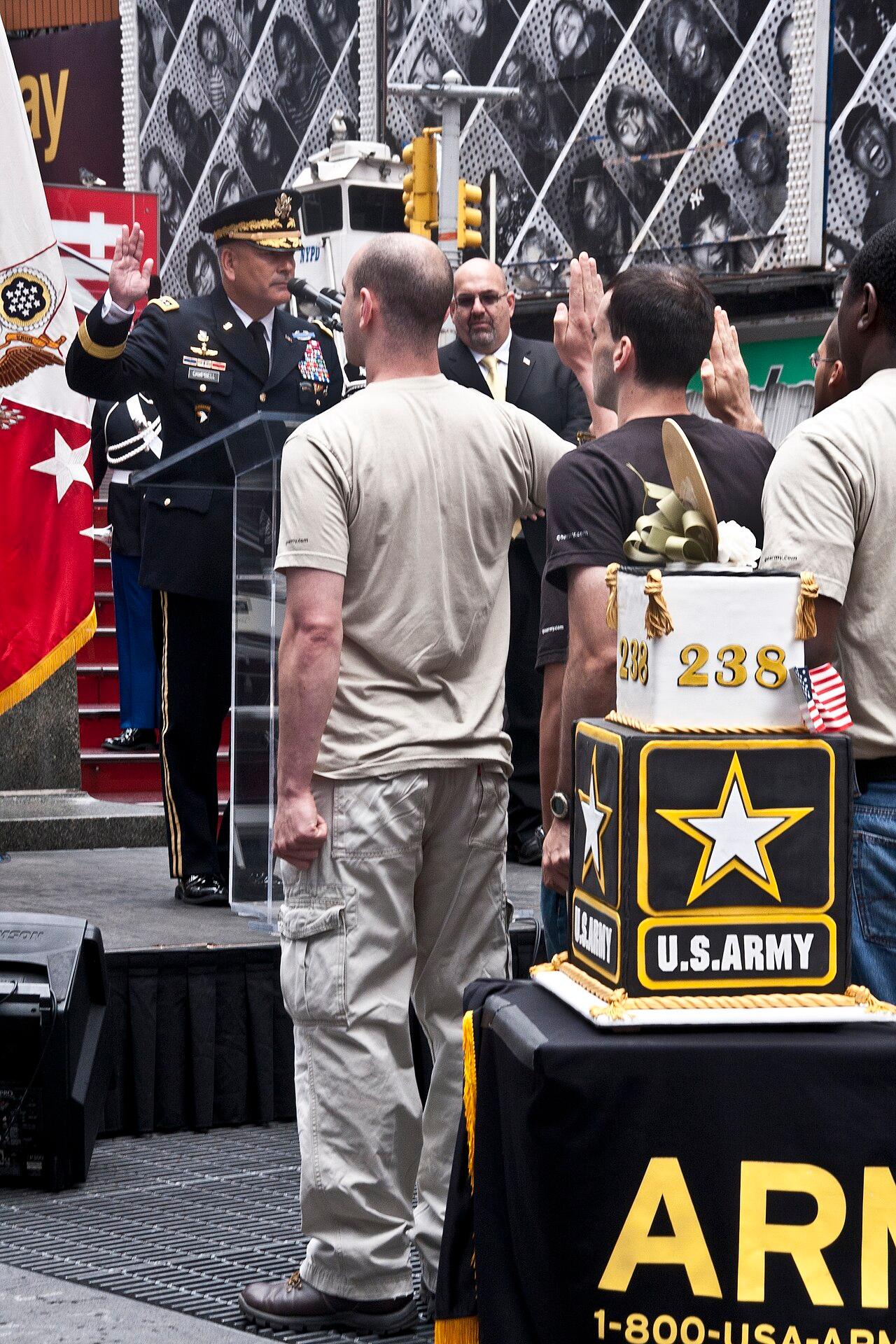
The two photographs sit side by side, and the distance between them is the whole story. In one, a young Kenyan woman stands in the plain workwear of a domestic helper, the everyday uniform of the East African women who keep Gulf households running. In the other, the same woman wears the fatigues of the United States Army, her shoulders square, her smile unguarded. The frames are separated by roughly seven years, three countries and a kind of persistence that Kenyan timelines recognised the moment the images began to circulate this week.
The woman is Nancy Njoroge, a Nairobi-born former househelp whose account of her journey from Saudi Arabia's domestic labour market to an American military base was reported on Friday by the Kenyan news site Tuko.co.ke, drawing on her own public Facebook testimony. On its surface, hers is one woman's good news. But the route she describes — Nairobi to a Saudi household, then onward to the United States and into uniform — traces almost perfectly the geography of modern Kenyan migration: the hard first chapter in the Gulf, and the longer bet on the West.
Two Years Behind Someone Else's Door
By her own account, Njoroge left Kenya for Saudi Arabia in 2019 and spent two years there as a domestic helper. She does not describe abuse or mistreatment. What she recalls instead is distance: the loneliness of being far from family, the uncertainty of not knowing what the future held, and the daily discipline of working through both. "Every challenge was preparing me for something greater," she wrote in the post quoted by Tuko.
Even an uneventful stint in the kingdom, though, takes place inside a system that researchers have spent years documenting. Amnesty International's 2025 report on Kenyan domestic workers in Saudi Arabia, pointedly titled "Locked in, left out", chronicled the isolation that defines the job — lives lived almost entirely inside an employer's home, schedules and movements set by someone else. Kenya's own Commission on Administrative Justice ran a systemic investigation into the plight of Kenyan migrant domestic workers in the kingdom back in 2022, after a string of distress cases pushed the issue into Parliament. Against that documented backdrop, the matter-of-fact way Njoroge describes her Saudi years — an endurance test that taught patience, rather than a calamity that required rescue — is part of why her story has landed so widely. For many Kenyan women, the Gulf is neither catastrophe nor jackpot. It is a toll gate.
The Corridor Kenya Cannot Quit
The Gulf labour corridor remains one of Kenya's most consequential economic relationships, and one of its most argued over. Diaspora remittances are the country's largest source of foreign exchange — worth nearly five billion US dollars a year, according to Central Bank of Kenya figures — and Saudi Arabia has for several years ranked among the fastest-growing sources of that money. Recruitment agencies in Nairobi continue to place thousands of women in Gulf households annually, even as scandals, parliamentary inquiries and bilateral renegotiations keep trying to make the trade safer.
What is quietly changing is how Kenyans treat Gulf work: less as a destination, more as a stage. Njoroge's framing is telling. In her telling, Saudi Arabia is not where her story ended but where it was funded and toughened. The savings, the references, the proof to oneself of endurance — these become raw material for the next move, whether that is a plot of land at home, a nursing qualification, or, in her case, a flight to America and a recruiting office.
A Green Card and a Recruiting Office
Njoroge says she arrived in the United States in January 2023 and joined the US Army not long afterwards. She has not publicly detailed her immigration pathway, and Tuko's report does not specify it. What is knowable is the rulebook. The American military does not require citizenship to enlist, but it does, with narrow exceptions, require lawful permanent residence. And for green-card holders, service carries one of the most powerful accelerants in US immigration law: naturalisation through military service, which waives the usual residency waiting periods for those who serve honourably.
That trade — service for belonging — has long made the armed forces one of the most immigrant-dense institutions in American life. Thousands of foreign-born recruits enlist every year, and African-born soldiers are a visible presence in their ranks. For Kenyans, the military path now sits alongside nursing, trucking and tech as a recognised ladder into American stability: hard and structured, but governed by rules that reward performance rather than luck. At a time when the visa lottery and family sponsorship routes that carried earlier generations are under political siege in Washington, that distinction matters more each year.
It is also a path that demands precisely the qualities the Gulf years build. Basic training favours people who can absorb discomfort, follow instruction, live far from home and keep their purpose private. A woman who has run a stranger's household in a language she had to learn, under rules she did not write, arrives at boot camp with assets no recruiter can screen for.
Why Her Story Travelled
The timing explains some of the resonance. This has been a bruising news season for Kenyans abroad: a sweeping immigration enforcement law moving through Washington, confusion over Gulf recruitment lists, and a steady drumbeat of deaths and distress calls from the diaspora's far edges. Into that feed dropped a story about agency — about a woman who used the system's narrow openings rather than being used by them.
Her message, notably, was aimed at individuals rather than policymakers. In the post reported by Tuko, she addressed people on the verge of giving up, urging them to take one step at a time, to lean on those who care about them, and to treat every day they keep going as a victory in itself. It is the language of testimony, not policy — and it travelled precisely because so many readers are somewhere along the same road, between the apron and whatever comes after.
The Caveats Honest Reporting Requires
It should be said plainly: the personal arc here rests on Njoroge's own public account as reported by a single outlet, Tuko.co.ke. No second publication has independently verified her enlistment, and the US Army does not comment on individual recruits. The context that can be checked — the scale and conditions of Kenyan domestic labour in Saudi Arabia, the enlistment rules of the American military, the economics of the remittance corridor — all holds. The rest is her story to tell, and she has told it in her own name, with photographs, to an audience that includes people who knew her in both lives.
The Road That Is Not Over
Every week, flights leave Nairobi carrying women toward Gulf households, and other flights leave carrying Kenyans toward American cities. The two streams are usually reported as separate stories — one of risk, one of aspiration. Njoroge's photographs argue that they are often the same story at different chapters. The diaspora has always written its history in befores-and-afters: the matatu tout who became a Texas nurse, the houseboy who became a London engineer. This week the archive gained another pair of images — an apron, then a uniform — and a caption that doubles as advice: the road may be difficult, but the story is not over.