The Salary That Was 'For Visa Purposes': How Kenyans Building America's New Milan Consulate Say Their Wages Vanished
Recruited in Nairobi to build a $350 million US consulate in Milan, Kenyan electricians say the €25,000 salaries in their contracts were dismissed as paperwork — and that complaints drew threats of deportation.
'Either You Work, or You Go Home'
The Kenyan electrician had a simple question, and the answer he received has now become evidence. When he walked into the site office in Milan to ask why his pay kept arriving smaller than his contract promised, he says he was told there was nothing to discuss. "Either you work or you will be returned to your country," he recalled to the Associated Press. "That's the amount you are supposed to be paid."
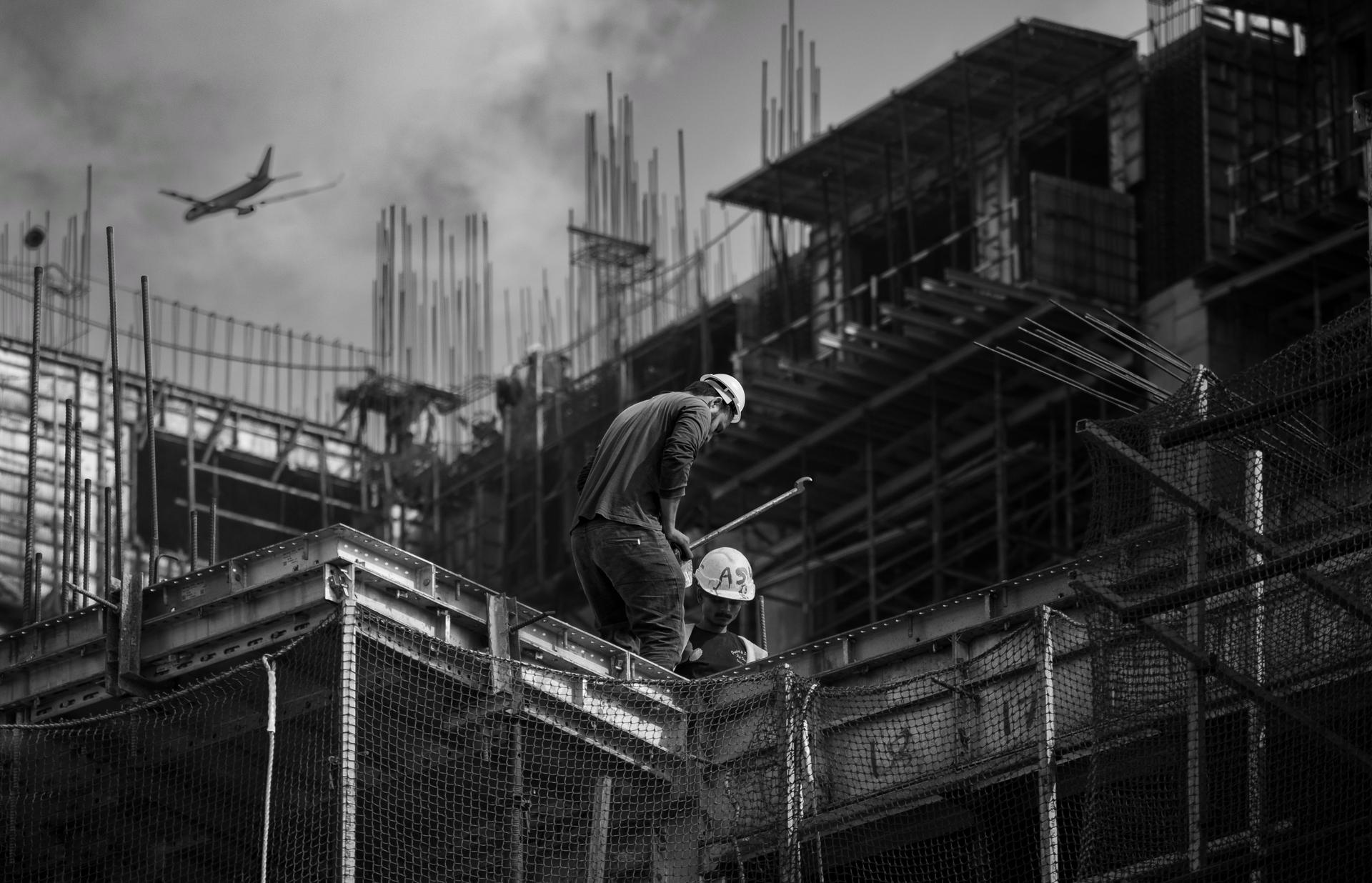
He had travelled from Kenya to fit wiring into the bones of a building that will one day fly the American flag: a new United States consulate rising on a ten-acre site in Italy's financial capital. The $350 million campus is meant to be a showpiece, a statement of how a superpower houses its diplomats abroad. For the men who wired and welded it, several of them Kenyan, the project has instead become the centre of an Italian criminal investigation into labour exploitation — and a hard lesson in how quickly a promise made on company letterhead can evaporate once a worker is far from home.
A Showpiece Project, Now a Criminal Case
The allegations were laid out this week in an Associated Press investigation built on interviews with five former workers and a review of their employment letters and pay stubs. Italian prosecutors, led by Paolo Storari — who has also pursued sweatshops supplying luxury fashion brands — opened the consulate inquiry about six months ago. It involves roughly 70 workers, most of them from India, with a group of Kenyans among them.
The contractor in the prosecutors' sights is Caddell Construction, a firm based in Montgomery, Alabama, and one of the most prolific builders of American diplomatic missions in the world. This month, two of its managers in Italy were arrested on suspicion of labour exploitation — one stopped while boarding a flight out of the country, another said by prosecutors to be planning to flee. So far only Caddell has been named as a target, not its subcontractors.
Prosecutors allege the company illegally deducted room and board from wages and forced employees to work ten-hour days, six days a week. The minimum wage for construction workers in Milan begins at €13.39 an hour, according to the Cassa Edile benefits fund. One worker's pay slip, the AP reported, listed an hourly rate of €1.55 — about $1.80.
The Letter Said €25,000. The Answer Was 'For Visa Purposes.'
For the Kenyans, the gap between the promised wage and the real one was not a matter of cents. Two of them showed the AP employment letters printed on Caddell stationery and signed by a company representative, pledging annual salaries topping €25,000 — close to $29,000. One electrician said that instead of the €2,300 a month he had been promised, he was paid about €800. When another presented an artificial-intelligence summary of Italian labour law to argue his case, he said he was threatened with a defamation claim and told that the €25,000 figure in his letter had been written "for visa purposes," not as a promise of pay.
The pay stubs the workers kept appear, at least in part, to document the squeeze. They listed monthly charges of around €510 for housing and more than €300 for food — deductions that, the AP noted, still do not account for the full distance between what was promised and what was paid. Union experts who reviewed the documents said they did not conform to Italian standards and could not verify their origins, even as they seemed to corroborate the workers' accounts. "They probably had in their minds the absolute certainty that they were untouchable," said Laura Malguzzi of the Fillea Cgil construction union, which intends to seek damages on the workers' behalf.
From the Nairobi Embassy to a Milan Shooting Range
The Kenyan workers did not stumble into this job. Several said they were hired by Caddell after working on a multimillion-dollar extension of the United States Embassy in Nairobi — a credential that made the Milan offer feel both prestigious and plausible. They had accepted roughly $200 a month at home, in a labour market where construction work is scarce and unemployment is high. A contract with a U.S. government contractor in Europe looked like the reward for years of skilled work. "But they expected better from a U.S. company operating in Europe," is how the AP framed the workers' disappointment.
There is a deeper irony in that journey. Caddell became a dominant force in building secure American embassies precisely because of Kenya. After the 1998 bombings of the U.S. Embassies in Nairobi and Dar es Salaam killed more than 250 people, Washington launched a sweeping security upgrade of its diplomatic facilities, and Caddell rose to lead it. By its own count the firm has held dozens of embassy projects worth billions of dollars. The same catastrophe that reshaped Kenya's relationship with American security is woven into the company now accused of underpaying Kenyans on one of its consulates.
What the Institutions Say
The bodies named in the affair have begun to answer. The U.S. State Department, whose consulate sits at the centre of the case, said it is investigating the prosecutors' allegations and that American law enforcement is working with Italian authorities. "The U.S. government does not tolerate labor exploitation," it said in a statement. Caddell said it was "fully cooperating" with Italian authorities and conducting a "comprehensive inquiry" to ensure its global subcontractors comply with labour standards, adding that it is "committed (to) treating and paying workers fairly."
No findings have been issued, and the workers' accounts remain allegations that prosecutors must test against the records. But the conditions on the site have already shifted. Work is now continuing under court supervision: room and board are no longer deducted, hours are capped at 45 a week, and workers are guaranteed two days off. For some, the intervention came too late to undo the damage — the AP reported that several of the five workers it interviewed had been fired this year, with some now sleeping in parks and another staying with a friend.
What the Diaspora Reads in Milan
For Kenyans abroad, the Milan case lands in an uncomfortably familiar register. It arrives in the same season as a widening Gulf labour crisis, a Kuwaiti ban on domestic-worker recruitment, and a steady stream of appeals from families trying to bring stranded relatives home. The details differ — skilled electricians in Europe rather than domestic workers in the Gulf — but the architecture of vulnerability rhymes: a worker recruited with a generous promise, a wage that shrinks on arrival, and a status so tied to a single employer that to complain is to risk one's very place in the country.
What unsettles most is where this allegedly happened. Not in the informal economy, not in a jurisdiction without rules, but on a project commissioned by the United States government, in a European Union member state with strong labour protections, built by a contractor entrusted with America's most sensitive facilities. If the safeguards can falter there, the workers' advocates argue, they can falter anywhere. One of the Kenyans put the imbalance plainly to the AP: "They can just hire you, and you just go running. Because you are poor you have nothing." Another offered something closer to hope. "I believe in justice," he said. "Also the workers there should not be afraid. They should come and speak up."