The Royalty That Wasn't There Before: How Kenya's Finance Bill 2026 Could Reach Into Every Diaspora Remittance App
A single proposed change to the definition of 'royalty' brings the rails of card networks and Pesalink into the tax net — and Kenyans abroad are watching the fee line on their next transfer home.

The phrase the diaspora is reading this week is hidden in a sub-clause. It does not mention M-Pesa by name. It does not say remittance. It does not say WorldRemit or Sendwave or the small green icon a Kenyan nurse in Birmingham taps on a Sunday evening when she sits down to plan the month back home. It only says royalty — and then it lists, for the first time, the things a royalty now includes.
In Kenya's Finance Bill, 2026, that list grew to cover the cables and rails that carry money across borders. Card schemes such as Visa and Mastercard. Payment switching systems such as Pesalink. Software licences from foreign technology firms. The bill proposes that the fees paid by Kenyan banks and processors to use those systems — interchange fees, network charges, switching fees, service fees — be treated as royalties and taxed at source at withholding rates of five to twenty percent, according to a Business Daily Africa report on the bill's proposed amendments.
That is a quiet technical change. It is also, for the millions of Kenyans abroad who keep families fed at home, a change in the price of the pipe their money travels through.
The clause that changed a definition
Royalty, under Kenya's current Income Tax Act, has long meant payment for the use of intellectual property — copyrights, patents, scientific equipment, the rights an artist or inventor holds over a creation. Finance Bill 2026 broadens that meaning in a single new paragraph, the Business Daily reported, to include software in any form, whether licensed or off-the-shelf, and transaction costs charged for the use of payment systems, whether periodic or transaction-based, and whether described as a service fee, network fee, processing fee or similar charge.
Read once, it is a clarification. Read twice, it is a reclassification of the entire backbone of Kenya's digital payments economy as taxable royalty income flowing to foreign owners — and therefore subject to withholding before the money ever leaves the country.
The Treasury wants the receipts. Kenya Revenue Authority is asked to collect Sh2.985 trillion in the financial year starting July, up from Sh2.784 trillion, according to documents tabled by the Treasury and reported by the Business Daily. New tax measures in this year's bill are projected to deliver about Sh120 billion of that uplift, four times what the previous year's bill targeted. Royalty withholding from foreign payment networks is one of the proposals that helps the arithmetic add up.
How the card rails carry the diaspora
Card schemes and switching systems are not abstractions for Kenyans abroad. They are the unseen tracks under almost every digital transfer home.
A pound sent from a debit card in London onto a remittance platform typically rides Visa or Mastercard's cross-border rails before being broken into a shilling deposit. A dollar pushed from a US bank account into a Kenyan recipient's bank usually clears through a payment processor that pays its own switching and interchange fees on the Kenyan side. Pesalink, the inter-bank switching system operated by Kenyan lenders, sits between many of those final delivery legs and the recipient's mobile money wallet.
Diaspora remittances to Kenya are one of the country's largest foreign currency inflows, contributing more than four billion dollars a year, according to Central Bank of Kenya figures cited in recent coverage of the bill. Every one of those dollars eventually meets a fee on its way to a household. And every one of those fees is now in scope to be re-read as a royalty.
The pushback from the boardrooms
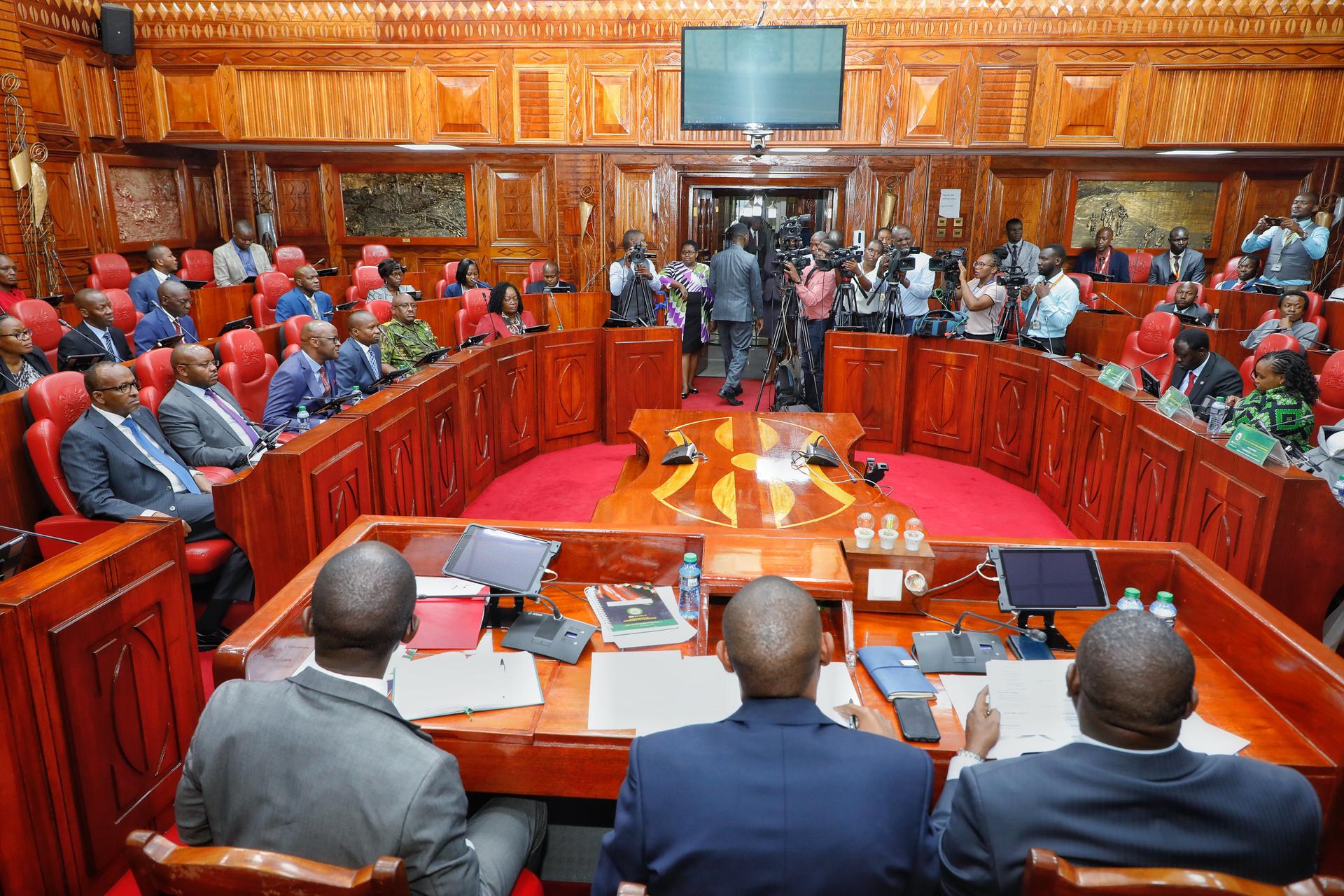
Kenya's organised business sector has not waited for the bill's third reading to object. The Kenya Private Sector Alliance, in a memorandum submitted to Parliament's Budget and Appropriations Committee, warned that taxing mobile banking and digital payments will simply chase transactions out of the formal system altogether.
"You tax digital payment platforms, you drive consumers to the mattress and to the informal economy," a KEPSA representative said during the committee's public hearings, as reported by Capital FM. The alliance argued that the contested measures would raise between Sh35 billion and Sh90 billion, far less than alternative proposals it has tabled — including a five percent cut to Pay-As-You-Earn tax that KEPSA estimates could unlock between Sh210 billion and Sh280 billion in economic output and roughly 36,000 jobs within a year. KEPSA also asked the government to zero-rate peer-to-peer mobile money transfers, on the grounds that those transfers do not add value and should not attract Value Added Tax.
The Central Organisation of Trade Unions of Kenya has filed its own pushback, urging Parliament to revise PAYE bands for workers earning up to Sh60,000 a month and opposing a proposed 25 percent excise on mobile phones and cellular devices, arguing the tax would slow Kenya's digital economy and raise the price of basic online work tools.
National Treasury Cabinet Secretary John Mbadi has defended the bill as a project of fairness, equity and simplicity, insisting that the proposals are about clarifying existing rules rather than imposing fresh ones. The royalty change, he has said in successive media briefings, is meant to align Kenyan law with court rulings that had limited KRA's ability to tax interchange and digital processing fees flowing offshore.
A wider reach into diaspora pockets
The royalty redefinition is the headline, but it sits inside a wider shift. Finance Bill 2026 enhances KRA's authority to access digital transaction data and improve compliance monitoring, removing — among other things — the statutory protection that has prevented the authority from issuing agency notices to taxpayers with active appeals before the Tax Appeals Tribunal or the courts. Critics, including tax practitioners, have raised privacy and surveillance concerns about the volume of personal and third-party data the authority is being invited to use to determine tax obligations.
For the diaspora, the data reach has a particular edge. Under the Tax Laws (Amendment) Bill, 2024 — referenced again in this year's Treasury briefings — Kenyans working remotely from abroad for Kenyan companies are required to obtain a Personal Identification Number from KRA, formalising their tax presence at home. The 2026 bill's processing rules give KRA more visibility into the digital channels through which those workers, and their families, move money.
That visibility is precisely what makes the new royalty layer felt at the household end. If Visa, Mastercard and Pesalink absorb the withholding tax cleanly, diaspora senders may notice nothing on the surface. If those costs are passed through — as global payment firms have signalled they often must — the small fee a Manchester nurse pays to send fifty pounds home in June may be a different number by September.
What the diaspora is watching for next
The Parliamentary Budget and Appropriations Committee is still hearing submissions on Finance Bill 2026, with the budget cycle aimed at a July start. Mbadi continues to argue the proposals simplify rather than tighten the screw. KEPSA, COTU and a chorus of fintech and bank associations continue to ask MPs to soften the digital provisions before the bill is voted on.
The diaspora, as it has done before, is watching from a distance — through phone calls from family in Nairobi, through line items on a remittance receipt, and through the slow public revision of a clause that began life as a definition and is now, for many households back home, a question about how much of next month's fee belongs to the rail and how much belongs to the receipt.