The Funeral Flight Just Got Heavier: How Kenya's Finance Bill 2026 Could Price the Diaspora Out of Going Home
A Treasury proposal to scrap a three-year exemption on aircraft and spare-part taxes could push fares out of Nairobi up by ten to fifteen percent, hitting the diaspora's hardest journeys first.

For Kenyans abroad, the most expensive seat on any plane is the one you have to book in a hurry. The call comes at 3 a.m. in Atlanta, at lunchtime in Doha, at the end of a London shift, and the question is always the same: how soon can you be home. By the time you have found the next flight to Nairobi, the fare has already moved.
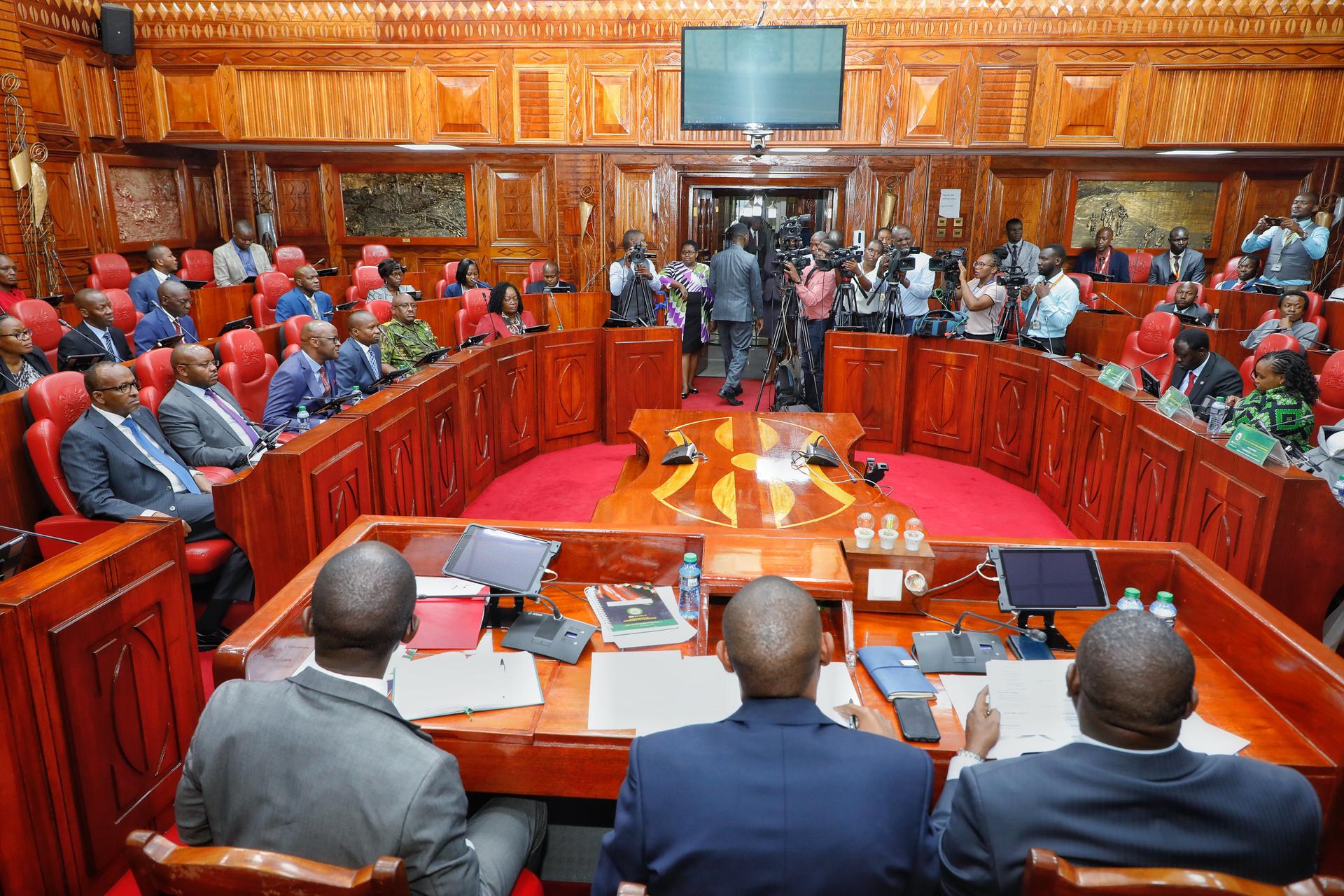
That quiet calculus is about to get sharper. A memorandum filed this week with Kenya's National Assembly warns that proposed tax changes in the Finance Bill 2026 would lift airfares out of Jomo Kenyatta International Airport by between ten and fifteen percent, with the heaviest pressure landing on the routes the diaspora uses most. The Kenya Association of Air Operators, the industry body that represents the country's commercial and general aviation firms, has asked Members of Parliament to reject the proposals.
For families spread across the Gulf, the United States, Britain, Canada and Australia, the bill is not abstract. It is the price of a funeral, a graduation, a hospital bedside, the moment you finally fly your parents over for a grandchild's first birthday.
What Treasury Has Actually Proposed
At the heart of the dispute is a small but powerful section of the bill. The Finance Bill 2026 seeks to delete the longstanding paragraphs in the Value Added Tax Act that exempt all goods of Chapter 88 of the customs tariff, the chapter that covers aircraft, engines, propellers, spacecraft and their parts, from VAT. The bill also moves to remove the same items from a separate exemption under the Miscellaneous Fees and Levies Act, the law that governs the 2.5 percent Import Declaration Fee and the 2 percent Railway Development Levy.
In practice, that means imported aircraft, helicopters, light planes used for training, and the spare parts that keep all of them airworthy would face an additional 4.5 percent in border charges on top of full VAT. The exemption being targeted has been in place, in some form, for three financial years. It was meant to support fleet renewal and post-pandemic recovery, and it has been challenged in each of those budget cycles. Each time, after industry submissions, Parliament has stepped back. This year's bill is the third attempt.
KAAO told the Departmental Committee on Finance and National Planning that the reversal would be felt immediately. Aviation operates on global net margins of between one and five percent, the association noted, which leaves little room to absorb new input costs. Anything that does not fit tends to land on the printed fare.
The Numbers Behind the Warning
The submission, first reported by Tuko, draws on a survey of twenty-one major operators based in Nairobi and Mombasa. Together, KAAO told the committee, those firms paid roughly thirty-nine and a half million United States dollars, about 5.1 billion Kenyan shillings, in taxes and statutory charges to the government in the last full financial year. They supported 1,551 direct jobs and put more than 121 million dollars into aircraft, hangars and pilot training during the exemption window.
Passenger numbers grew in the same period, from a pandemic-era trough to 11.82 million in 2025, a 10.1 percent rise. Cargo throughput climbed 16.8 percent to 473.6 million kilograms. KAAO argues that the recovery was made possible by the predictable cost of bringing in jets and spare parts. Reverse the exemption, the association warned, and the trend lines change direction.
There is already a leading indicator. Data the operators cited from the Kenya Civil Aviation Authority shows that the number of aircraft deregistered in Kenya jumped from sixteen in the 2022/23 financial year to seventy-four in 2023/24, after VAT was reintroduced on helicopter leasing and chartering. Operators read those filings as the moment owners began moving fleets to friendlier jurisdictions. KAAO fears the broader bill would push the same logic onto commercial airlines.
A ten to fifteen percent rise on a typical Nairobi-to-London return fare of around 90,000 shillings would add the equivalent of a month's electricity bill to every ticket. On the long Nairobi-to-New York route, where economy fares routinely cross 180,000 shillings before tax, it would add the price of a domestic Kenyan flight just to fly out.
Why the Diaspora Feels It First
The Kenyan diaspora is one of the country's most reliable economic constituencies. The Central Bank's monthly remittance series has shown inflows above 400 million United States dollars in recent months, and a meaningful share of that money travels home in person, in suitcases, alongside the people who earned it. Diaspora ticketing is not optional travel. It is funeral travel, wedding travel, the sustained pattern of visiting parents who are aging and children who were left in boarding school during a job posting abroad.
That makes diaspora flyers unusually price-insensitive in the short run and unusually angry in the long one. They will pay what is asked when the call comes. They will also notice, over months and years, that the trip home has slipped further out of reach for the cousin who works two jobs in Dallas, the nurse on a tight Saudi contract, the student in Birmingham whose family back in Kakamega is rationing how often they ask her to visit.
Airlines know this. Kenya Airways has rebuilt its long-haul network on the assumption that diaspora traffic and business traffic to Nairobi would keep growing. The route map relies on connecting passengers across the rest of the continent through JKIA. If the bill becomes law, the cost of running that hub goes up at exactly the moment when the Gulf carriers and Ethiopian Airlines are pricing aggressively to take the same passengers via Doha, Dubai or Addis Ababa.
The Regional Race Kenya Is Quietly Losing
KAAO's submission spent several pages on what its neighbours are doing. Ethiopia, Tanzania, Uganda, Rwanda, Nigeria, Angola, Mozambique and Malawi all grant either a VAT exemption or zero-rating on aircraft, engines, parts and maintenance services. The International Air Transport Association's country manager for Kenya, Agnes Mucuha, reminded MPs that under the Chicago Convention, the global treaty that governs civil aviation and which Kenya has ratified, taxes that distort connectivity and competitiveness are explicitly discouraged.
Maureen Kahonge, the director of commercial and communications at the African Airlines Association, wrote that the proposed levies risked turning Kenya into a "high-cost jurisdiction" that would lose maintenance contracts and fleet investments to friendlier markets. Once a heavy maintenance contract moves to Ethiopia or Rwanda, the jobs and the spare-parts logistics tend to move with it. They do not return on the next budget cycle.
For travellers, the consequence is more concrete than a competitiveness index. It is the realisation that the cheapest path from Nairobi to a wedding in Bristol or a graduation in Toronto may, after this bill passes, run through another country's airport.
What Happens Next on the Hill
The Finance Bill 2026 is still in committee. The aviation submission joins a long line of pushback this season, including from manufacturers, fuel marketers and the mobile-payments industry, which is fighting a separate proposal to bring a sixteen percent VAT to the service fees of platforms such as M-Pesa and Airtel Money. Treasury wants the bill passed before the end of June so its measures take effect with the new financial year on 1 July.
For the diaspora, the window to weigh in is small. KAAO's memorandum names specific paragraphs of the VAT and Miscellaneous Fees and Levies Acts that it wants retained, and public submissions to the Finance Committee can still be filed in the coming days.
If the proposals survive Parliament unchanged, the call that comes at 3 a.m. in Atlanta will arrive in the same voice, with the same urgency. The seat to Nairobi will simply cost more.