The Pump Price in the Family Budget: What a Nigerian Refinery's Record Run Could Mean for the Money Kenyans Send Home
As Dangote's refinery hits a record 700,000 barrels a day, East Africa's fuel math — and the cost of living the diaspora helps carry — may finally start to shift.
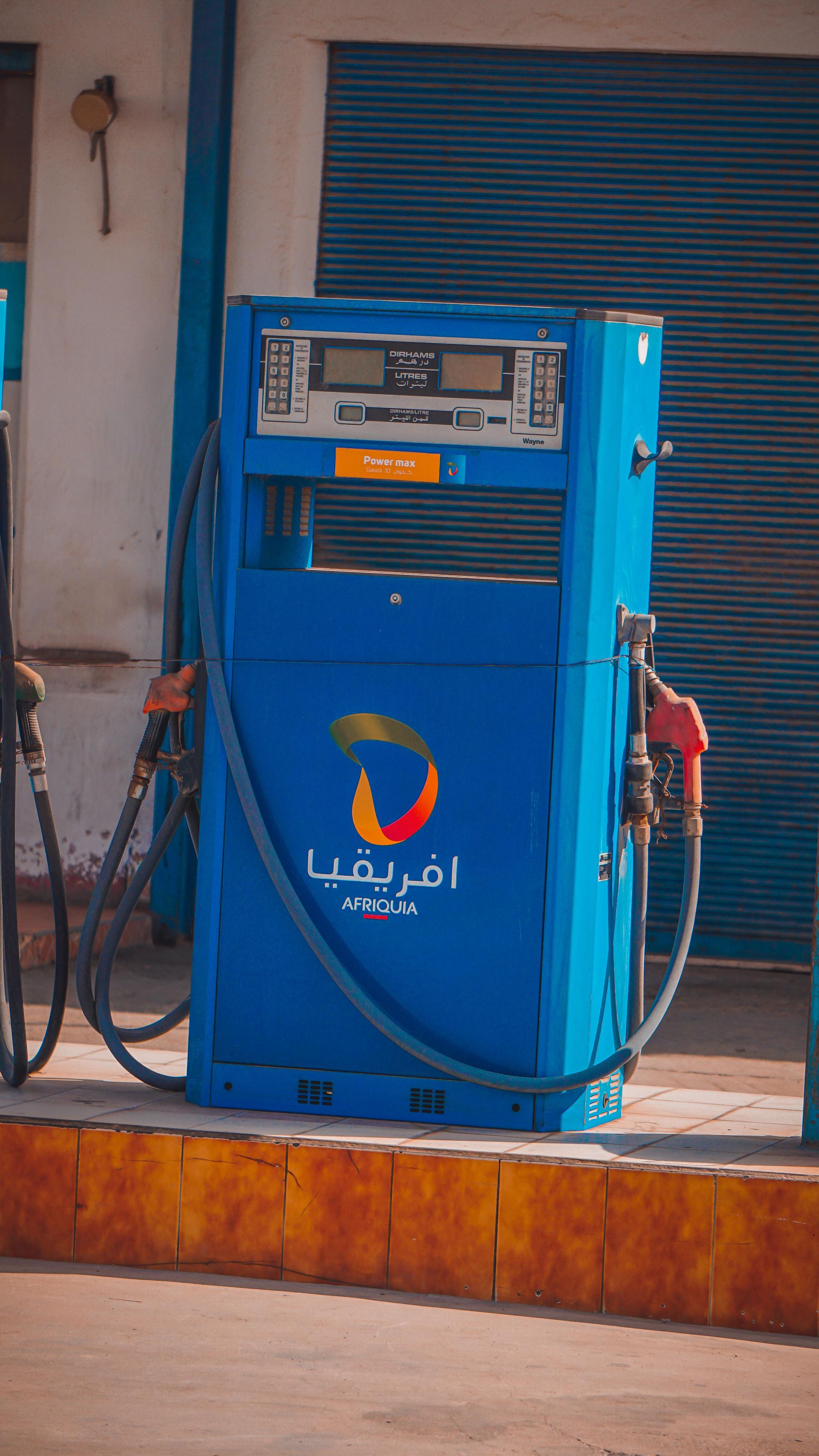
The text usually arrives near the end of the month, and it usually carries a number. A son in Boston, a daughter in Birmingham, a cousin in Calgary opens a message from home and reads the latest arithmetic of survival: the price of a litre at the pump has moved again, and with it the cost of the matatu fare, the bag of maize flour, the kerosene for the lamp. For hundreds of thousands of Kenyans abroad, the pump price is not an abstraction on a news ticker. It is a line item in the family budget they quietly underwrite, the variable that decides whether this month's transfer stretches to the end of the month or runs out a week early.
This week, far from any Nairobi forecourt, a development in West Africa nudged that equation. Africa's largest refinery announced it had pushed its output to a record level — and the ripples, in time, could reach the petrol stations that shape so many diaspora budgets.
A Record Set in Lagos
Dangote Petroleum Refinery and Petrochemicals confirmed that it had increased its crude-oil processing capacity to 700,000 barrels per day, a figure verified in a performance test conducted by the plant's process licensors. The milestone pushes the facility past its installed nameplate capacity of 650,000 barrels per day and cements its standing as the world's largest single-train petroleum refinery.
The plant, which began operations in 2024, is now turning out petrol, diesel, aviation fuel and other refined products at a scale that is starting to reorder the continent's energy map. Company executives say the record is only a waypoint: Devakumar Edwin, who leads the group's oil-and-gas arm, has described a strategy aimed at 1.4 million barrels per day within 30 months. The announcement was reported by Kenya's People Daily and corroborated by a range of regional outlets including Africanews and Nairametrics, with the company itself publishing the test results.
Why a Lagos Number Matters in Nairobi
For decades, East Africa has bought most of its refined fuel from distant suppliers, with cargoes sourced largely from the Middle East and routed through the ports that feed Kenya, Uganda, Rwanda and their neighbours. That dependence is part of why pump prices in the region move to a rhythm set far away — by global crude markets, shipping costs and freight insurance that Kenyan families never see but always pay for.
A refinery of this size on the African continent introduces something the region has rarely had: a large, nearby source of refined product. The Dangote plant has already widened its export reach to markets across Africa, Europe, the United States and parts of the Middle East, and analysts tracking the trade say its shipments have climbed sharply, with jet-fuel exports recorded as recently as April, according to industry data cited by S&P Global Commodities. None of this rewrites Kenyan pump prices overnight. But a credible continental supplier changes the long-run sourcing options for the importers who keep Kenya's tanks full — and, eventually, the calculus that lands in a month-end text message.
The Mombasa Question
The story has a more direct Kenyan chapter still on the drawing board. Dangote Industries is weighing a refinery project in Kenya valued at somewhere between 1.93 trillion and 2.19 trillion shillings, with a projected capacity of 650,000 barrels per day. The site under consideration is Mombasa, chosen for its port and for the fuel-consumption levels of the surrounding market.
The proposal has reportedly reached the stage of engagement with Kenyan authorities, and it forms part of a broader push to expand refining capacity across East Africa and trim the region's reliance on imported petroleum. For now it remains a proposal, its fate dependent on financing, infrastructure and political will that have sunk grander schemes before. Kenya's own Mombasa refinery was converted to a storage facility years ago, a reminder that ambition and execution are different currencies. Still, the conversation is live in a way it has not been for some time, and it is the diaspora — often the source of the savings and investment that chase such projects — who tend to watch these announcements most closely.
The Squeeze the Diaspora Already Feels
The reason any of this lands with families abroad is that the pressure is already real. Kenya's cost of living has been climbing, with inflation reported at 6.7 percent in May 2026 as fuel and food prices pushed higher, according to figures published by People Daily drawing on national statistics. Fuel has been politically combustible too, the subject of protests and an official inquiry into related deaths, and of a tense regulatory review cycle each time the energy authority resets prices.
Into that environment flows the diaspora's money. Kenyans abroad sent home roughly $5.04 billion in 2025, and the Central Bank expects the figure to grow again this year — a river of remittances that, for many households, is the buffer between a fuel-price shock and a missed school term. When the pump price rises, the transfer is what absorbs it. Anything that promises to steady that price over time is, for the sender, more than an energy-sector headline.
What to Watch, and What Not to Assume
It would be easy to read a record-breaking refinery as imminent relief at the Kenyan pump, and that would be a mistake. Pump prices are set by a tangle of forces — global crude, the shilling's strength, taxes and levies, and the margins of importers and marketers — over which a single refinery, however large, has limited short-term sway. Refined-product trade flows also take time to redraw, and a Mombasa plant, if it happens at all, lies years downstream.
What has genuinely shifted is the structure of possibility. For the first time, the continent has a refining giant capable of supplying its own markets at scale, and Kenya is openly in conversation about hosting one of its own. For the Kenyan in Boston or Birmingham doing the month-end arithmetic, that is not yet a lower number on the screen from home. But it is a reason to read the next fuel-price announcement with slightly different eyes — and to keep watching where Africa chooses to refine its own future.