The Phone That Beat the Bank: How Mobile Money Quietly Took Over Kenya's Diaspora Lifeline
A landmark national survey shows record sums flowing home from Kenyans abroad — and that the smartphone, not the bank branch, is now how most of that money lands.

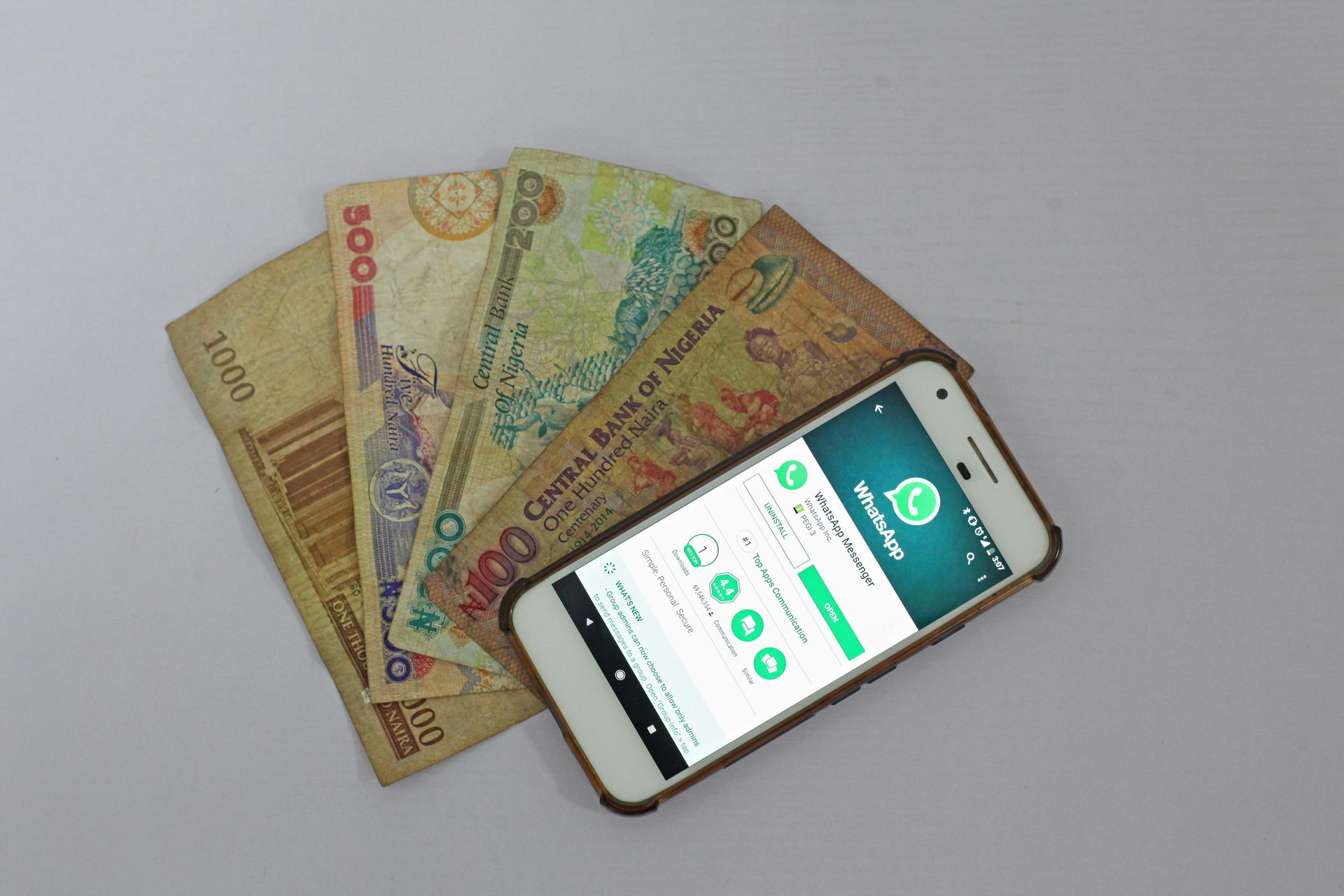
On the first morning of the month, a phone buzzes on a kitchen table in Nyeri. There is no envelope, no queue at a bank counter, no slip to sign. Just a short message, a name from far away, and a balance that is suddenly large enough to cover a school fee, a hospital bill, a sack of maize. Somewhere in Texas, a daughter has pressed send on her lunch break. By the time she is back at her desk, the money is already home.
That quiet exchange, repeated millions of times a year, has just been measured properly for the first time — and the picture it reveals is reshaping how Kenya thinks about the money its people send back from abroad. According to the country's first comprehensive Remittances Household Survey, released by the Kenya National Bureau of Statistics with the Central Bank of Kenya, the diaspora is now sending home record sums. And increasingly, it is doing so not through a bank, but through a phone.
A Record Finally Counted
The headline number is staggering in its scale. The survey estimates that Kenyan households received roughly 1.15 trillion shillings between June 2024 and May 2025, with about 91 percent arriving as cash and 9 percent in kind — goods, paid-for services, and possessions shipped or carried home. Of that, formal channels accounted for around 932 billion shillings, while informal flows that previous counts had largely missed added an estimated 281 billion shillings more.
What makes the figure matter is not just its size but what it now represents. The Central Bank's research director, Robert Mudida, told reporters that remittances have become "a pillar of macroeconomic stability," now contributing about 3.7 percent of national output and overtaking both foreign direct investment and official development aid as a source of external finance. In plain terms, the money Kenyans abroad send to their parents and children is now doing more for the country's balance of payments than the deals signed at investment summits.
For the families on the receiving end, the survey put hard numbers to a familiar dependence. It found that 42 percent of households treat remittances as supplementary income and 36 percent as additional income, while a striking 22 percent rely on the inflows as their main source of livelihood. For roughly one in five recipient homes, the message that lights up the phone is not a bonus. It is the budget.
Why the Branch Is Losing
The most telling shift the survey captured is not how much is being sent, but how. For years, banks were the unquestioned spine of formal remittances, and by total value they still lead, handling about 43.7 percent of the money. But that lead is narrowing fast, and at the front edge of the trend it has already flipped.
When researchers asked households about their single most recent transaction, mobile money came out on top, carrying about 46.5 percent of those transfers against 34.9 percent for banks. In other words, when a Kenyan abroad sent money home most recently, they were more likely to reach for a phone-based wallet than a bank account. Across all transfers, mobile money has climbed to roughly a third of the total — a remarkable share for a channel that barely existed in formal remittance statistics a decade ago.
The reasons are not mysterious to anyone who has stood in line at a wire-transfer counter. Mobile money settles in seconds, runs around the clock, and reaches a recipient who may live hours from the nearest bank branch but never more than an arm's length from a handset. The same digital infrastructure that made M-Pesa a household verb inside Kenya is now quietly rewiring how the diaspora's money completes its final leg home.
America at the Top of the List
If the survey punctures one assumption, it confirms another: the center of gravity for Kenya's remittances sits firmly in the West, with the United States far out in front. The data shows the US as the single largest source, accounting for roughly 43.5 percent of inflows — ahead of Germany, the United Kingdom, Canada, and Australia, which together with the US make up close to 80 percent of the money sent home.
That concentration tells a story about where Kenyans have built their lives. It is the nurse in Dallas, the truck driver in Minneapolis, the care worker in Manchester, the software engineer in Toronto, the aged-care assistant in Melbourne. Each represents a household ledger that stretches across an ocean, with one column written in dollars or pounds and the other in shillings spent on rent in Kakamega or fees in Kisii.
It also explains why policy shifts in Washington and other Western capitals ripple so quickly through Kenyan kitchens. When visa rules tighten, when the cost of living in host cities climbs, when a job is lost in a far-off recession, the effect is not abstract. It shows up, or fails to, as a number on a phone screen at the start of the month.
The Cost of Sending Love Home
For all the convenience the survey celebrates, it also names the friction that still eats into every transfer. Asked what made sending money difficult, 83.3 percent of households pointed to high transfer costs — by a wide margin the biggest complaint. Long settlement times, strict identity checks, limited access points, and unfavorable exchange rates followed.
Those costs are not trivial. Every percentage point skimmed off a transfer is a percentage point that never reaches a school bursar or a chemist's counter. Development economists have long argued that cutting remittance fees is one of the most direct ways to put more money into poor households without spending a shilling of public funds, precisely because the money is already being sent. The survey gives Kenyan policymakers fresh, locally grounded evidence to press that case with the banks, operators, and fintechs that sit in the middle of each transaction.
Mudida urged policymakers to expand formal access points and strengthen financial literacy so that more of the flow moves through cheaper, traceable channels — and so that the informal 281 billion shillings, carried in suitcases and trusted hands, can be brought into the light where it is safer and easier to track.
What Comes After the Lifeline
The quieter ambition running through the survey is to turn a lifeline into a launchpad. Officials have spoken repeatedly about channeling remittances beyond day-to-day consumption and into productive sectors — agriculture, education, healthcare, and small businesses — through diaspora-targeted investment products. "Remittances are not just transfers," Mudida said. "They are lifelines, investments and bridges connecting Kenyans abroad with development at home."
Whether that vision materializes will depend less on speeches than on plumbing: on whether the digital rails now carrying the money can also carry savings accounts, bonds, and mortgages priced for someone earning abroad but building at home. The diaspora has already shown it will adopt the fastest, cheapest tool available. The mobile-money surge is proof of that. The open question is whether Kenya's financial system can offer that same audience something to do with the money beyond watching it land and disappear.
For now, the survey stands as the clearest portrait yet of an invisible economy. Every record figure in it began as a single, ordinary act — a person far from home, on a lunch break or after a night shift, deciding that the people they left behind would not go without. The phone on the kitchen table in Nyeri will buzz again next month. Thanks to this count, the country finally knows just how much that sound is worth.