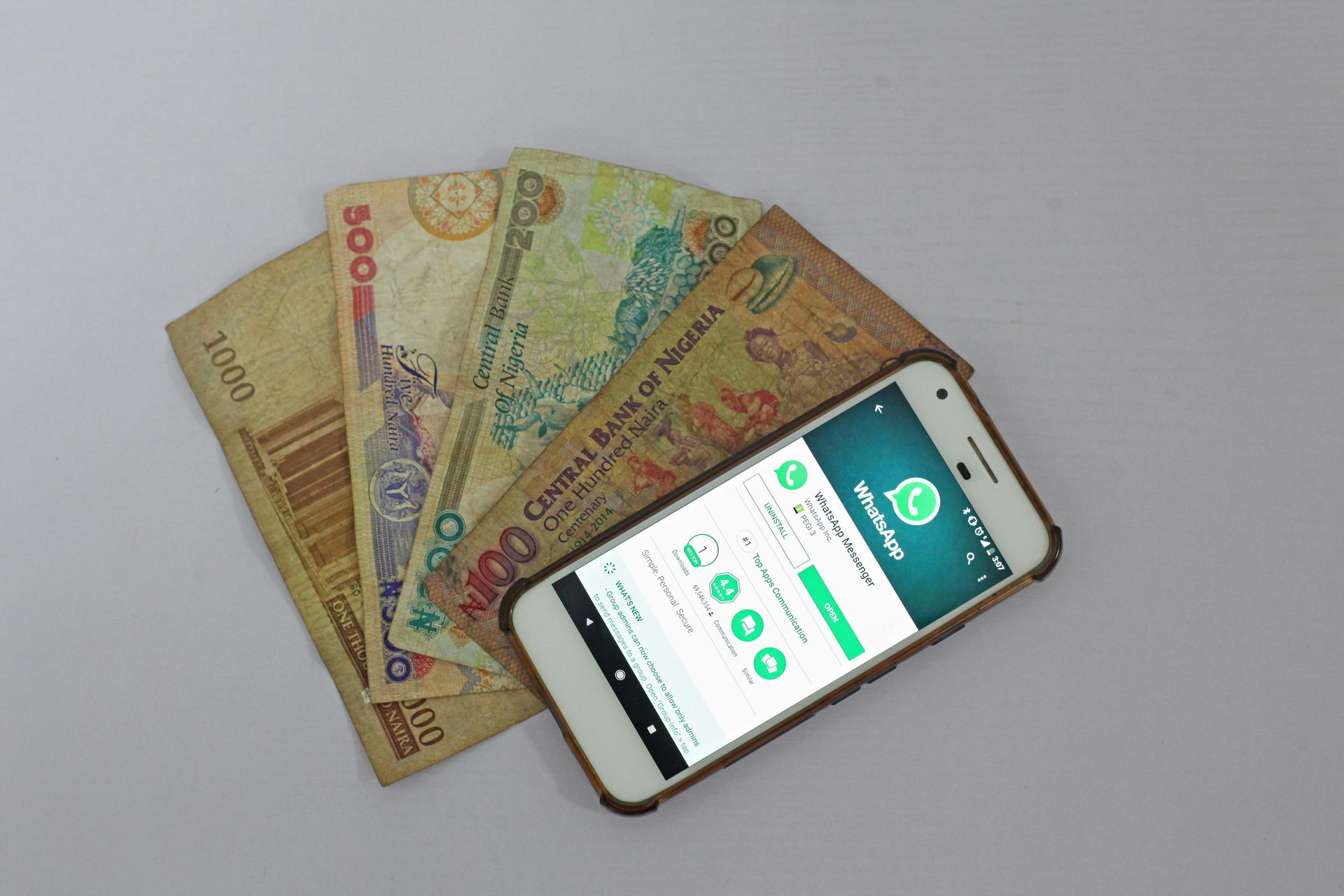
The Phone That Beat the Bank: How Mobile Money Became the Diaspora's New Way Home
A record Sh931.8 billion came home last year, and for the first time more of it arrived by phone than by bank wire.

It is late on a weeknight in a kitchen somewhere outside Dallas, and the dishes are done. A nurse who finished a twelve-hour shift sits at the table with her phone, not her laptop, and not the printed wire-transfer form her parents once insisted she keep in a drawer. She opens an app, taps in a number she knows by heart, and a few minutes later a phone buzzes in a sitting room in Kericho. The money has arrived before she has finished her tea. No branch, no teller, no three-day wait. For a growing share of Kenyans abroad, this is now what sending money home looks like.
That small, ordinary moment is the human edge of a much larger shift confirmed this week. According to figures highlighted by Financial Afrik and drawn from the 2025 Remittances Household Survey compiled by the Central Bank of Kenya and the Kenya National Bureau of Statistics, Kenyan households received about 931.8 billion shillings from relatives abroad between June 2024 and May 2025 — a record. But the more telling number is not how much came home. It is how it travelled.
The Number That Keeps Climbing
For more than a decade, remittances have been one of Kenya's most reliable sources of foreign exchange, often rivalling or surpassing tourism and key export crops. The latest survey puts the annual figure at roughly 931.8 billion shillings, the highest on record, and underscores how central the diaspora has become to ordinary household budgets back home.
The United States remains the single largest source of that money, accounting for about 43.5 percent of the total, ahead of Germany and Australia. That concentration mirrors the shape of the modern Kenyan diaspora: a large, established professional community in North America, a sizeable and growing presence in Europe, and a younger cohort spread across the Gulf, the United Kingdom and Australasia. When a nurse in Texas or an engineer in Munich sends money home, they are not a footnote to the national economy. Collectively, they are a pillar of it.
When the Phone Overtook the Branch
The headline of the new data is a quiet changing of the guard. Measured by the total value of money received over the survey period, banks still lead, handling about 43.7 percent of the amounts, with mobile money channels carrying around 33.2 percent. By that backward-looking measure, the traditional banking system still moves the most money.
But when the survey looked at the most recent transaction each household received — a sharper snapshot of how people are sending money right now — the picture flipped. Mobile money took the lead at about 46.5 percent, ahead of banks at roughly 34.9 percent. In other words, the accumulated stock of remittances still tilts toward banks, but the flow at the margin has already moved to the phone. That is usually how technological shifts announce themselves: not as a single dramatic break, but as a crossover in the newest numbers that the older averages have yet to catch up with.
A Lifeline Rewired
The reasons are not mysterious to anyone who has tried both methods. A bank wire from abroad can carry steep fixed fees, demand matching account details on both ends, and take days to clear. A mobile transfer can land in minutes, in amounts small enough to make a weekly top-up worthwhile rather than a once-a-quarter event. For families, that changes the rhythm of support from occasional lump sums to a steadier, more responsive trickle.
The survey also points to why the rails were ready. It found that about 82.5 percent of remittance recipients own a mobile money account, while only around 55.4 percent hold a bank account. In much of rural Kenya, the nearest bank branch may be an hour away, but the nearest mobile money agent is often a short walk down the road. The infrastructure that the diaspora's money now rides on was built, over nearly two decades, by Kenyans at home adopting mobile wallets faster than almost any population on earth. The diaspora is not leading this change so much as catching up to it.
What It Means for Families Back Home
For recipients, the convenience is real and immediate, but so are the trade-offs. Mobile money makes it easier to send smaller amounts more often, which can smooth a household's cash flow but can also blur the line between a genuine emergency and a routine request. Money that arrives instantly is money that can be asked for instantly, and several studies of remittance-dependent families have noted the emotional weight that constant, frictionless availability can place on senders abroad.
There is also the question of cost and transparency. Mobile transfers are not free, and layered fees — a charge to send, a charge to convert, a charge to withdraw at an agent — can quietly erode a transfer's value, especially on the small, frequent payments that the technology encourages. The strong link the survey found between financial inclusion and remittance receipt cuts both ways: households plugged into formal channels are easier to reach, but they are also more exposed to whatever those channels decide to charge.
The Risk Beneath the Convenience
A system this fast is also a target. As digital channels carry a larger share of diaspora money, fraud and impersonation scams follow the flow, and regulators in both sending and receiving countries are still adapting rules written for an era of bank wires and cash. Kenya's own push to formalise and monitor these flows — the very surveys that produced this week's figures — reflects a recognition that what cannot be measured cannot be protected.
For the diaspora, the shift carries a subtler risk too: dependence on a small number of platforms and corridors. When most of a nation's household support runs through a handful of apps, an outage, a policy change or a pricing decision can ripple into kitchens from Kericho to Kakamega within hours. Convenience and concentration tend to arrive together.
The Diaspora's Quiet Verdict
None of this dims what the numbers ultimately show. A record amount of money came home last year, and Kenyans abroad increasingly chose the fastest, most familiar tool to send it. The bank wire is not dead, but it is no longer the default in the hands of the youngest, busiest senders. The future of the diaspora's lifeline is being decided one tap at a time, on phones held in kitchens half a world away, and for now that future looks less like a teller's window and more like a buzzing handset in a sitting room back home.