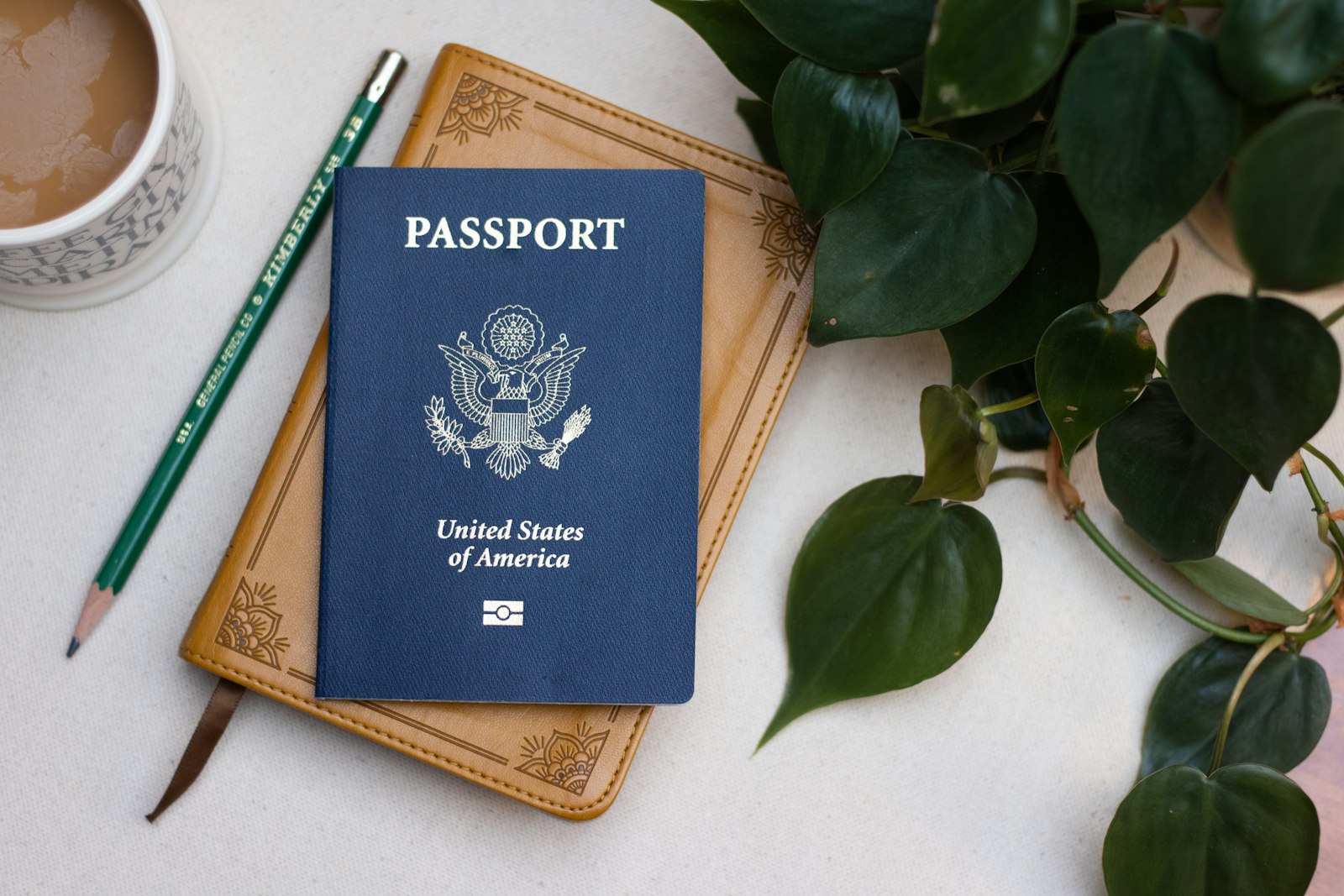
The Long Way Home: How Washington's New Green Card Rule Could Send Kenyan Workers Back to Nairobi to Wait
A USCIS memo issued Friday now treats adjustment of status as 'a matter of discretion' — pushing most diaspora green-card hopefuls into consular queues abroad.
In a one-bedroom apartment in Lowell, Massachusetts, a Kenyan nurse named Wambui has spent the last fourteen months living with her shift bag packed and her wedding photographs in a drawer. She arrived in 2023 on an H-1B sponsored by a long-term-care facility, married a US citizen the following year, and filed her I-485 application to adjust her status to permanent resident in August 2025. Until last week, she expected to receive her green card in 2026 without leaving the country. That assumption — held by hundreds of thousands of immigrants in similar situations — was unsettled on Friday by a single policy memo from US Citizenship and Immigration Services.
The memo, issued by USCIS on May 22, declares that adjustment of status — the procedure that lets a person already inside the United States apply for permanent residency without going home — is a matter of "discretion and administrative grace" rather than an entitlement. In practical terms, the agency now intends to push most temporary visa holders and humanitarian parolees out of the country to apply through consular offices abroad. USCIS spokesman Zach Kahler said the policy would return immigration administration to the "original intent of the law" and ensure that aliens navigate the nation's immigration system properly.
For East African nurses, doctors, software engineers, students and small-business owners — categories where Kenyan citizens are heavily represented in the US labour market — the change is not a footnote. It rewrites the geography of waiting. The diaspora must now reckon with the possibility that the journey from H-1B or F-1 to green card may run through a US embassy in a country they spent years saving money to leave.
What the Memo Actually Changes
Until Friday, an H-1B worker, F-1 graduate on Optional Practical Training, or an immediate relative of a US citizen could, in most circumstances, file Form I-485 inside the United States. Many people filed concurrently with their employer's I-140 or their spouse's I-130 petition, then continued to work and live in the country during the months — sometimes years — it took the case to mature. That option, the memo states, will now be granted only in "extraordinary circumstances", with USCIS officers themselves deciding what qualifies.
Cases described as providing an "economic benefit" or serving the "national interest" may still be processed inside the United States, USCIS said. Others, the agency added, might be transferred to consular offices overseas. The memo does not list the criteria officers will use, does not name an effective date, and does not say what will happen to the more than one million I-485 applications already sitting in the queue.
The Department of Homeland Security framed the move as a restoration of statute. Immigration lawyers, including Michael Valverde, a former senior USCIS official cited by the Washington Post and Mwakilishi, described it differently, calling the shift largely unprecedented and warning that it could upend the lives of hundreds of thousands of people who built their plans around the existing rules. ABC News and NPR each reported that USCIS did not say when the policy would take effect or how it would handle in-progress cases.
Why the Kenyan Diaspora Is Especially Exposed
The Kenyan-American community is concentrated in occupations where adjustment of status is the standard route to permanence. The largest cohort, health workers, typically arrive on H-1B or EB-3 visas sponsored by hospitals and care facilities in Massachusetts, Maryland, Texas, Minnesota and Georgia. Family-based filings are also common; a sizable share of green cards issued to Kenyans each year follow marriage to a US citizen or sponsorship by an adult child.
If those routes must now run through Nairobi's consular section, the diaspora faces a queue that already moves slowly. Kenyan applicants have, for several years, reported wait times of many months for routine visa interviews at the US Embassy on United Nations Avenue. Adding tens of thousands of green card files to that workload, without new staff or new appointment slots, would compound delays already visible in the National Visa Center's monthly bulletins.
There is also a second risk that immigration attorneys are quietly flagging to Kenyan clients. Anyone who has overstayed a visa, even briefly, can trigger a three- or ten-year bar to re-entry the moment they depart the United States. A consular officer in Nairobi has discretion to forgive that bar, but only through a waiver process that itself takes months. For mixed-status Kenyan families — a citizen child, a green-card-holder parent, a sibling on H-1B — that arithmetic can mean indefinite separation.
The View From Kenyan Households Across America
The first reactions inside the community on Saturday were not legal but logistical. WhatsApp groups that normally circulate church notices and funeral contributions began carrying questions that the memo cannot yet answer. Will an I-485 filed last year be sent abroad? Will employer-sponsored cases be treated more leniently than spouse-based ones? Will a pregnant applicant be required to give birth before travelling? Will children born in the United States be allowed to remain with relatives while a parent waits in Nairobi?
Some of those questions will be settled by future USCIS guidance. Others will be settled by court challenges. Advocacy groups quoted by NPR and the Texas Tribune warned that requiring applicants to leave the country could separate families for long periods and, in cases involving prior overstays, prevent their return entirely.
Kenyan diaspora organisations in Boston, Atlanta and Dallas have already begun convening online clinics with immigration attorneys. Their early advice is consistent: do not travel internationally if there is a pending I-485, do not abandon work authorisation, and gather documentation that demonstrates an economic-benefit or national-interest argument — academic credentials, employer letters, evidence of community service — in anticipation of a more adversarial review.
What Nairobi Has Said, and What It Has Not
Kenya's Ministry of Foreign and Diaspora Affairs has not yet issued a public response to the USCIS memo. Principal Secretary Korir Sing'Oei, currently on a diaspora outreach tour of Europe, has previously framed the ministry's role as one of advocacy and information rather than direct intervention in another state's immigration decisions. Past Kenyan governments have typically reserved formal diplomatic engagement for issues affecting workers in the Gulf, where labour-recruitment scandals dominate, leaving North American policy questions to be navigated by individual applicants and their lawyers.
That posture may now need to change. Remittances from the United States account for a substantial share of Kenya's annual diaspora inflows, which crossed half a trillion shillings last year according to Central Bank of Kenya bulletins. A policy that funnels Kenyan adjustment-of-status applicants back through Nairobi has consequences not only for individuals but for the foreign-exchange balance that the Treasury depends on. Diaspora groups have begun pressing the ministry to engage USCIS counterparts and to seek clarity on how transitional cases will be treated.
What Comes Next, and What Is Still Unknown
USCIS has not published an effective date. The agency has not said whether the memo applies prospectively, retroactively, or only to filings made after a notice-and-comment period. It has not defined "extraordinary circumstances" with any precision, leaving each adjudicator considerable latitude. Litigation challenging the change is widely expected, and immigration lawyers told the Washington Post and NPR they were already preparing filings on behalf of affected applicants.
For Wambui in Lowell, and for the thousands of other Kenyans waiting on similar paperwork, the immediate guidance from her attorney was unromantic: keep working, do not leave, document everything, and prepare for the possibility that the final stretch of the green card road may, after all, run through Nairobi. The door that has stood open for a generation of skilled Kenyan migrants has not yet closed. It is, however, no longer guaranteed to stay open from this side.