The Penalty That Cleared the Bar: How Arsenal's Budapest Loss to PSG Lands on Kenya's Diaspora Just Days After the Nairobi Parade
PSG retained the Champions League trophy on penalties in Budapest, leaving Kenya's enormous Arsenal following — at home and in the diaspora — staring at screens one week after they had filled Nairobi's streets in red.
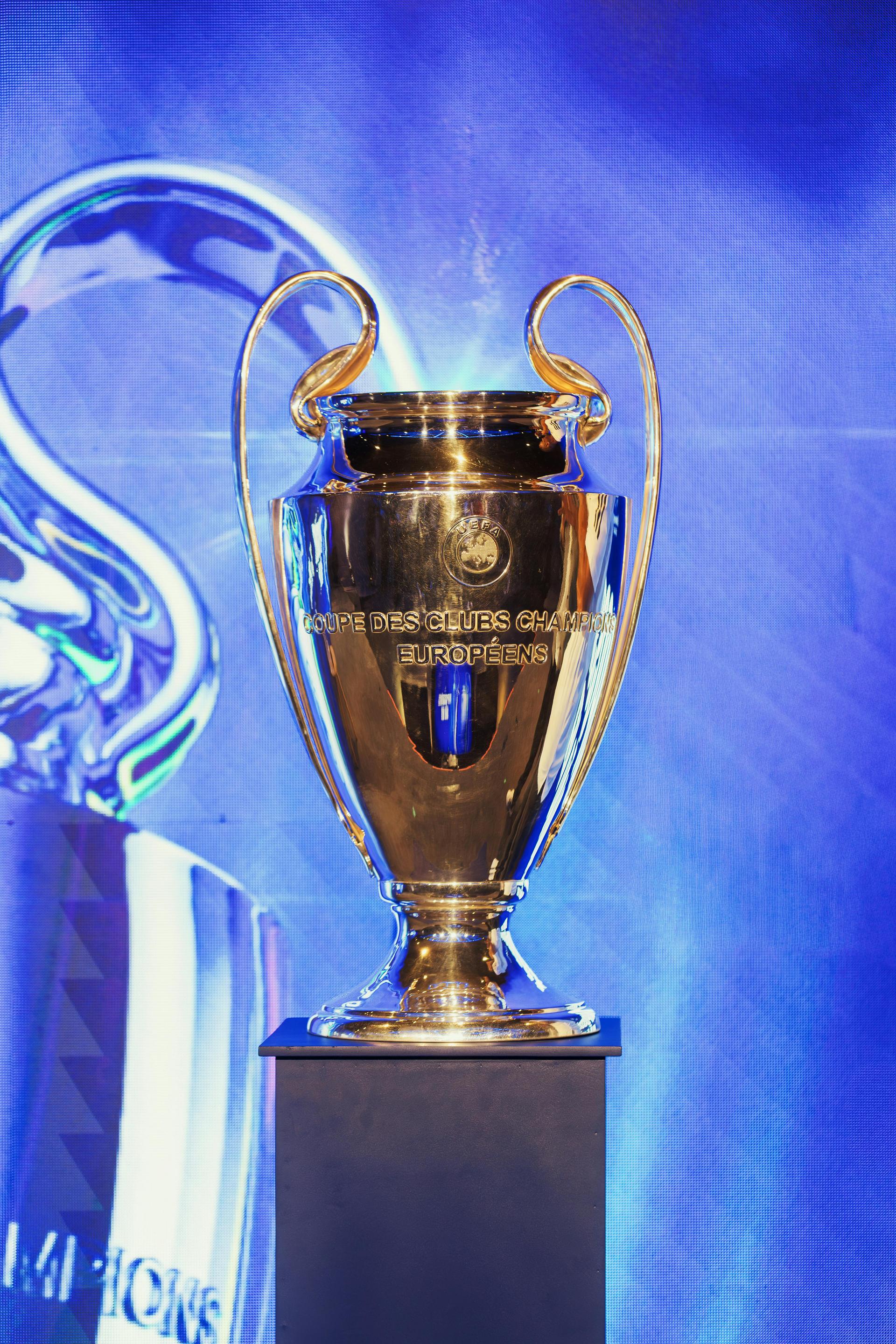
At a bar in Westlands just past midnight on Sunday, the speakers cut from a thumping promo loop to a silence so sudden that the waiter, mid-pour, paused with the bottle still tilted. A Kenyan-British supporter in a yellow Arsenal away kit looked at his pint, then at his phone, then back at the screen above the door. Gabriel Magalhaes — the same defender who had organised Arsenal's back line for ninety minutes and another half-hour of extra time — had just sailed his fifth penalty over the bar of the Puskas Arena in Budapest. The Paris Saint-Germain bench burst out of its own technical area in a single, ragged wave of dark blue. Five thousand kilometres north-west of that Westlands bar, in Edgware and Croydon and the smaller Kenyan corners of Manchester, identical living rooms were watching the same moment from another camera angle. PSG had retained the Champions League trophy 4-3 on penalties, the match level at 1-1 after 120 minutes, and Kenya's deepest, loudest English club had gone home with another runners-up medal.
A back-and-forth final, decided by the smallest possible margin
The match itself, played at Hungary's Puskas Arena, was the kind of European final that resists easy summary. Arsenal opened the scoring inside the first ten minutes when Kai Havertz drove the ball past PSG goalkeeper Matvei Safonov in the sixth minute, and for the better part of an hour the Gunners absorbed wave after wave of attacks from a French side that has now become the European game's most relentless aggressor. The equaliser came in the 62nd minute, when Cristhian Mosquera's foul on Khvicha Kvaratskhelia handed Ousmane Dembele the spot kick. Dembele struck it cleanly past David Raya, and the rest of the second half and the extra time that followed largely felt like a long, careful wait for the inevitable shootout. PSG took it 4-3, with Gabriel's miss the only kick of the night that mattered. Luis Enrique's side became only the second club since the European Cup was reformatted as the Champions League in 1992 to win the trophy in consecutive seasons, joining a Real Madrid side that has dominated that conversation for a generation.
A week ago, the same red was a parade
What gives the loss its particular sting in Nairobi is that just one week ago, the same supporters were spending an entirely different evening in the same bars. On the night Arsenal sealed the Premier League for the first time in more than two decades, the Central Business District near the National Archives effectively closed itself off to non-Arsenal traffic. Matatus crawled. Strangers hugged on Tom Mboya Street. Photographs taken that night, and replayed every day since on Kenyan television, showed a sea of red Arsenal jerseys stretching from Aga Khan Walk to the Hilton. Arsenal majority owner Stan Kroenke publicly thanked the Nairobi crowds within forty-eight hours; a Premier League trophy tour passed through the city; Arsenal Fanatics, a Nairobi-based supporters' group of close to two hundred members, organised viewing parties for every match still on the calendar. The Champions League final was the one that remained.
Why Arsenal sits so deeply in Kenya's football imagination
Kenya is a Premier League country — that is widely accepted in the broadcasting industry. What is less obvious from outside is just how dominant a single English club's hold has become within that following. Arsenal has, for more than a generation, been the team Kenyan teenagers picked first, partly because the long Arsene Wenger years coincided with the deep penetration of satellite television into urban estates, partly because the side's playing style mapped neatly onto the kind of football most often described in Swahili commentary as kuipanga — the careful arrangement of the ball. The result is the kind of fan base where a Champions League final does not stay in one neighbourhood. It runs from Mombasa hotel bars to upcountry pubs in Eldoret, from Kenya Airways crews on layover in Doha to nurse-share houses in Slough where the kettle goes on at half-time.
A diaspora that watched at odd hours
For Kenyans abroad, Saturday's kickoff time of 21:00 Central European Time lined up almost perfectly with the diaspora's most reliable rhythms. In London and Manchester, it was a Saturday evening at the pub, jerseys on, the work week done — many of the United Kingdom's roughly 200,000-strong Kenyan community switched on at the same moment as their parents back in Karen and Kasarani. On the United States East Coast, it was a late afternoon match: 3 p.m. in New York, 2 p.m. in Atlanta, 12 p.m. in Seattle, with Kenyan-American supporters gathering at the same Maryland and Minnesota sports bars that have hosted every Premier League weekend this year. In Australia, where the recent death of Sheila Chebii in Sydney has kept Kenya's small but tight community in regular contact, supporters set Sunday-morning alarms; in Bradford, where a Kenyan diaspora football tournament has been running this weekend, organisers paused fixtures so players could crowd around a phone propped against a water bottle.
The crossbar that everyone saw
The penalty itself — the one Gabriel sent clearing the bar — will be replayed for weeks on Kenyan sports radio and on the WhatsApp groups that keep diaspora and home in constant contact. Inside that single moment is most of what makes Arsenal in Kenya a particular kind of supporters' culture: the patience, the long memory of near-misses, the way a defender who had played a near-perfect tactical match for two hours becomes, by one bad contact with a ball, the image attached to the loss. Mikel Arteta, who only last week sent a short, warm message to Arsenal's Kenyan supporters before flying out to Budapest, will keep his job and his project. Luis Enrique's PSG, meanwhile, has entered the kind of conversation about historical greatness that used to be reserved for the Spanish and Italian giants of the 2010s. In Paris, fires were lit in the streets within minutes of the final whistle, in scenes that mirrored the more than five hundred arrests and two deaths that followed last year's win over Inter Milan. In Westlands, the bar simply restarted its promo loop. By 1:30 a.m. on Sunday in Nairobi, the waiter was clearing glasses. Someone walked out into Mpaka Road still wearing the away kit, looking up at a city in which the red lights of the matatu taillights, for the first time in a week, were not part of a celebration.