The Goal Beyond the Goalposts: How a Meru Football Final Became Kenya's Pitch for Jobs Abroad
On a dusty primary-school pitch in Buuri, sixty teams chased a trophy. The government chasing them had a bigger prize in mind: a safe, sanctioned route to working overseas.
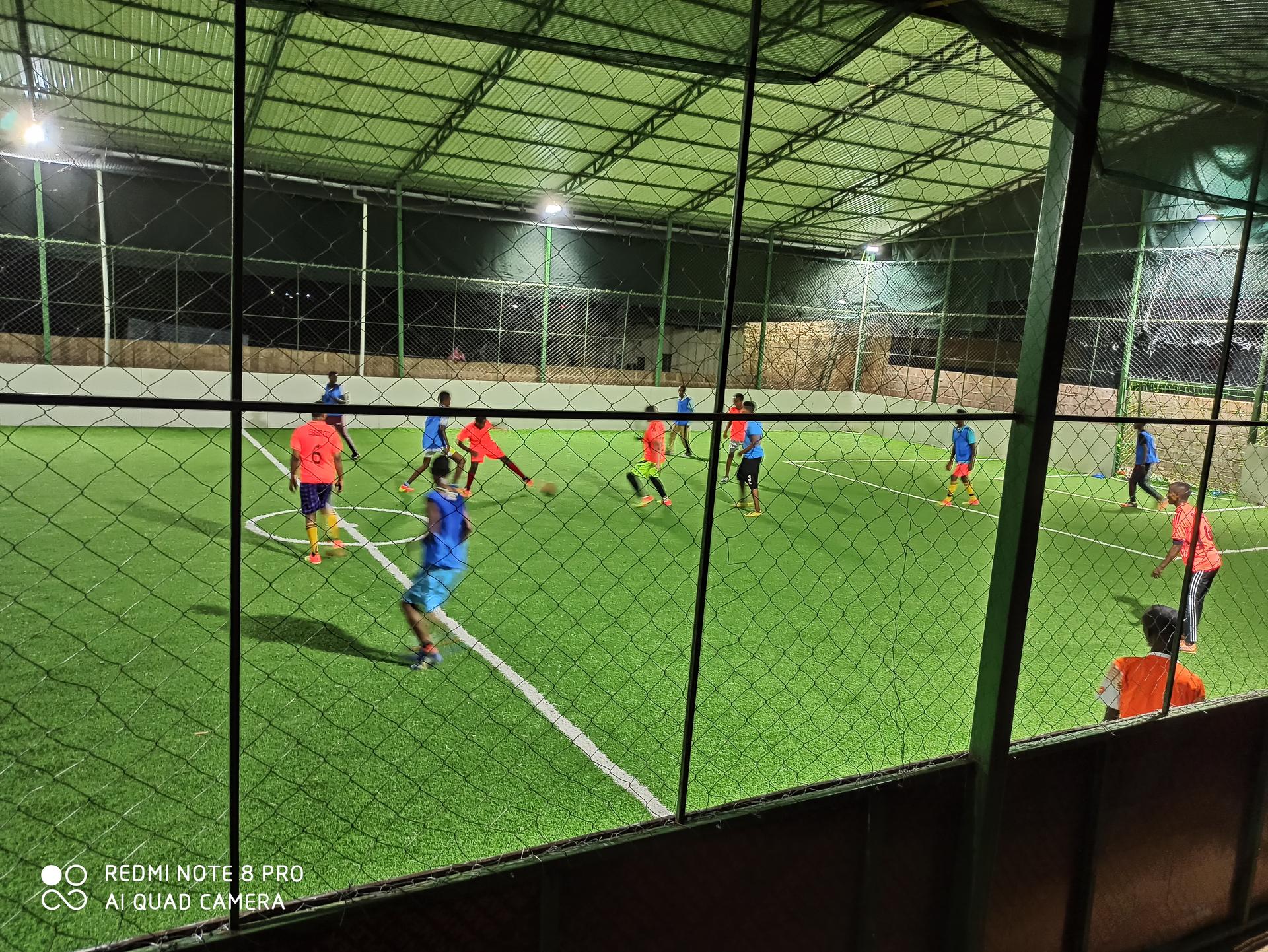
The whistle that ended the men's final at Mitoone Primary School did not settle much. Sirimon FC had edged Christian FC by a single goal, 1-0, the kind of scoreline that leaves the losing bench staring at the grass. Earlier, in the girls' final, Gundua Starlets had beaten Kironya Starlets by the same margin. Sixty teams had travelled in from across Buuri Sub-county in Meru County for the day, and the winners would go home with footballs and playing kits. But the woman handing out the prizes had come to talk about something other than football.
Roseline Njogu, the Principal Secretary for Diaspora Affairs, was at the Meru pitch to launch the "Kazi Majuu" football tournament, a competition whose name — Swahili for "jobs abroad" — gives away its real purpose. Behind the brackets and the penalty shootouts sat a government recruitment drive, aimed squarely at the young men and women filling the touchline.
A Tournament With a Second Scoreboard
Kazi Majuu is not new. It is one arm of a three-part state effort to chip away at youth unemployment, alongside programmes the government brands Kazi Kwa Ground and Kazi Mtandaoni — work on the ground and work online. What is new is the decision to wrap the message in sport, and to take it to the village level rather than the conference hall.
"I urge the youth to embrace the programme because it has many benefits both locally and abroad," Njogu told the crowd. "Kazi Majuu, which literally means jobs abroad, will allow young people to exchange ideas, acquire skills and abstain from drug and substance abuse, among other social vices."
The tournament, she said, targets women and young people under the age of 25 — the demographic most exposed to joblessness and, officials worry, to the idleness that feeds drug use. By her account, more than 530,000 young Kenyans have found work through the Kazi Majuu programme over the past three and a half years. The pitch in Buuri, then, was less a sports day than a registration booth with goalposts.
The Remittance Engine
To understand why a cabinet-level department is refereeing village football, follow the money. Njogu told the gathering that Kenyans working abroad sent home more than 500 billion shillings last year, up from roughly 400 billion in 2022. Remittances have quietly become one of the country's largest sources of foreign exchange, outpacing several traditional earners and arriving, crucially, directly in the hands of families rather than through state coffers.
For a government under pressure to create jobs faster than its economy can, labour export is an attractive release valve. Each young person who lands a contract in the Gulf, Europe or North America is one fewer in the domestic unemployment column and one more potential sender of dollars, pounds and riyals. The diaspora, in this framing, is not a community that simply left so much as a workforce deployed.
"Safe Labour Migration" and Its Shadows
The language officials use around Kazi Majuu is careful, and deliberately so. Njogu stressed that the tournament also teaches residents how to apply for overseas jobs safely, through approved recruitment agencies and in coordination with the Ministry of Labour and the State Department for Diaspora Affairs. The emphasis on the word safe is not accidental.
The same months that have seen the government celebrate its job placements have also produced a steady stream of grimmer diaspora headlines: workers stranded by unscrupulous agents, families waiting on the repatriation of bodies, and the long-documented dangers of domestic and construction work in parts of the Gulf. A programme that sends tens of thousands abroad each year carries an unavoidable duty of care, and the official insistence on vetted agencies is an implicit acknowledgement of what can go wrong when that vetting is absent.
That tension — opportunity on one side, exposure on the other — is the quiet subtext of every Kazi Majuu launch. The promise being made to the teenagers in Buuri is not simply that a job exists overseas, but that the state can help them reach it without being exploited along the way.
Exporting Talent, Not Just Labour
There was a second idea on the pitch, less developed but more novel. Njogu suggested the government wants to treat athletic ability as exportable in the same way it treats nursing or construction skills.
"We want to sensitise the youth that even if your talent is local, it has global opportunities," she said, floating the prospect of channelling sporting talent abroad through the same machinery that places workers. For a country whose distance runners are global brands but whose footballers rarely break into the lucrative European leagues, it is an ambitious leap. Yet it reframes the tournament neatly: the boys and girls chasing a 1-0 win in Meru are being told that the pitch itself could be a passport.
Buuri's member of parliament, Mugambi Rindikiri, leaned into the practical side. He welcomed the initiative, said he intended to help enrol at least 250 young people from his constituency, and pressed the crowd on paperwork. "I challenge the youth to register in order to benefit," he said, urging them to obtain national identity cards and passports — the documents without which no overseas opportunity, sporting or otherwise, can be claimed.
What the Diaspora Is Watching
For Kenyans already abroad, the Buuri tournament is a small scene with familiar stakes. Many of them left through earlier, messier versions of the same pipeline, and they know better than anyone how much rides on the difference between a sanctioned route and a broker's promise. A more organised, state-backed system could mean younger relatives arriving with contracts that hold up, rather than landing on a tourist visa and hoping.
Njogu announced that the football tournament will be rolled out across the country, turning a one-day event in Meru into a national template. Whether it becomes a genuine on-ramp to safe, well-paid work — or simply a livelier way to market a migration model whose risks are still being counted — will be measured not on any scoreboard, but in the experiences of the players who take the message to heart and board the plane.