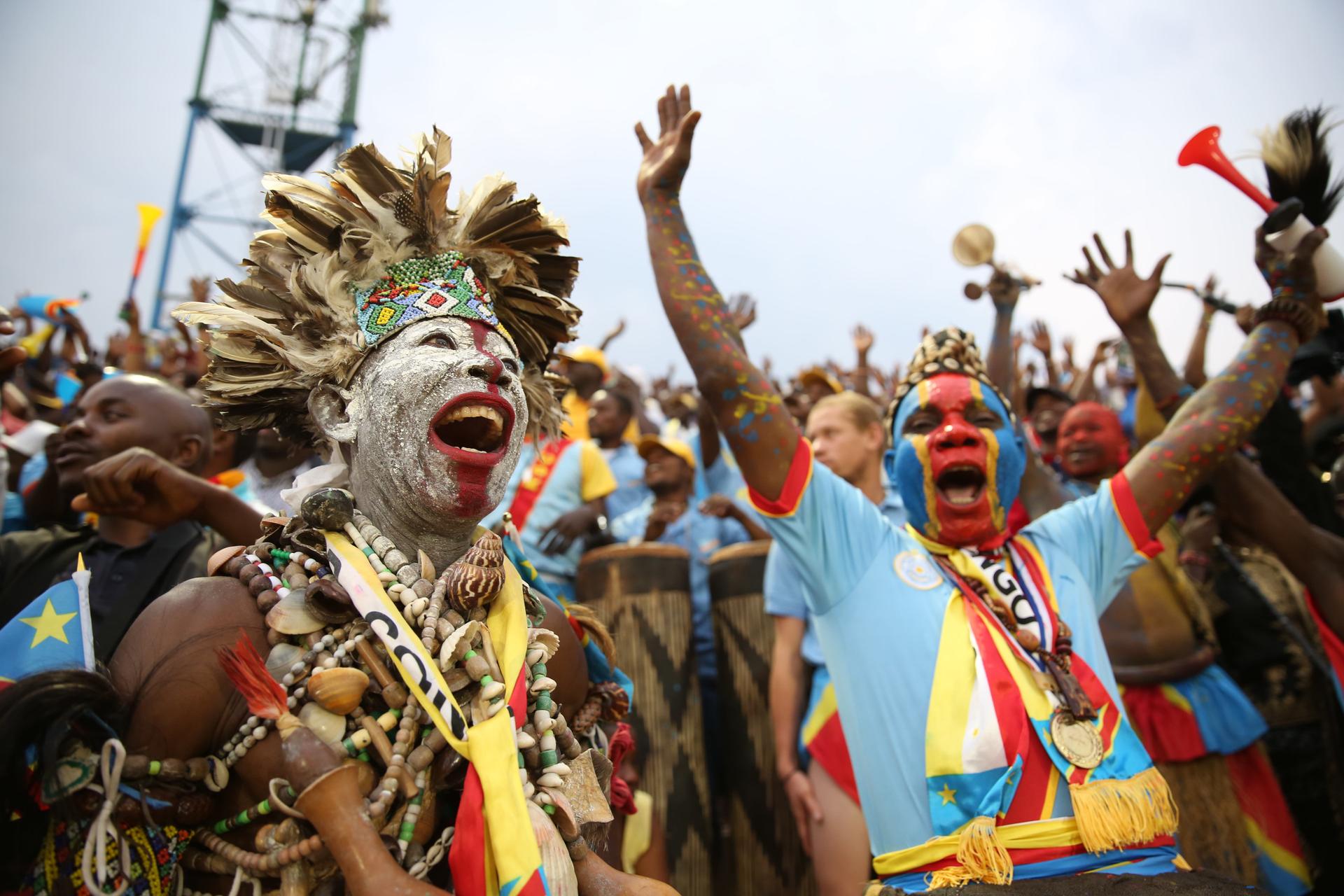
The Flag They Chose Instead: How a World Cup Opener Split Africa's Diaspora Over South Africa
When Bafana Bafana fell to Mexico in the opener, much of the continent's diaspora was quietly cheering the other side — a protest against years of xenophobic violence.
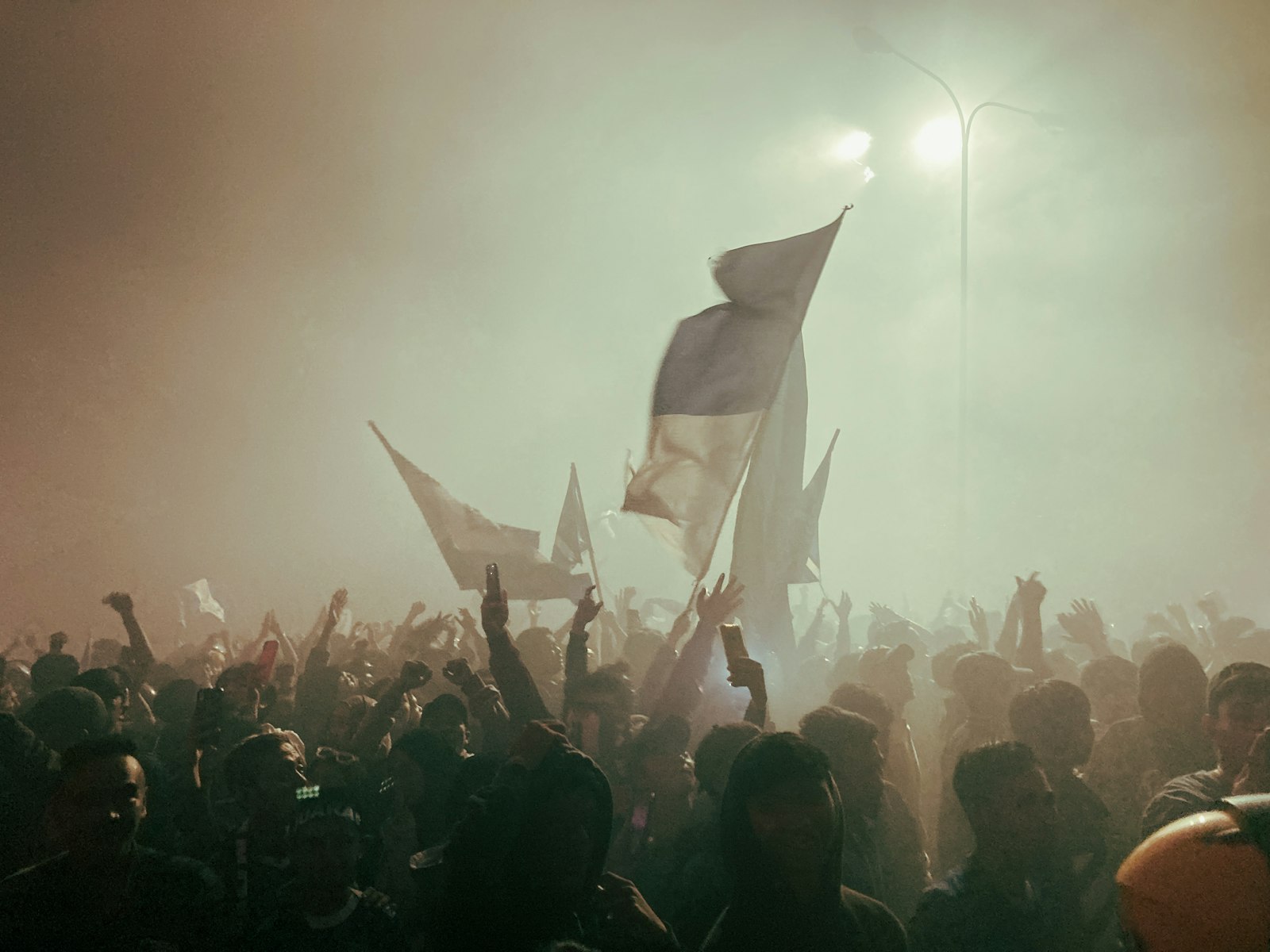
In the bars of Johannesburg's Yeoville, a neighbourhood whose streets carry the accents of half a dozen African countries, the loudest reaction to South Africa's World Cup opener came at the wrong moment. When Mexico's Julián Quiñones struck inside the opening ten minutes at the Estadio Azteca on June 11, and again when Raúl Jiménez sealed a 2-0 win in the second half, some of the migrants watching in the diaspora-rich quarter did not groan. They cheered. For a tournament that has always doubled as Africa's great act of collective pride, the sound was jarring — and it travelled fast, from the screens of Yeoville to timelines in Nairobi, Lagos and Lusaka.
The 2026 World Cup, co-hosted across the United States, Canada and Mexico, was supposed to be a homecoming for the continent's scattered millions. Instead, its first week has surfaced a quieter, more uncomfortable story: that the unwritten pact of pan-African football solidarity, the reflex that turned Ghana in 2010 and Morocco in 2022 into the whole continent's team, has frayed. And the team it has frayed around is Bafana Bafana, South Africa's national side.
A Goal That Drew Cheers in the Wrong Corners
The split is not subtle. After the loss to Mexico, a vocal slice of African social media openly welcomed the result, naming xenophobia and the treatment of foreign nationals in South Africa as the reason they could not bring themselves to back the side. The reaction was loud enough that sports outlets from Accra to Lagos wrote it up as a phenomenon in its own right, framing the opener less as a football match than as a referendum on how Africans treat one another across borders.
For the people voicing it, the choice was personal rather than performative. Patricia Banda, a Malawian living in Johannesburg, told the news agency Xinhua that she had celebrated African victories before because they felt like wins for everyone, but that watching how some foreigners are treated in the country had changed how she could cheer. Chinedu Okafor, a Nigerian trader in the same city, said much the same: a lifelong supporter of African teams who, this time, withdrew his backing because of the hostility many migrants around him had lived through.
The Memory Beneath the Boycott
The anger did not arrive with the tournament. It has a long backstory in South Africa's socio-economic strain — stubborn unemployment, overstretched public services, and recurring waves of violence aimed at foreign nationals and foreign-owned shops. Vigilante groups have repeatedly blamed undocumented migrants for crime and scarce jobs, and for many expatriates the result is a low, persistent climate of fear that no football fixture can switch off.
That history is why, for a section of the diaspora, the opener became a stage. Supporting Mexico over an African side was, in their telling, a message rather than a betrayal — a way of saying that goodwill cannot be assumed while the grievances behind it go unaddressed. The sentiment rippled outward into a loose online movement, with users swapping avatars and captions to make the point that their loyalty, this time, had conditions attached.
A Conversation That Reached Nairobi
What makes the episode more than a South African story is how far it carried. The debate jumped borders almost immediately, lighting up feeds in Kenya, Ghana, Nigeria and Zambia, where fans with no direct stake in Bafana Bafana argued over whether a result on a pitch in Mexico City should be freighted with politics at all.
For Kenyans abroad, the question lands with a particular edge. Kenya did not qualify for 2026, which means the country's large diaspora — in the United States, Britain, Canada and the Gulf — enters every World Cup as a nation of adopted allegiances, free to lend its voice to whichever African side is flying the flag. That freedom is exactly what is now being weighed. A prominent Kenyan sports commentator urged supporters to treat the tournament as a moment for honest reflection: back a team if you wish, the argument went, but keep alive the harder conversation about how Africans treat their own across the continent's borders. It is a notably Kenyan framing — measured, a little stern — and it captures why this row has gripped a diaspora that, in theory, has no horse in the race.
The Fans Who Refuse to Let Go
The boycott is far from unanimous, and the pushback has been just as heartfelt. Many supporters insist that sport should stay a unifying force, held apart from political and social quarrels. "Football should unite us, not divide us," Cameroonian expatriate Alain Ndzi told Xinhua, making the case that one can condemn xenophobia and still cheer an African team carrying the continent onto the world's biggest stage.
South Africans themselves are divided over the backlash. A Johannesburg university student warned that aiming anger at ordinary fans erases the many citizens working to build a more inclusive country, and pointed to ubuntu — the ethic of shared humanity — as the value the tournament ought to showcase. Outside a Yeoville shopping complex, a Zimbabwean mechanic offered a blunter version of the same idea: people support teams when they feel connected, respect runs both ways, and the contributions of migrants to South Africa's economy and communities need acknowledging before loyalty can be expected in return.
What the Group Stage Has Already Shown
While the argument plays out off the pitch, the football has kept moving — and it has handed the diaspora plenty else to feel. On June 16, Senegal, the reigning African champions, went down 3-1 to France at MetLife Stadium outside New York, undone by a Kylian Mbappé brace and a Bradley Barcola strike before Ibrahim Mbaye pulled one back deep in stoppage time. The same day, Algeria fell 3-0 to Argentina. Two African sides, two opening defeats, watched by some of the very communities now debating whom they owe their support.
The early results are a reminder that the continent's campaign is fragile and that the diaspora's emotional investment, however it is distributed, still runs deep. For all the talk of withheld loyalty toward one team, the watch parties for Senegal and Algeria were as full and as anguished as ever — proof that the instinct to rally behind African sides has not vanished, only grown more conditional.
A Mirror Held Up to a Continent
What the opening week has exposed is less a crisis of fandom than a stress test of an idea. Pan-African solidarity has always been easiest to perform at a distance, in the safe glow of a goal celebration. The 2026 World Cup, by placing South Africa on the same screen as the migrants who have lived its hardest realities, has forced that idea to answer for itself.
The tournament still has weeks to run, and the conversation it has triggered is unlikely to resolve before the trophy is lifted. But for a diaspora that experiences the World Cup as one of its rare moments of collective belonging, the questions it has raised — about who counts as family, and what that family owes one another across borders — will outlast any scoreline.