The Flag That Crossed Sixty Borders: How Two Kenyans Drove 45,470 Kilometres From Nairobi to London
Becky Kim and Bonnie Koko spent roughly four months crossing Africa and Europe by road, turning a private dream into a quiet point of diaspora pride.
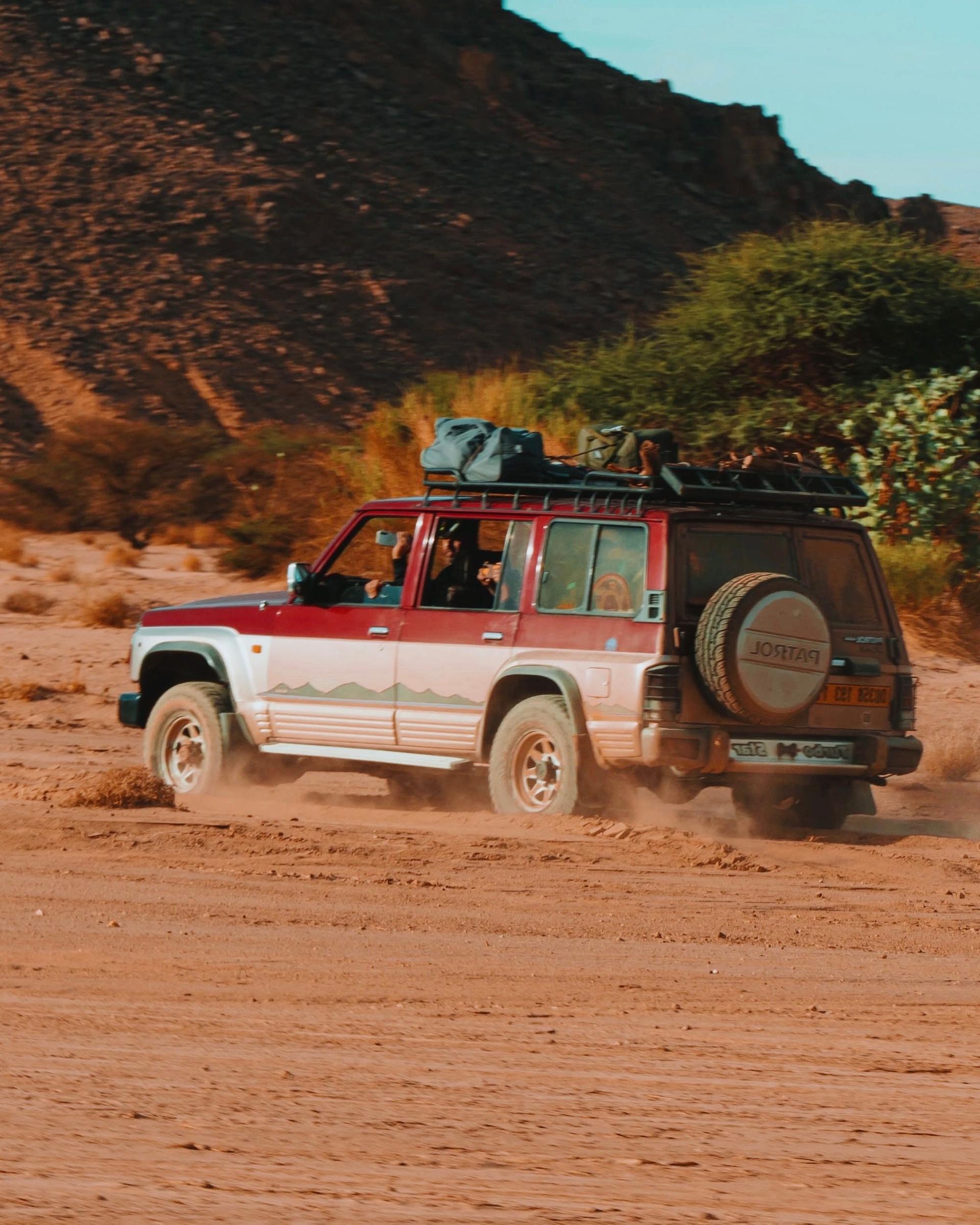
When the dust-streaked vehicle finally rolled up to the gates of the Kenya High Commission in London, it had been on the road for the better part of a year's seasons. A Kenyan flag, faded by sun and salted by sea air, still clung to its frame. Inside were two women who had set out from Nairobi in the warmth of February and arrived in a British summer, having pointed a single car north and simply kept driving until the continents ran out.
Becky Kim and Bonnie Koko had just completed one of the longest overland journeys ever attempted by Kenyans: 45,470 kilometres from Nairobi to London. They were received at the mission by the outgoing Deputy High Commissioner, Dr Joseph Warui, who joined them for photographs beside the vehicle that had carried them across deserts and rivers and the top of the world. Days later, Kenya's High Commissioner to the United Kingdom, Ambassador Maurice Makoloo, met the pair to mark what the mission framed as a national achievement rather than a private adventure.
A Journey Measured in Months, Not Miles
The expedition began on 13 February 2026 and ended on 12 June, a span of roughly four months — 122 days, by Mwakilishi's count. The two travelled in an INEOS Grenadier, a boxy, utilitarian four-wheel-drive built for exactly this kind of punishment, and crossed around 60 countries on the way, according to the outlets that tracked their arrival.
The route read less like a holiday than a geography examination. They moved through the Congo River basin, pushed across the Sahara Desert, and at the northern end of Europe drove beyond the Arctic Circle before turning toward the British Isles. Each of those environments demands a different kind of vigilance: the equatorial mud of central Africa, the heat and navigation of the Sahara, the cold and long light of the far north. To string them together in one continuous drive is an act of planning as much as endurance.
Becky Kim was the lead driver for the entire four-month run. Bonnie Koko served as co-driver and navigator, the one charting borders and routes and keeping the team oriented as the landscapes changed around them. The division of labour mattered: an overland expedition of this length is won or lost less in the dramatic moments than in the daily discipline of fuel, paperwork, and the next stretch of road.
The Quiet Difficulty Behind the Romance
It is easy to read a journey like this as pure romance — two friends, a sturdy car, an open map. The reality of overlanding across 60 countries is closer to a logistics campaign. Every frontier is a negotiation: visas, vehicle permits, insurance documents, and customs officials who may never have seen a Kenyan-plated Grenadier before. A single missing stamp can cost a day; a closed border can cost a week.
Mechanical self-reliance is the other half of the equation. Far from any dealership, a breakdown in the Sahara or the Congo basin is not an inconvenience but a genuine hazard, which is why expeditions of this kind live and die on preparation. Supporters who followed the pair online singled out exactly that — their planning, resilience, and conduct — as the thing that separated the trip from a reckless stunt. The applause, in other words, was for competence as much as courage.
Why the Diaspora Watched So Closely
For Kenyans abroad, a story like this lands differently than it might for a general audience. The diaspora spends a great deal of its emotional life negotiating borders — visa renewals, residency rules, the quiet arithmetic of who can travel where and on what document. To see two Kenyans cross 60 of those borders by sheer will, flag flying, and be welcomed at their own High Commission at the end of it, is to see the relationship inverted for once. The border becomes something to be conquered rather than feared.
There is also the matter of representation. Diaspora communities often describe the fatigue of being defined by hardship stories — detentions, deportations, fundraisers to repatriate the dead. An achievement framed in pride rather than crisis offers a different mirror. Dr Warui's description of the journey as a reflection of determination and commitment was diplomatic boilerplate, but it spoke to a real appetite among Kenyans abroad for narratives that begin with ambition and end with arrival.
That the welcome happened at the Kenya High Commission, the same kind of institution diaspora Kenyans usually visit for passports and consular emergencies, gave the moment an extra charge. For an afternoon, the mission was a finish line.
A Growing Appetite for the Long Road
Becky Kim and Bonnie Koko's drive does not stand alone. It arrives amid visibly growing interest in long-distance road expeditions among Kenyan travellers. Earlier this year, Elly Kimutai Keter drew significant online attention by announcing plans to drive in the opposite direction — from London to Eldoret — promising to compress the trip into a matter of days rather than months.
The two ambitions, one slow and continental, one fast and pointed, suggest a small but real cultural shift. Overlanding has long been dominated by European and North American travellers documenting Africa from the outside. A wave of Kenyan-led expeditions reframes who gets to be the adventurer and who gets to narrate the journey. The car bearing the Kenyan flag is not being driven through Africa by a visitor; it is being driven out of Africa and into the world by Kenyans on their own terms.
What Remains After the Engine Cools
The practical legacy of such a trip is modest and personal — photographs, a battered vehicle, stories that will be retold for years. The larger legacy is harder to measure but easier to feel. Each completed expedition lowers the imaginative barrier for the next person who wonders whether it can be done at all.
For now, the achievement has been logged as a milestone in Kenyan adventure travel, celebrated at home and abroad. Two women left Nairobi in February with a full tank and an outsized idea. In June, on a quiet London street outside their country's mission, the idea had become a record, and the flag that crossed sixty borders was finally allowed to rest.