The Field in Sherwood: How South Africa's Migrant Crackdown Is Emptying a Continent's Safe Haven
A week of mass repatriations, midnight marches and an ultimatum to leave by 30 June has left thousands of African migrants camped at airports and in open fields, watching the door close.
In an open field in Sherwood, on the western edge of Durban, more than a thousand people have been sleeping under the thin light of a Highveld winter. They are Malawians, for the most part, families who walked out of the Burnwood informal settlement after being ordered to leave and then simply stopped, in the open, because there was nowhere else to go. By the weekend their number had swelled toward an estimated seven thousand, all of them waiting for the same things: a bus, a stamped page, a road back to a country many had not seen in years.
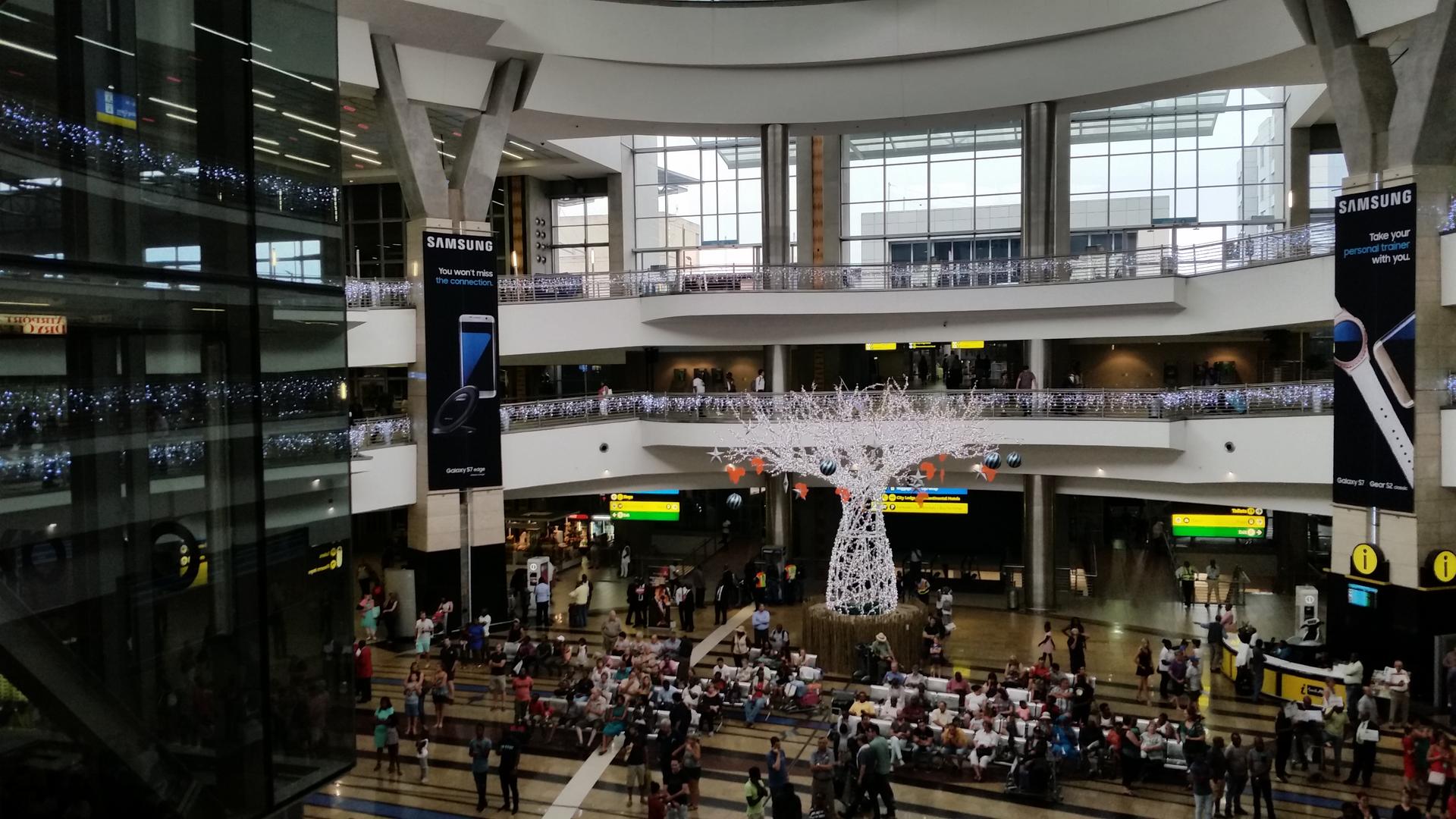
A year ago that scene would have jolted South Africa. In the middle of June 2026 it has hardened into something closer to routine. The field at Sherwood is one node in a national operation that, in a single week, moved 2,745 foreign nationals out of the country and shows no sign of slowing. For the Kenyan and broader African diaspora, the images arriving from Durban and from the departure halls of O.R. Tambo International Airport are more than a neighbour's crisis. They are a barometer of how welcome Africans remain on the one part of the continent that, for three decades, had served as its economic anchor.
A Five-Point Plan and a Hard Number
The current wave traces back to 7 June, when President Cyril Ramaphosa addressed the nation and set out a five-point response to a swelling tide of anti-foreigner protest: zero tolerance for those who break immigration law, tighter borders, a purge of corruption inside the immigration system, the closing of legal loopholes, and closer cooperation with other African governments to manage migration at its source.
A week later, the Inter-Ministerial Committee on Migration — chaired by Justice and Constitutional Development Minister Mmamoloko Kubayi — gathered reporters to report progress. The headline figure was the 2,745 already repatriated, a number officials expect to climb. "The South African Government will not tolerate the circumvention of our immigration systems and laws," Kubayi said, framing the operation as enforcement rather than expulsion. Much of the activity she described, she acknowledged, predated the President's speech; the address had simply given a long-running machinery a new public urgency.
The Machinery of Removal
The scale of that machinery is considerable. According to the committee, the South African Police Service arrested more than 7,400 people for immigration offences in the past month alone, part of more than 40,000 arrests of undocumented people since the start of the year. The Border Management Authority has pushed drones and body-worn cameras to land, air and sea crossings. Plans are advancing to reopen a dedicated deportation court at the Lindela holding centre within a month, and to pilot a fast-track immigration court at O.R. Tambo itself to prosecute trafficking and organised border crime.
The removals are being negotiated capital to capital. Malawi has commissioned eight buses to move its citizens out of the Sherwood field, a fleet bolstered by ten more from the South African state, following the recent deportation of 980 Malawians from Lindela. In late May, Ghana repatriated hundreds of its nationals through O.R. Tambo after a spasm of violence against migrants; the government in Abuja has moved 586 Nigerians home, the first flight carrying 268 passengers travelling on emergency documents issued by the Nigerian High Commission. Each arrangement is a quiet admission that the continent's largest economy is, for now, asking many of its guests to leave.
When the Audit Contradicts the Anger
What unsettles the official story is how often the numbers fail to match the rhetoric. In Durban's Che Guevara Street, 457 foreign nationals gathered outside a Home Affairs office seeking help; when officials audited the crowd, they found just three people without legal status. It is a ratio that should give the marchers pause, and the government has been careful, at least at the podium, to draw a line between enforcement and mob justice.
Kubayi rejected the idea that South Africa is inherently hostile, pointing to its long history of hosting people from across the globe and its commitments under the African Union's Agenda 2063. She warned of a targeted disinformation campaign — staged, old or doctored images circulated to stir panic — and she was sharpest on the question of citizen patrols. Only the state may enforce immigration law, she said; the law permits a citizen's arrest but not "victimisation and intimidation." The committee also conceded a cost the protests rarely count: South African companies abroad are now seeking urgent consular help, and South African artists have lost income to performances cancelled elsewhere on the continent, a reminder that hostility tends to travel both ways.
The Diaspora Watching From Afar
Kenyans are a smaller presence in South Africa than the Zimbabwean, Mozambican, Malawian and Nigerian communities now bearing the brunt of the crackdown, clustered more often in professional and service roles than in the informal settlements being cleared. But the diaspora reads South Africa as a test case. It is the destination that proved Africans could build middle-class lives without leaving the continent, the place where remittances and reinvention were supposed to be possible closer to home. When that promise frays, it reshapes the calculation for every family weighing whether opportunity lies in Johannesburg or in London, Toronto or the Gulf.
It also exposes how fragile legal status can feel when public mood turns. The Che Guevara audit suggests most of those swept up in the panic are in the country lawfully, yet lawful residence has not spared them from fear, displacement or the slow grind of proving themselves over and over. For diaspora communities everywhere, that is the uncomfortable lesson: documentation is necessary, but it is not the same as safety.
A Door Marked 30 June
Hanging over all of it is a date. Anti-foreigner movements, among them the group March and March led by Jacinta Ngobese-Zuma, have told foreign nationals to be gone by 30 June, regardless of paperwork. The ultimatum has already turned deadly once: two Mozambican men were killed after a march against illegal migration in the Western Cape town of Mossel Bay in late May. Counter-currents exist — workers in the clothing and garment sector have marched to keep skilled foreign colleagues whose machining expertise local factories say they cannot quickly replace — but they are quieter than the demand to clear the streets.
For the families in the Sherwood field, the politics are abstract and the cold is not. They are waiting for buses that will carry them across borders they once crossed in hope. Whether South Africa emerges from this winter as a country enforcing its laws or one that let a panic outrun its facts will be measured, in part, by how many of them had any right to be removed at all — and by whether the rest of the continent still believes its anchor will hold.