The Empire Sends an Invoice: What Suella Braverman's Reparations Reversal Means for Kenyans Who Remember
A Reform UK MP's claim that former colonies owe Britain money has landed hard in Kenya, where the memory of Empire is neither abstract nor settled.
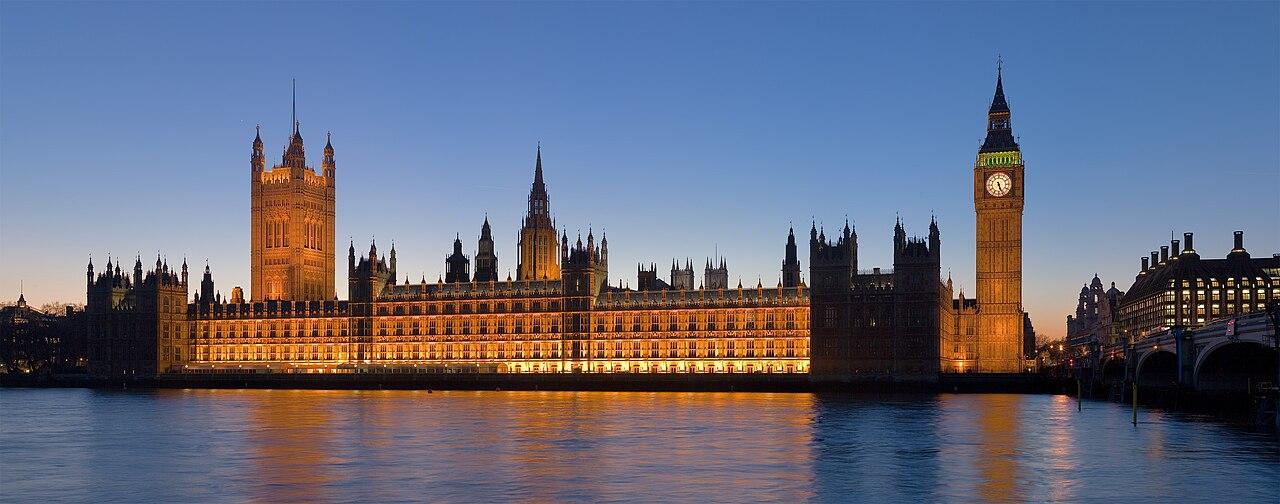
On the morning Kenya marked Saba Saba behind police checkpoints, another argument was already burning through the country's group chats and timelines, this one imported from London. A post by Suella Braverman, the former British Home Secretary who now sits as a Reform UK MP, had been picked up by Kenyan outlets overnight, and by breakfast it had done what few statements from Westminster still manage to do: unite Kenyans at home and abroad in a single, incredulous conversation.
Braverman's argument, delivered on X, was that the long-running campaign for colonial reparations has the direction of payment backwards. If anyone owes anyone, she suggested, it is the former colonies — Kenya among them — who should be compensating Britain.
A Post That Crossed Three Continents
The exchange began with Jamaica. Labour MP Bell Ribeiro-Addy shared a report that the Caribbean nation intends to formally petition King Charles for reparations later this year, the latest step in a campaign that has gathered force across the Commonwealth. Braverman's response did not engage with the petition's specifics. Instead, she mounted a defence of the Empire itself.
"The British Empire did so much good for the world. Of course slavery was abhorrent but to expect the British people of the 21st century to pay for actions that took place in the 18th century has no basis in law," she wrote.
Then came the line that turned a familiar Westminster position into an international story. If the British government were seriously considering reparations, she argued, "former colonies should pay the British back for the considerable investment, effort and contribution that this country made which laid the foundations for many flourishing democracies today."
Within days the remarks had been covered from Kingston to Nairobi, with TUKO reporting the story to Kenyan readers on Tuesday morning and outlets including Middle East Eye and the Jamaica Observer carrying it a day earlier. The reaction online was immediate and fierce, splitting broadly between those who called the Empire an extraction machine dressed up as a civilising mission, and those who insisted modern Britons owe nothing for the decisions of their great-great-grandparents.
From the Home Office to Reform UK
Braverman is no stranger to controversy, but her platform has changed. Once one of the Conservative Party's most prominent right-wing voices — she served two stints as Home Secretary — she defected to Reform UK earlier this year, joining the insurgent party at a moment when it is working to convert protest support into a governing programme.
That context matters for how the remarks are read. This was not a backbencher thinking aloud. It was one of the most recognisable figures in a party with serious ambitions for the next British government, staking out a position on colonial history at the precise moment several former colonies are escalating their claims. For diaspora communities watching British politics drift rightward on immigration, the message lands as part of a pattern rather than a one-off provocation.
What Kenya's Ledger Actually Says
Kenya occupies an awkward place in any argument that the Empire was a net gift to its colonies, because Kenya is one of the few countries where a British government has already, in effect, conceded the opposite in a courtroom settlement.
In 2013, after years of litigation by elderly survivors, the UK government expressed regret for the torture and abuse inflicted on Kenyans during the Mau Mau emergency of the 1950s and agreed to pay £19.9 million to more than 5,000 claimants. The case forced into the open an archive of documented abuses in the detention camps that colonial administrators had spent decades minimising. No serious reading of that settlement supports the idea that the colonial relationship was one of patient British investment gratefully received.
The broader economic record is contested terrain for historians, but the core of the Kenyan experience is not: land alienation in the highlands, forced labour systems, racially tiered wages and a colonial economy designed to move value toward London. The railways Braverman's defenders cite were built to serve that economy, not to seed the businesses of the Kenyans who were barred from the best land alongside them.
The Loan Britain Only Finished Paying in 2015
Critics of Braverman's position also pointed to a fact of British fiscal history that has become central to the reparations debate. When Britain abolished slavery in 1833, it compensated not the enslaved but the slave owners, borrowing the modern equivalent of billions of pounds to do so — a sum so large, at roughly five percent of GDP at the time, that British taxpayers were still servicing the debt until 2015.
That detail cuts against the framing of Britain as history's unpaid benefactor. Kenyans and other Commonwealth citizens who lived and paid taxes in Britain before 2015 were, in a small but real way, helping to retire a loan taken out to compensate the people who owned their ancestors' contemporaries. It is the kind of arithmetic that makes Braverman's invoice feel, to many in the diaspora, like being billed twice.
What This Means for Kenyans in Britain
For the Kenyan community in the UK — one of the largest Kenyan populations anywhere outside East Africa, and for decades among the biggest sources of remittances flowing home — the row is more than a historical debate. Reform UK's rise has already pushed British politics toward harder lines on migration, visas and citizenship, all of which touch diaspora families directly.
Few Kenyans in Britain expect reparations to arrive in their lifetimes, and polling has long shown British public opinion divided on the question. But there is a difference between a country that declines to pay and a country whose rising political voices argue it is owed. The first is a disappointment. The second, many in the community argued this week, is an erasure — one that recasts their grandparents' dispossession as a subsidy they should be grateful for.
The Petition That Started It
The irony is that Braverman's intervention may end up amplifying the movement she set out to dismiss. Jamaica's planned petition to King Charles now carries far more visibility than it did a week ago, and reparations campaigners across Africa and the Caribbean have been handed a viral illustration of exactly the attitude they say they are fighting.
Kenya's own claims — over Mau Mau-era abuses beyond the 2013 settlement, over land, over artefacts still held in British museums — remain live questions that Nairobi has periodically pressed through diplomatic channels. They will outlast this news cycle. What the week's argument has changed is the audience: a generation of young Kenyans, at home and in Britain, who might never have read a reparations report but who have now seen the Empire's most confident modern defence — and found it wanting.