The Door Changes, the Queue Does Not: What Keir Starmer's Resignation Means for Kenyans in Britain
As Britain readies for its seventh leader in a decade, Kenyan nurses, carers and students are left to wonder whether the visa rules that shape their lives will shift again.
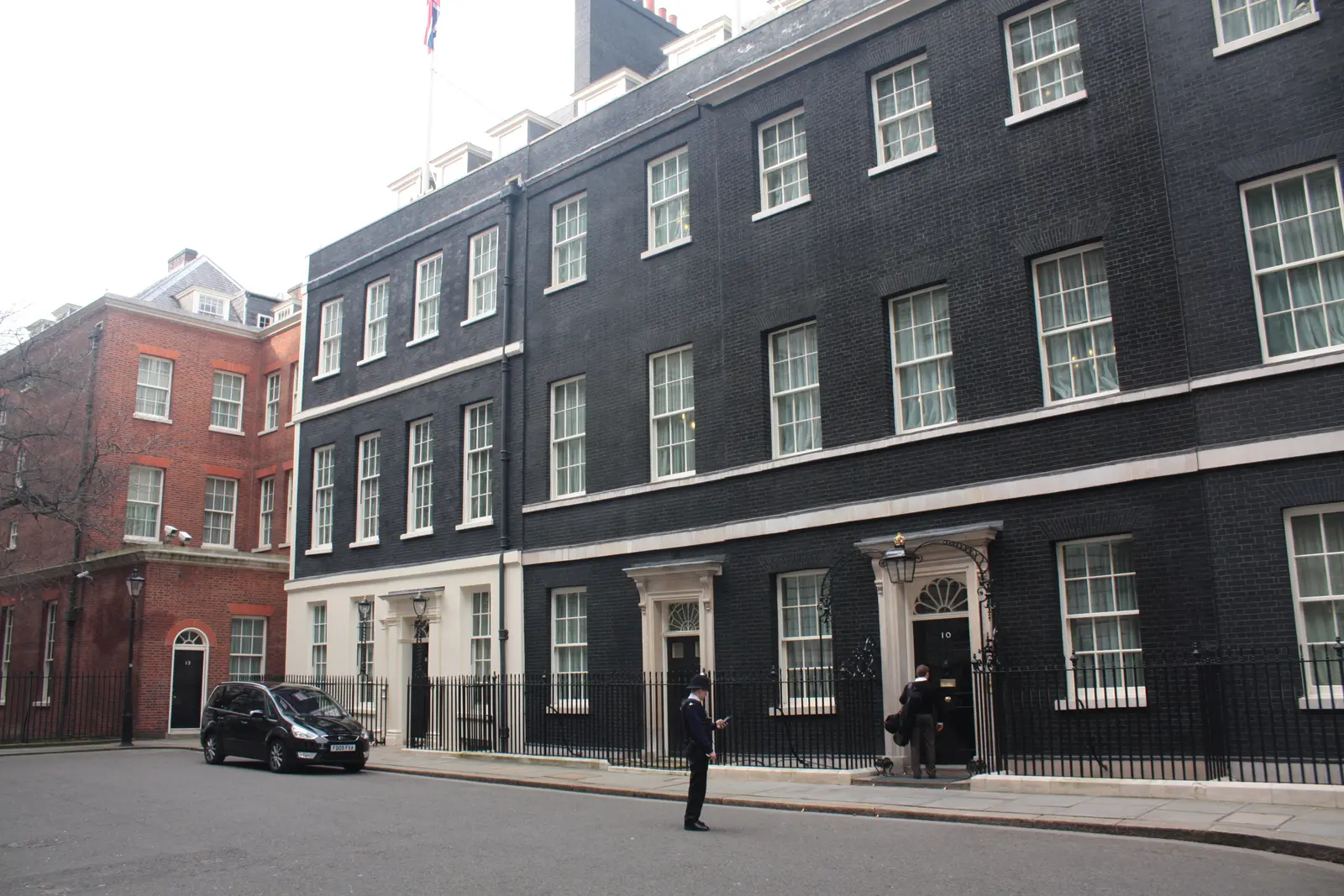
On a grey Monday morning in a shared kitchen in Luton, the kettle clicked off and the radio carried the sentence that would travel quickly through Britain's Kenyan WhatsApp groups: the prime minister was standing down. For the nurse heading to an early shift, the carer counting hours toward a settlement application, the student watching a tuition bill she cannot yet pay, the news landed less as Westminster theatre than as a practical question. When the man at the famous black door changes, does anything change for the people who clean behind it, nurse beside it, and queue for the right to stay near it?
Keir Starmer announced his resignation as prime minister and leader of the Labour Party on Monday, 22 June, speaking outside 10 Downing Street after fewer than two years in office. He said the contest to choose his successor would begin in July and that he would remain as a caretaker prime minister until a new Labour leader is in place, a process expected to conclude by September. For a country that has now cycled through a remarkable run of leaders in a single decade, the announcement was both a shock and, to many, the confirmation of a slow unravelling.
A Resignation Long in the Making
Starmer's exit followed months of sinking poll numbers and visible strain inside his own party. An Ipsos survey published days before his announcement found that 52 percent of the British public believed he should step down, against 35 percent who thought he should stay. The figures put numbers to a mood that had been hardening since the winter: a sense that the government had run out of road.
The pressures were several and overlapping. Starmer and his chancellor had spent much of the year defending fiscal choices that unsettled Labour's own backbenches, while a contested set of welfare reforms drew anger from the party's traditional supporters. A separate controversy over a senior diplomatic appointment deepened the distrust. None of these stories, on its own, would necessarily topple a government with a working majority. Together, they corroded the authority a prime minister needs to govern, and by June that authority had thinned to the point where staying became harder than leaving.
For readers in Nairobi or Atlanta, the internal Labour drama may feel distant. But Britain is not an abstraction to the Kenyan diaspora. It is one of the largest and oldest destinations for Kenyans abroad, home to tens of thousands who work in its hospitals and care homes, study in its universities, and send money back to households from Kisumu to Kiambu. When London's politics shift, the tremor reaches those kitchens in Luton.
Why the Diaspora Is Watching the Home Office, Not Just No. 10
For most Kenyans in Britain, the prime minister matters less as a personality than as the person who sets the tone for immigration policy. The past two years in the United Kingdom have been defined by a steady tightening of the very routes that many Kenyans rely on, particularly the skilled worker and health and care visa pathways that brought a wave of nurses and care assistants to British wards after the pandemic.
A change of leader does not, by itself, rewrite a single visa rule. The salary thresholds, the sponsorship requirements, the dependant restrictions and the settlement timelines that govern a migrant's life are set in regulation and law, and they remain in force the morning after a resignation as surely as the night before. What a leadership change can alter is direction. A new prime minister, chosen to reset a struggling government, will face pressure to signal a stance on migration quickly, because few subjects move British politics faster.
That is the uncertainty Kenyan families now sit with. A successor who leans toward further restriction could accelerate the squeeze on care-sector recruitment that has already left some Kenyan workers stranded when sponsors collapsed. A successor who chooses to stabilise the workforce that keeps the National Health Service running might offer a measure of reassurance. Neither path is guaranteed, and the people most affected have no vote in the contest that will decide it.
The Care Sector at the Centre
Nowhere is the stake clearer than in social care. Britain's care homes have leaned heavily on overseas staff, and Kenyans have been part of that workforce in growing numbers. The health and care visa was, for several years, one of the more accessible routes into the United Kingdom for a qualified Kenyan willing to do demanding work for modest pay.
But the same route has been narrowed by rule changes intended to cut overall migration figures, and the tightening has produced painful cases: workers who arrived on legitimate sponsorships only to find their employers deregistered or insolvent, leaving them scrambling to find a new sponsor before their permission to stay expired. A government in transition is a government distracted, and distraction is rarely good news for people whose right to remain depends on timely administrative decisions. The diaspora's anxiety is less about ideology than about the machinery of the Home Office continuing to turn while Westminster reorganises itself.
Remittances, Students and the Longer View
Beyond the care wards, two other groups are doing their own quiet arithmetic. Kenyan students in British universities, already absorbing high international fees and a tougher line on post-study work and dependants, will watch whether a new government treats them as valued revenue or as a number to be reduced. And the families back home who depend on money sent from Britain will feel any change in the diaspora's fortunes directly, because remittances do not care about the colour of a governing party; they respond to whether people abroad have stable, legal, paid work.
It is worth keeping perspective. Caretaker governments are designed for continuity, and the formal machinery of immigration will keep working through the summer. The likeliest near-term reality for most Kenyans in Britain is not upheaval but a holding pattern, with the bigger questions deferred until a new leader sets out their programme in the autumn.
A Familiar Lesson From Afar
For a diaspora that has learned to read foreign politics as a forecast for its own life, Starmer's resignation is a reminder of a hard truth: the rules that determine where a family can live, work and reunite are written by people they did not elect, in rooms they will never enter. The black door on Downing Street will soon admit a different occupant. The queue outside the Home Office, and the long wait for certainty, will look much the same. Kenyans in Britain will keep showing up for the early shift, keep filing the paperwork, and keep watching London closely, because experience has taught them that what happens behind that door eventually arrives at their own.