The Country Europe Wants to Borrow: Why Kenya Has Become a Candidate to Hold the Migrants the EU Sends Away
Brussels is shopping for places to park rejected asylum seekers, and Nairobi keeps coming up. For a nation that exports its own people, the offer is a strange mirror.
In a rented flat in Eastleigh, a Nairobi mother who spent three years saving for her son's passage to Europe reads the news on her phone and laughs without humour. Her boy is somewhere in the Netherlands, waiting on an asylum decision that has not come. Now the country she dreamed would take him in is talking, quietly, about sending its rejected arrivals somewhere else. And the somewhere else might be home.
That, in a sentence, is the unease running beneath a story that surfaced this week: Kenya is among the countries European governments are weighing as a host for "return hubs" — facilities outside Europe that would hold migrants whose asylum claims have failed while officials arrange their deportation. The reporting, carried by the diaspora outlet Mwakilishi and consistent with months of European coverage, places Kenya on a shortlist that also includes Rwanda, Benin, Ghana and Uzbekistan. No deal has been signed. But the conversation alone says a great deal about how Europe now thinks about its borders, and about how it has come to see Kenya.
What a return hub actually is
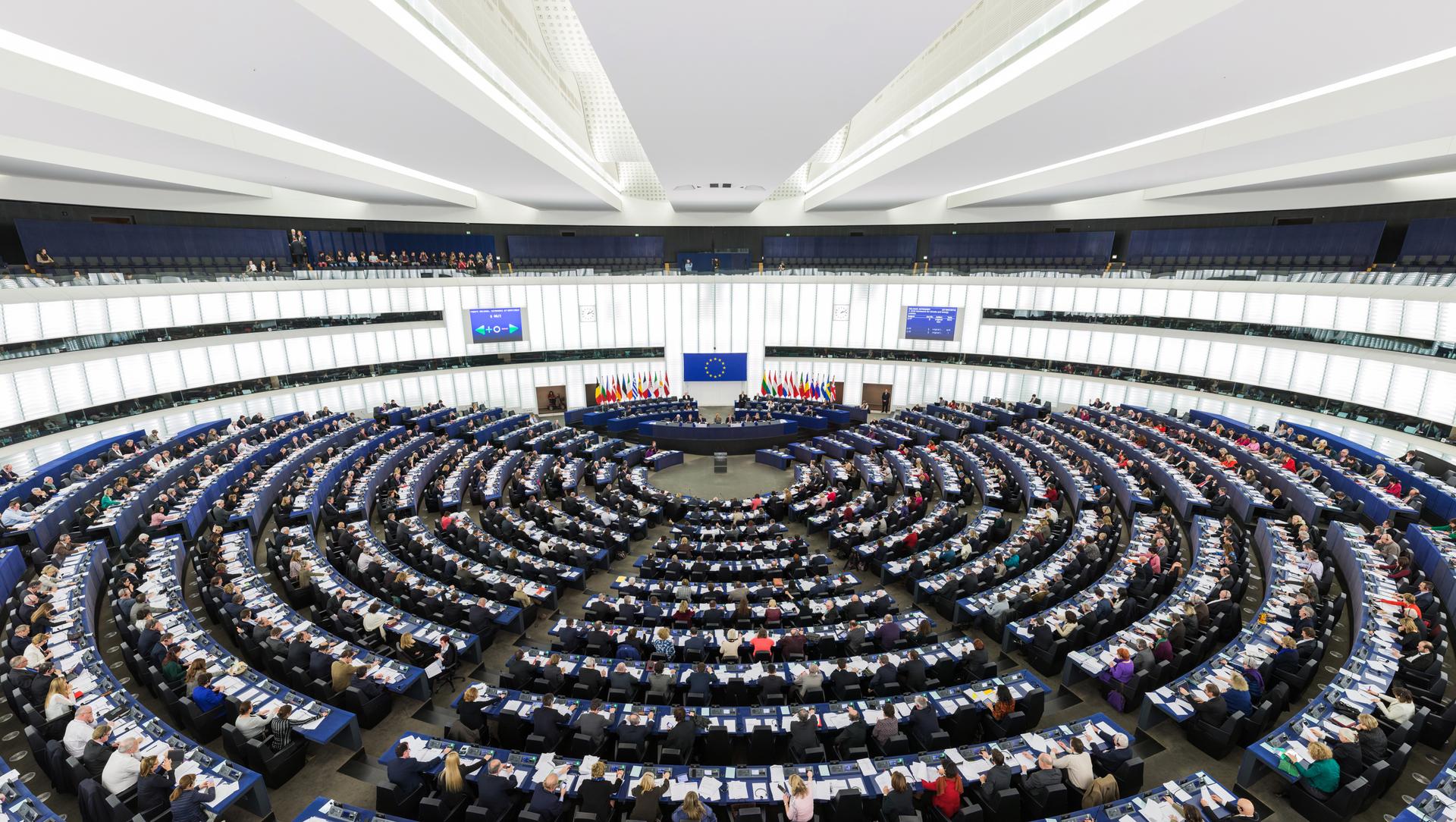
Strip away the bureaucratic language and a return hub is a holding centre for people Europe has decided it does not want, built in a country that is not their own. The idea grew out of the European Union's hardening migration architecture, including new return rules that European lawmakers approved earlier this month. Those rules give authorities wider powers to compel people who have exhausted their legal options to leave, and to stop them slipping away before a deportation order can be carried out.
The hubs are meant to solve a problem European interior ministers have complained about for years: it is one thing to reject an asylum claim, and quite another to physically remove someone whose home country will not cooperate, whose identity cannot be confirmed, or who simply disappears into the informal economy. By moving rejected applicants to a third country while the paperwork grinds on, governments hope to make removals faster and harder to resist. Rights organisations describe the same machinery in starker terms — as a way of placing vulnerable people beyond the easy reach of European courts and oversight.
Why Kenya, and why now
European officials assessing potential partners are reported to be looking at political stability, economic capacity and a country's record on international human rights standards. On the first two counts, Kenya scores well by the region's measure: a comparatively diversified economy, functioning institutions, and a government that has spent the past two years marketing itself as a reliable interlocutor for the West.
The timing is not accidental. Nairobi and Brussels have drawn closer through a run of trade and diplomatic engagements, and President William Ruto, alongside Prime Cabinet Secretary Musalia Mudavadi, met European Commission President Ursula von der Leyen on the margins of the recent G7 summit in France. The Netherlands is said to be steering the return-hub discussions, working with an informal cluster of governments that includes Germany, Austria, Denmark and Greece. Dutch authorities have declined to confirm which countries are under consideration, citing the sensitivity of the talks — a silence that tends to accompany negotiations neither side is ready to defend in public.
For a host country, the calculation is transactional. Agreeing to hold Europe's rejected migrants could unlock financial packages, development support and political goodwill from some of the world's wealthiest states. The price is a sudden, unblinking spotlight on that country's own detention conditions, asylum law and human-rights commitments — scrutiny that does not switch off once the cameras leave.
A strange mirror for a nation of migrants
There is an irony in the proposal that is hard for any Kenyan to miss. This is a country whose own citizens are scattered across the globe in their millions, sending home record remittances that now rival the value of its biggest exports. Kenyan nurses staff British wards; Kenyan engineers, students and care workers are courted by Canada, Australia and the Gulf. The national conversation about migration is usually about getting out — about visas, work permits and the long wait for a green card.
To be asked, in the same breath, to become a warehouse for the people Europe is pushing out reframes that conversation entirely. It casts Kenya not as a sender of talent but as a service provider in someone else's deportation system. For the diaspora, who read these stories closely from Minneapolis, Manchester and Melbourne, the discomfort is layered: many know firsthand how it feels to have a future decided by a foreign immigration official, and now their home country is being invited to administer that verdict on others' behalf.
It also raises a sovereignty question that Kenyan commentators have begun to ask aloud. A country that accepts such a role accepts a degree of dependence — financially on European transfers, reputationally on European approval — that sits awkwardly with the language of partnership in which these deals are always wrapped.
The human-rights problem nobody can wave away
The loudest objections come from migrant-rights groups, and they are not abstract. Under the broader "safe third country" logic now embedded in EU policy, member states can reject asylum claims without examining their merits, on the reasoning that the applicant would be safe somewhere outside Europe. Critics warn this risks sending people to places they have never lived, where they have no community, do not speak the language, and may face exploitation or abuse.
A return hub in Kenya would import that dilemma onto Kenyan soil. Who would be legally responsible for the people held there — Nairobi or the European capital that sent them? What recourse would a detainee have? How would conditions be monitored, and by whom? These are not questions that disappear because a memorandum is signed; they are the questions that determine whether such a facility is a managed legal process or a place where accountability goes to die.
What happens next
For now, the honest answer is that nothing has been agreed. Kenya is a name on a list, the talks are described as informal, and Dutch officials are saying as little as possible. Supporters of the plan, including some European lawmakers who hailed this month's vote as proof that the bloc could finally enforce its own decisions, see it as an overdue fix to a broken returns system. Opponents see the early outline of an export model for unwanted people.
What is certain is that the proposal will not stay quiet for long. If Brussels and Nairobi move from informal soundings to a formal framework, it will force Kenya to decide what kind of partner it wants to be — and to weigh European money and goodwill against the harder currency of its own credibility. The Nairobi mother refreshing her phone, waiting on a decision an ocean away, already understands the stakes better than most negotiators ever will.