The Calm in a Burning Neighbourhood: What the 2026 Peace Index Tells Kenyans Abroad About the Home They Left
A new global ranking puts Kenya ahead of every northern neighbour — even as Sudan, Somalia and South Sudan fuse into a single conflict system the diaspora watches from afar.
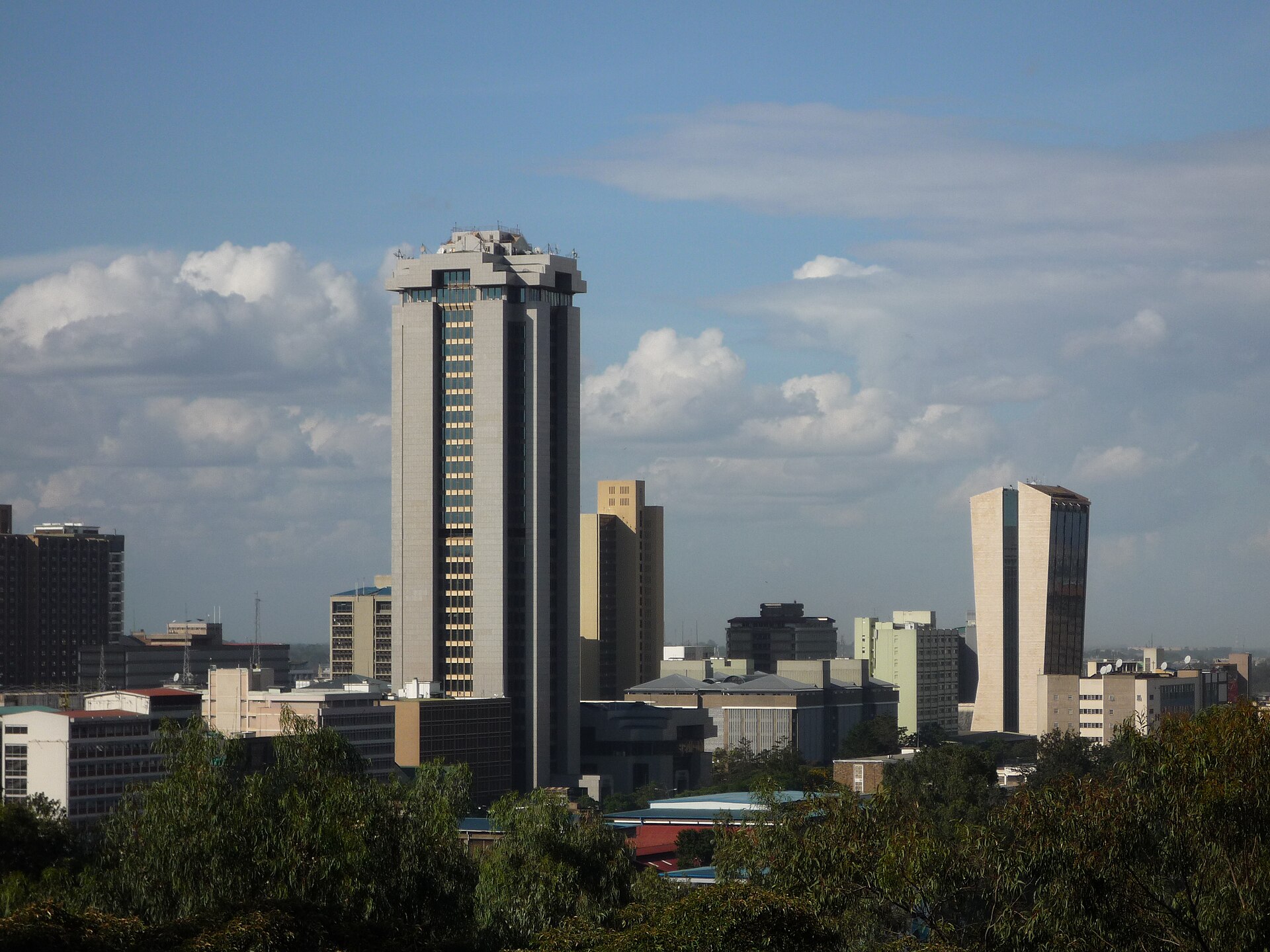
In January 2024, a private jet carrying one of Sudan's most feared men touched down in Nairobi. Mohamed Hamdan Dagalo — "Hemedti," commander of the Rapid Support Forces accused of atrocities across Darfur — was received at State House by President William Ruto. Months later, his deputy and a rival rebel commander were photographed walking into the Kenyatta International Convention Centre for another round of talks. To a Kenyan nurse scrolling the news between hospital shifts in Dallas, or a software engineer half-watching it on a Manchester train, the pictures carried a double message. Their capital had become the room where the Horn of Africa's wars are argued over. And those wars had drawn close enough to land at the airport.
That proximity is now the subject of a sober warning. The newly released Global Peace Index 2026, compiled by the Institute for Economics and Peace, argues that the conflicts ringing Kenya are no longer separate emergencies to be managed one at a time. They have fused. For the millions of Kenyans who live abroad and measure home from a distance, the report is less an academic exercise than a scorecard on a question they ask quietly all the time: is it still safe back there?
The City Where the Wars Come to Talk
Nairobi's role as the Horn's negotiating table is not new, but the GPI 2026 reframes what it means. The report describes a region in which Sudan, Ethiopia, Eritrea, South Sudan and Somalia are "interlocked through every channel that causes conflicts to spread" — refugee flows, arms trafficking, gold smuggling, proxy fighters and competition over the Red Sea. Kenya sits at the centre of that map not because it is at war, but because it is the one place stable enough to host the people who are.
For the diaspora, that is a strange kind of reassurance. The same stability that makes Nairobi a venue for peace talks is the stability that lets families receive money, run small businesses and keep children in school. But hosting a region's warlords is also a reminder of how thin the buffer is between the city sending those reassurances and the conflicts being discussed inside its conference halls.
One Conflict, Not Five
The central finding of the GPI 2026 is a shift in how analysts read the Horn. For years, Sudan's civil war, Somalia's insurgency, Ethiopia's internal tensions and South Sudan's instability were treated as distinct problems with distinct solutions. The index calls that approach outdated. It identifies roughly eight major conflict clusters worldwide, and says the Horn of Africa stands out for the sheer number of overlapping drivers pushing violence across borders.
Sudan is the clearest example. The report describes its civil war as the world's worst humanitarian crisis, with more than 12 million people displaced and deaths still climbing. More troubling for the region's future, it notes that the war has become "self-financing through gold revenues" — meaning the fighting now pays for itself, and the usual incentives to stop it have weakened. As civilians flee, the pressure lands on South Sudan, Ethiopia and Uganda, while smuggling networks moving weapons and gold harden into permanent cross-border infrastructure. Conflicts, in the index's telling, are no longer contained by national lines; they reinforce one another.
That is the neighbourhood Kenya lives in. To the northwest, Sudan burns. To the north, South Sudan ranks among the least peaceful countries on earth. Ethiopia manages recurring internal strain, and Somalia remains locked in its long fight against Al-Shabaab — the same militancy that periodically reaches across the border, as it did in this week's raid on a security camp in Mandera.
The Number That Travels Well
And yet the same report carries a figure the diaspora can hold onto. Kenya ranks 132nd out of 163 countries in the Global Peace Index 2026 — far from the world's most peaceful, but an improvement on its previous standing, and ahead of every immediate northern neighbour, including Uganda, Ethiopia, Somalia, South Sudan and the Democratic Republic of Congo. A separate Africa safety ranking for 2026 placed Nairobi above other regional capitals such as Djibouti City, Addis Ababa, Asmara and Mogadishu.
These are the numbers that travel well in WhatsApp groups stretching from Atlanta to Dubai. They do not say Kenya is safe in any absolute sense; the country still wrestles with crime, protest crackdowns and the long shadow of terrorism. But relative to the region, they describe an island of comparative calm — and relative is exactly how the diaspora thinks. The decision to wire money for a parent's medical bill, to break ground on a retirement house in Kiambu, or to plan a flight home for December is, at bottom, a bet on stability. The index is one more data point in that calculation.
The Red Sea Comes Closer
If there is a single line in the report that should give the diaspora pause, it is about water. The GPI 2026 calls the broader Middle East conflict "a force multiplier for the spread of conflict," warning that instability around the Red Sea is amplifying every existing vulnerability across the Horn. The Red Sea handles a large share of global trade, and Sudan, Eritrea and Somalia have become more important — and more contested — as outside powers compete for ports and influence along the coastline.
For Kenyans abroad, the Red Sea is not an abstraction. It is the corridor that carries the goods Kenya imports and the route that shapes fuel prices at home. It also overlaps with the Gulf, where hundreds of thousands of Kenyans work and from which a meaningful slice of the country's remittances flow. When the Central Bank of Kenya trimmed its 2026 remittance outlook earlier this year, it pointed to exactly this — the war's reach into Gulf economies. A conflict system that pulls in the Red Sea pulls in the diaspora's paycheques too.
What the Diaspora Is Really Reading
Read from a kitchen in Birmingham or a night shift in Doha, the GPI 2026 is not really a story about indices and rankings. It is a story about whether the place you send money to will still be standing the way you left it. Many in the Kenyan diaspora carry the region in their families — relatives in the Somali community, in-laws across the South Sudanese border, friends scattered by Ethiopia's troubles. For them, the report's insistence that the Horn is one connected ecosystem is not a thesis. It is daily life.
The index offers no easy comfort, but it does offer clarity. Kenya, it suggests, is not immune by virtue, only by geography and effort — and geography can betray you. As East Africa's transport, logistics and diplomatic hub, the country is exposed to refugee movements, cross-border crime, terrorism and trade disruption, and its institutions will be asked to carry more as the region's instability deepens. The uncomfortable question the report poses is one the diaspora has already been asking: how long can the calm hold while everything around it burns?
For now, the answer Kenyans abroad keep choosing is the optimistic one. The money still goes home. The houses still get built. But the 2026 Peace Index is a quiet reminder that the bet they are making is not on Kenya alone — it is on a whole neighbourhood, and the neighbourhood is on fire.