The Academy at the Summit: What Ruto's Handshake With Sam Altman Could Mean for Kenya's Scattered Tech Talent
A corridor conversation at the G7 about an OpenAI Academy in Nairobi has stirred both hope and hard questions among Kenyans building the digital economy at home and abroad.
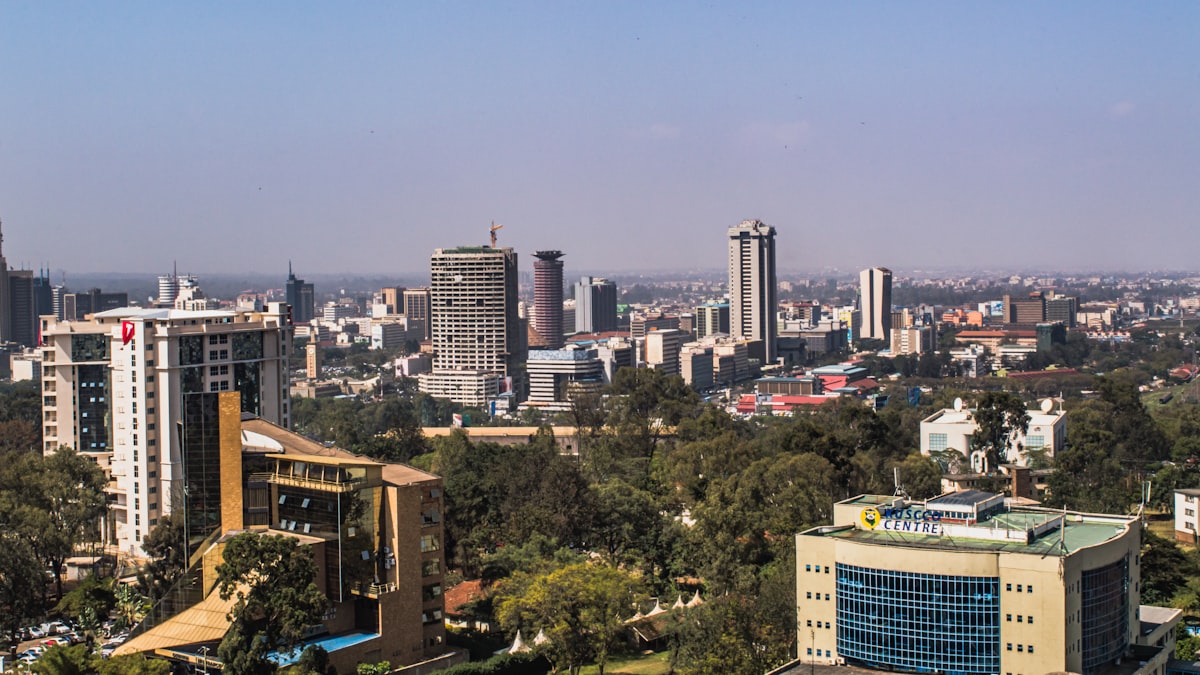
The photograph that travelled around Kenyan group chats this week is, at first glance, unremarkable: two men in dark suits leaning toward each other in a conference hall in France, mid-sentence, the bustle of the G7 Leaders' Summit blurred behind them. One is President William Ruto. The other is Sam Altman, the chief executive of OpenAI, the company whose chatbot has become a verb in Nairobi staffrooms and Seattle open-plan offices alike. The caption that accompanied it carried a bigger claim than the image: Kenya, it suggested, might soon host the first OpenAI Academy in Eastern Africa.
For a country that has spent two decades exporting its brightest engineers, the idea landed with unusual weight. Among the first to forward it were not people in Nairobi at all, but Kenyans in the diaspora — software developers in Berlin, data scientists in Toronto, support engineers in the Gulf — for whom every story about Kenya's place in the global technology economy is also, quietly, a story about whether they ever need to come home to do the work they love.
A Handshake in France, an Ambition in Nairobi
According to a statement released by the President on Wednesday, June 17, the two men used their time at the summit to explore "potential collaboration through establishing Nairobi as the home of the first OpenAI Academy initiative in Eastern Africa." The stated goals were broad: expanding access to artificial intelligence education across the region, strengthening digital skills among young people, supporting educators and learners, and "reinforcing Kenya's position as a leading hub for AI talent and innovation."
Ruto framed the conversation in the language of opportunity rather than commerce. He said he had underscored the importance of harnessing emerging technologies "to create opportunities for young people, drive innovation and ensure Africa plays a meaningful role in shaping the future digital economy." The talks, his office added, were expected to continue beyond the initial discussions.
If the academy materialises, it would be only the second of its kind on the continent. Africa currently hosts one official OpenAI Academy, attached to the University of Lagos in Nigeria. A Nairobi campus would extend that footprint into East Africa and, symbolically, place Kenya alongside the small club of countries OpenAI has chosen to anchor its educational ambitions.
The Country That Already Speaks Fluent ChatGPT
The choice of Kenya is not arbitrary. The country has, by some measures, embraced generative AI faster than anywhere on earth. The July 2025 Global Digital Report, compiled by DataReportal and Meltwater, found that 42.1 per cent of Kenyan internet users aged 16 and above had used ChatGPT in the month surveyed — the highest rate recorded anywhere in the world.
That statistic helps explain why an academy in Nairobi reads as a natural fit rather than a leap of faith. The appetite is already there: in universities, in the matatu-stop hustle of freelance gig work, in the small studios where young Kenyans build apps for clients they will never meet in person. An institution that trains educators and learners in the tools they are already using, but largely teaching themselves, could formalise a skill base that has so far grown organically and unevenly.
It also dovetails with Kenya's longer digital story — the mobile-money revolution of M-Pesa, the "Silicon Savannah" branding that Nairobi has worn for more than a decade, and a government that has made the digital economy a recurring theme of its development agenda.
The Diaspora Question: Magnet or Mirage?
For the diaspora, the news cuts two ways. On one side is genuine hope. Kenya's technology talent has long flowed outward, drawn by salaries, research budgets and visa pathways that the local market could not match. A serious AI training institution in Nairobi — one with a recognisable global name attached — is exactly the kind of anchor that could begin to slow that outflow, or even reverse it, giving returning engineers a reason and a place to land.
On the other side is hard-earned caution. Diaspora professionals have watched announcement-stage partnerships before, and they know the distance between a summit photograph and a functioning campus can be measured in years. The promise of "becoming a hub" is one Kenya has heard repeatedly; what turns it real is curriculum, funding, faculty and follow-through, none of which a handshake guarantees. Many in the diaspora will reserve their optimism until there is a building, an enrolment list and a budget line.
What is not in doubt is that the diaspora would be central to any success. Kenyans abroad already mentor coders back home, fund bootcamps, and route remote contracts to Nairobi teams. An academy could give that informal network a formal partner — a place to send interns, to run guest seminars over video link, to channel the expertise that emigration scattered across three continents.
The Shadow of the Data Labellers
Any honest account of OpenAI's relationship with Kenya has to hold a more uncomfortable chapter alongside the optimism. Before ChatGPT became a household tool, much of the unglamorous human labour that made it safe to use was performed in Nairobi. OpenAI contracted a significant share of the data-labelling and content-moderation work required to train the system and build its safety filters to workers based in the Kenyan capital.
Some of those workers later raised concerns about their conditions, describing the toll of sorting through disturbing material for modest pay and calling for stronger protections. That history sits awkwardly beneath this week's headlines. It is a reminder that Kenya has already been woven into the AI supply chain — not as a celebrated talent hub, but as a source of low-cost labour — and that the test of an academy will be whether it lifts Kenyans up the value chain rather than simply rebranding the bottom of it.
What Was Said, and What Was Not
It is worth being precise about what actually happened in France, because the gap between the announcement and the detail is where expectations live or die. The President's statement described discussions and an exploration of "potential collaboration." It did not name an investment figure. It did not announce a signed agreement. It did not offer a timeline, a site, or a date.
For now, then, the OpenAI Academy in Nairobi is an aspiration backed by a conversation, not a contract. That is not nothing — global partnerships often begin exactly this way, with two principals agreeing to keep talking. But for the Kenyan engineer in Nairobi wondering whether to stay, and the one in the diaspora wondering whether to return, the meaningful news will come later: not in the photograph from the summit, but in whatever is built, or isn't, in the months that follow.