Less Than Two Euros an Hour: How Kenyan Hands Helped Build America's Milan Consulate for a Fraction of the Promise
Italian prosecutors say Kenyan electricians recruited off a US Embassy job in Nairobi were underpaid and overworked on a flagship American diplomatic project in Milan.

A Job That Began in Nairobi
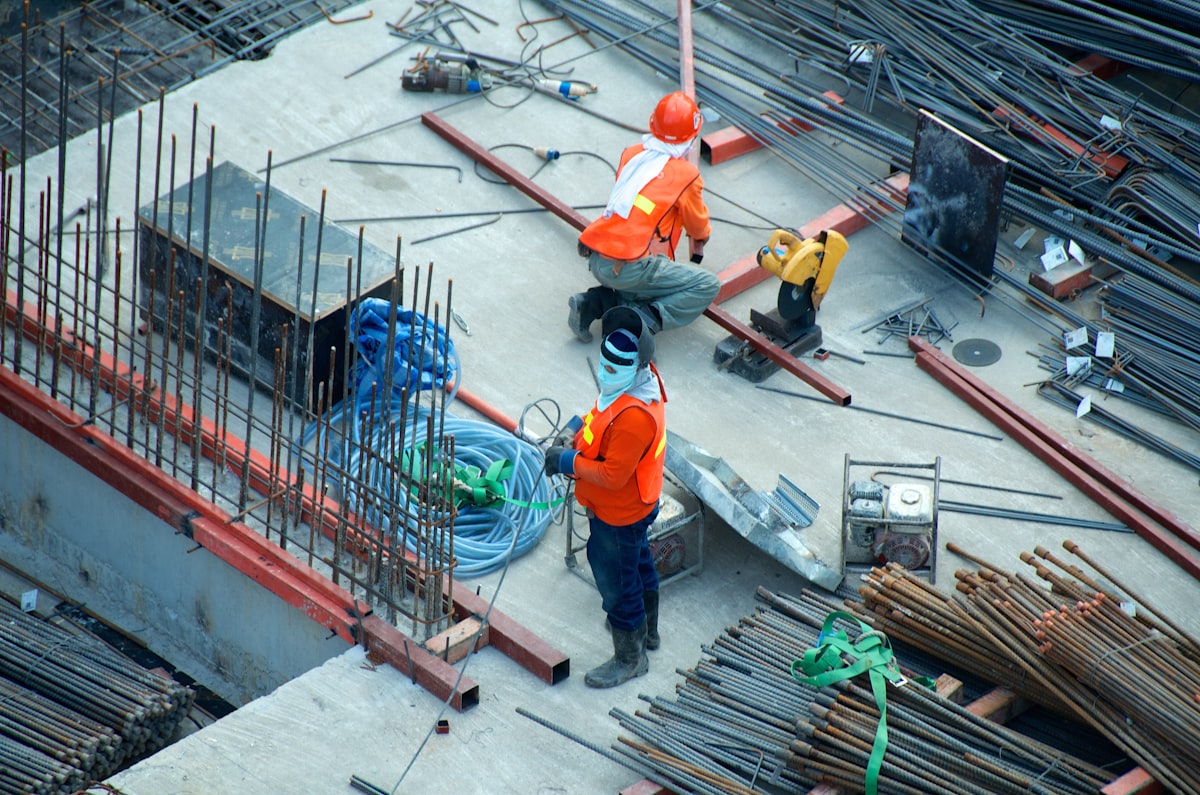
For the Kenyan electricians now at the centre of an Italian criminal inquiry, the road to Milan began on a familiar site back home. Several had first earned their wages on the expansion of the United States Embassy in Nairobi, wiring and fitting one of America's most heavily guarded compounds in East Africa. When recruiters offered them a chance to carry that experience to Europe — to a new American diplomatic mission rising in northern Italy — the proposition sounded like the rare clean break that diaspora dreams are made of: a documented job, a Western salary, a foothold on a new continent.
The figures they were given were specific. According to accounts they later gave investigators, the men were promised annual salaries of more than €25,000, a sum that would have transformed households in Kenya and justified the distance from family. They packed their tools and their certificates and flew to Milan to help build a consulate for the very government whose embassy they had already helped wire in Nairobi. What they say they found on arrival bore little resemblance to the contract that had drawn them there.
Less Than Two Euros an Hour
The case turns on the gap between what was promised and what landed in the workers' pockets. Prosecutors in Milan and reporting by the Associated Press describe a system in which wages were steadily eroded by deductions for food, transport and shared accommodation, until some men were taking home as little as 500 euros a month. By the workers' own calculations, the effective rate fell to less than two euros an hour — a wage that would be illegal under Italian labour law and a fraction of the salary that recruiters had advertised.
The hours, the workers said, were as punishing as the pay. They described shifts running as long as ten hours a day, six days a week, with little margin to question the arrangement. Several told investigators they were warned that complaints could cost them their jobs — and, by extension, the residency that their employment underpinned. For migrant workers far from home and dependent on a single employer for both income and legal standing, the threat of dismissal carried the weight of deportation. That dependency, labour advocates note, is precisely what makes exploitation on foreign construction sites so difficult to surface.
A Flagship Project Under Investigation
The compound at the heart of the inquiry is no ordinary building site. It is a secure United States diplomatic mission in Milan, built under a contract the US State Department awarded in 2022 to Caddell Construction, an Alabama-based firm that is one of the most prolific builders of American embassies and consulates around the world. The Associated Press has valued the project at roughly $350 million, placing it among the larger US diplomatic construction efforts in Europe.
Italian authorities began scrutinising labour practices on the site in 2024. The inquiry sharpened in May 2026, when prosecutors formally placed Caddell's Italian subsidiary under investigation, saying they had uncovered evidence of exploitation affecting workers from Kenya, India and Egypt. In June 2026, a Milan court upheld emergency measures putting the company's local branch under judicial supervision and appointing an administrator to enforce compliance with Italian labour law. The court characterised the alleged abuses as systemic rather than isolated. Authorities also arrested two of the company's managers in Italy this month, one of them detained at an airport as he tried to board a flight out of the country.
The Investigator Who Chased the Sweatshops
The prosecution is being led by Paolo Storari, a Milan magistrate who has built a reputation pursuing labour abuse in supply chains that the public assumed were clean. Storari has previously spearheaded investigations into sweatshops that fed some of Italy's most prestigious luxury fashion houses, exposing how globally recognised brands could sit atop chains of subcontractors where wages and conditions collapsed at the bottom. That a US government project would now fall within the same line of inquiry has unsettled observers in both countries, because the alleged mechanics are strikingly similar: a respected name at the top, layers of subcontracting beneath it, and migrant workers at the very bottom absorbing the cost.
For the Kenyan electricians, that structure has become the substance of the case. Investigators say several of them handed over contracts, payslips and detailed testimony documenting the difference between the wages they were promised and the amounts they received. Their paperwork, assembled across borders, has become central evidence in proceedings now moving through the Italian courts.
When Diplomacy Outsources Its Risk
The Milan case lands at an awkward intersection of American foreign policy and the realities of global migrant labour. US embassies and consulates are built to project the values of the country they represent, yet the contracting arrangements behind them can run through multiple subcontractors and national jurisdictions, making conditions on the ground difficult to monitor from Washington. When a flagship project is alleged to have rested on underpaid foreign hands, the symbolism is hard to ignore.
For Kenya, the story is also a window into the machinery of labour export that successive governments have promoted as an answer to unemployment. Tens of thousands of Kenyans take up overseas contracts each year, many of them in construction, security, hospitality and caregiving, often recruited on promises that prove difficult to verify once they are abroad. The Milan workers were, in one sense, the success stories of that system — skilled, documented, hired by a name connected to the US government. That even they say they ended up earning less than two euros an hour is a sobering data point for every family weighing whether a foreign contract is worth the leap.
Cooperation, and the Questions That Remain
Caddell Construction has said it is fully cooperating with Italian authorities and is conducting its own comprehensive review to ensure its global subcontractors comply with labour standards, adding that it maintains a policy of zero tolerance for abuse. The US State Department has said it is investigating the prosecutors' allegations and that American law enforcement is working alongside Italian counterparts. No findings have been finalised, and the company and its subcontractors are entitled to the presumption of innocence as the case proceeds.
What the Kenyan workers want now is narrower and more concrete than any policy debate: the wages they say they were promised, and an acknowledgement that the conditions they describe were real. Their testimony has already shaped a judicial process unfolding far from Nairobi, and its outcome will be watched closely by a diaspora that has learned to read stories like this one not as distant news, but as a mirror of risks they or their relatives could one day face. For now, the consulate in Milan still rises — a building meant to represent American ideals, shadowed by questions about the hands that helped raise it.