If It Will Not Be Me: The Sunday Sermon That Cracked Open Kenya's Opposition and Started the Diaspora's 2027 Clock
Justin Muturi's open endorsement of Kalonzo Musyoka has turned a private opposition disagreement into a public rift — and Kenyans abroad are watching the calendar more anxiously than anyone.

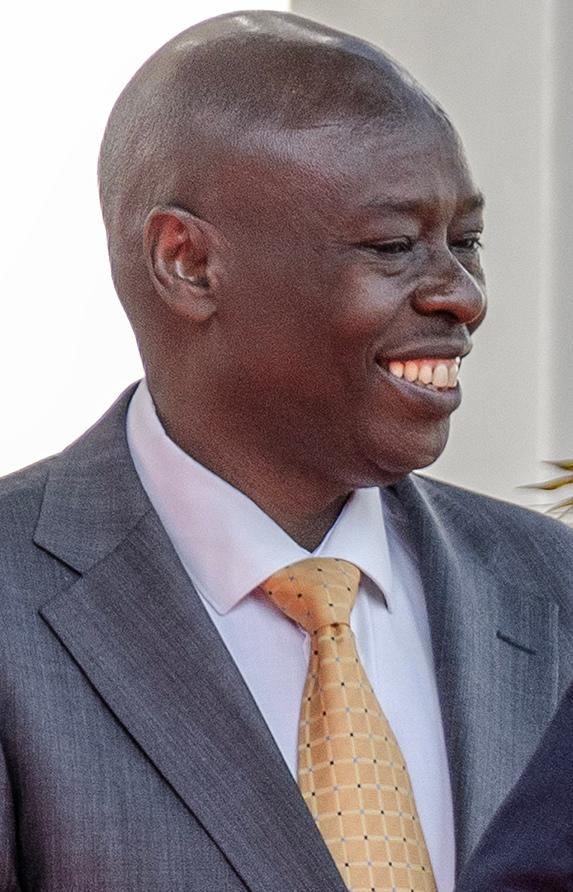
It was in the middle of a Sunday church service — not a press conference, not a party congress — that Kenya's united opposition finally said out loud the thing it had been circling for weeks. Justin Muturi, the former Attorney General and Democratic Party leader, rose to speak and left no room for interpretation. "If it will not be me, I will support my brother Dr Stephen Kalonzo Musyoka to be the flagbearer," he said. In a coalition that had agreed, at least in public, to keep its 2027 presidential candidate a closely guarded secret, the sentence landed like a stone through a window.
By Monday the remark was leading Kenya's political coverage, reported by Mwakilishi, Kenyans.co.ke and The Standard. And by evening it was moving through diaspora WhatsApp groups from Dallas to Doha, because for the millions of Kenyans abroad who fund, follow and increasingly expect to vote in the country's elections, the question of who will face President William Ruto has stopped being an abstraction.
The Deadline That Divides
The disagreement Muturi dragged into the open is not about whether the opposition should unite. Every principal in the coalition — Rigathi Gachagua, Kalonzo Musyoka, Martha Karua, Muturi himself — repeats the same goal: a single candidate to challenge Ruto in 2027. The fight is about when to say the name.
Gachagua, the former Deputy President, wants the announcement held back until the last possible moment. "We can name a candidate as late as May 15, 2027. That is the deadline of naming a candidate," he said on July 3. His argument rests on history: the National Rainbow Coalition unveiled its candidate only weeks before the 2002 election and swept to power. Naming a challenger early, he argues, would hand State House many months to undermine, intimidate or prosecute the nominee.
Muturi's Sunday intervention was a direct rejection of that logic. Delay, he said, benefits the president, not the opposition. He dismissed the wait-and-see strategy as "politics of cowardice," arguing that Ruto already knows exactly who the opposition's leaders are, so secrecy protects nothing. Voters, he said, are tired of unity declarations without a face attached to them.
A Denial From Wamunyoro
Muturi's endorsement landed on ground that was already unsteady. Days earlier, reports of a quiet pact — Gachagua stepping aside for Kalonzo in a negotiated arrangement — had rattled the coalition. Speaking from his Wamunyoro residence in Nyeri on Saturday, July 4, Gachagua flatly denied any such agreement, confirming his alliance with the Wiper leader while insisting no flagbearer had been designated.
That denial was meant to close the matter. Instead, a day later, Muturi reopened it — this time not as a leaked rumour but as an open declaration from a coalition principal. The difference matters. A rumour can be waved away. An endorsement, delivered in daylight and on the record, forces every other principal to respond.
Karua's Warning About Order of Operations
Martha Karua, the People's Liberation Party leader, offered the most lawyerly response. The coalition, she noted, has not yet built the structures or agreed on the rules by which a candidate will be chosen. Until that machinery exists, she said, any endorsement — including Muturi's — reflects an individual's view, not a collective position.
It is a technical point with sharp political edges. Without agreed rules, an early endorsement is not binding; but it does shape expectations, and expectations are their own kind of power. Kalonzo, who has run for the presidency before and stepped aside for others more than once, now carries a public blessing from at least one coalition colleague, whatever the rulebook eventually says.
Why Kenyans Abroad Are Watching the Calendar
For the diaspora, the timing question is not academic. Kenyans overseas vote at embassies and consulates — a system the High Court upheld in June — and voting abroad takes preparation that voters at home rarely think about: confirming registration at a mission that may be a six-hour drive away, arranging a day off work, planning travel to a capital city in another state or emirate.
A candidate named in May 2027 gives diaspora communities barely three months to organise around a choice. A candidate named earlier gives them time — to register, to mobilise, and to do the thing Kenyan diaspora communities do in every election cycle: argue, persuade and remit. Money follows conviction. Remittances from Kenyans abroad remain the country's largest source of foreign exchange, according to Central Bank of Kenya data, and diaspora political enthusiasm tends to travel the same channels.
There is also the quieter calculation of risk. Many in the diaspora left Kenya in part because of the turbulence that surrounds its elections. For them, Gachagua's fear — that an early nominee would be hounded by the state — and Muturi's counter — that hiding the nominee insults the voters — are not debating points. They are competing predictions about how rough the road to 2027 will be.
Forty-Five Days of Listening
What happens next runs through Nyeri. Gachagua has begun a forty-five-day consultation from his residence, canvassing views on who is best placed to lead the alliance. The exercise will conclude in mid-August, and its outcome will be the next hard data point in a contest currently fuelled by signals and sermons.
Until then, the coalition holds a delicate line. Each principal campaigns in their own base. Each repeats the promise to back whoever is eventually chosen. And each knows that Muturi has changed the game: the question is no longer whether the opposition will name a candidate, but how long its leaders can keep pretending the naming has not already begun.
For Kenyans abroad, the advice implicit in this week's rupture is simple: watch the calendar, keep your registration current, and assume the road to 2027 will be decided long before the ballots are printed.