Ghana Evacuates 300 Citizens from South Africa as Xenophobic Violence Escalates—and Offers Them a 'Welcome Home Package'
Ghana's President John Mahama has authorized the emergency evacuation of 300 Ghanaian nationals from South Africa following a wave of xenophobic attacks and property seizures. The government is providing a chartered flig
# When the Mayor Took the Keys
In the South African town of Estcourt, near Durban, the local mayor did something extraordinary in early May 2026: he went door to door to foreign-owned businesses—mechanic shops, small retail stores, service providers—confiscated their keys, and handed the premises over to local residents.
Approximately 25 Ghanaian-owned businesses were shuttered in a single operation. The mayor's justification was framed in the language of economic redistribution: locals deserved these opportunities, foreigners were taking jobs and wealth that belonged to South Africans. No legal process preceded the seizures. No court orders were issued. The keys were simply taken.
"The mayor in Estcourt has taken keys belonging to Ghanaians and other African migrants who are genuinely and legally working in his area. He has taken the keys, handed over their shops and businesses to locals," Benjamin Anani Quashie, a Ghanaian High Commission official, told GBC Ghana Online.
It was the breaking point. Within days, Ghana's President John Mahama authorized the emergency evacuation of 300 Ghanaian nationals from South Africa. On May 21, 2026, a chartered flight is scheduled to bring the first group home. And unlike many repatriation efforts—where governments simply extract their citizens and leave them to fend for themselves—Ghana is offering a comprehensive support package: immediate financial relief, transportation assistance across the country, job placement support, and access to startup funding.
It is a test case for how African governments respond when their citizens face violence and dispossession on the continent. And it is unfolding against a backdrop of escalating xenophobic tensions that South Africa's national government insists do not exist.
The Context: A Familiar Pattern
Xenophobic violence in South Africa is not new. Since the early 2000s, periodic waves of attacks have targeted foreign nationals—particularly those from other African countries. Somalis, Zimbabweans, Ethiopians, Nigerians, Mozambicans, and now Ghanaians have been beaten, had their shops looted, and in some cases killed, by mobs claiming they are stealing jobs and opportunities from South Africans.
The targets are almost always Black African migrants. The violence is almost always framed in economic terms—foreigners undercutting wages, taking business from locals, benefiting from opportunities that South Africans are denied. But the undertone is unmistakably xenophobic, rooted in a post-apartheid nationalism that defines belonging narrowly and views other Africans as outsiders.
The African Continental Free Trade Area (AfCFTA), which South Africa signed, envisions a continent where goods, services, and people move freely across borders. The reality on the ground in Johannesburg, Durban, and Pretoria tells a different story.
Ghana's Response: Firm and Fast
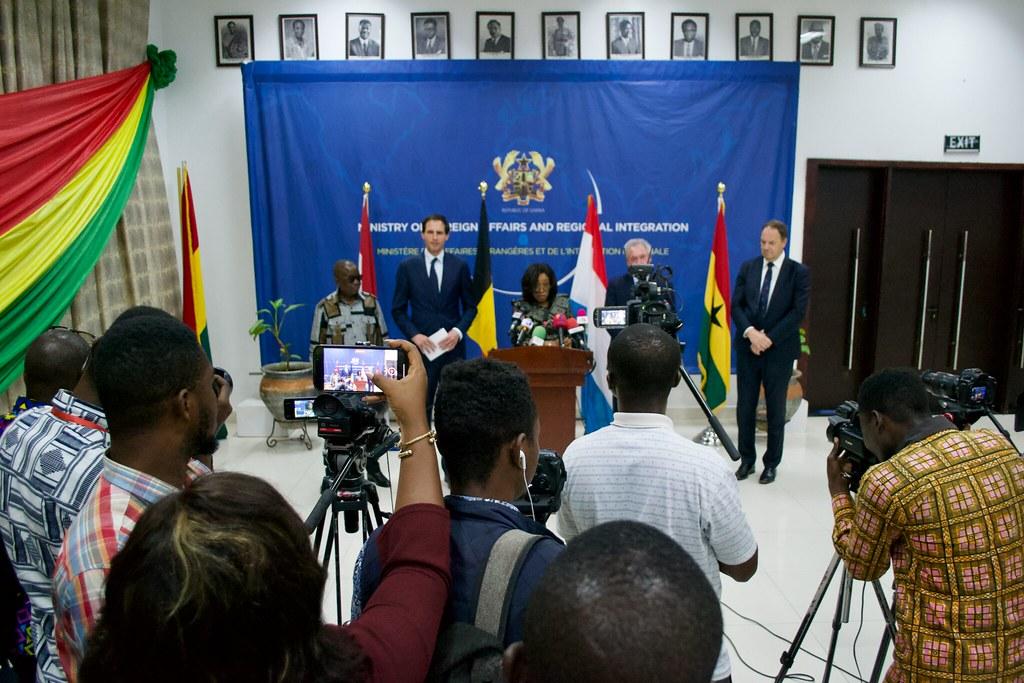
Ghana's Foreign Minister, Samuel Okudzeto Ablakwa, confirmed on May 14 that President Mahama had granted "presidential approval for the immediate evacuation of 300 Ghanaians in South Africa." These individuals had registered with the High Commission in Pretoria after official safety advisories were issued.
The government's response has been notable for its speed and comprehensiveness. According to the Ministry of Foreign Affairs, evacuees will receive:
- A **chartered flight** home, departing May 21, with costs covered by the government.
- A **"Welcome Home Financial Package"** to provide immediate economic relief upon arrival.
- **Transportation assistance** from the airport to destinations across Ghana.
- **Job placement support** through a special database connecting returnees with employers.
- **Startup funding access** for those wishing to launch businesses.
The Ministry stated, "We value and cherish all our citizens." It is a message of reassurance—and a rebuke. If South Africa will not protect Ghanaians, Ghana will bring them home and give them a second start.
“"The government further disclosed that evacuees would be entered into a special database designed to connect them with job opportunities and startup support programmes. Through these combined measures, the Ministry of Foreign Affairs described the intervention as part of the government's commitment to protecting the welfare of Ghanaian citizens abroad."”
Diplomatic Pressure Works—Slowly
The Estcourt mayor, facing intense diplomatic pressure and the threat of litigation, reversed course. "I think that we have just been briefed that the mayor is standing down on what he was doing back in Estcourt," Quashie reported on May 20. "He indicated that he's looking for a meeting and getting this matter resolved."
The High Commission made clear it would not negotiate. "We did not come in to negotiate. We came in to ensure that the right thing is done. The right thing is to give back the keys to the people who own those businesses," Quashie stated.
South Africa's national government, through the Department of International Relations and Cooperation (DIRCO), has signaled cooperation—promising to rein in local officials who overstep their mandates. But the pattern is familiar: national leaders condemn xenophobic violence in principle, then do little to prevent it in practice. Local actors—mayors, police, vigilante groups—operate with effective impunity.
The Economic Stakes
For Ghana, the repatriation carries tangible economic consequences. The Ghanaian diaspora in South Africa has functioned as a financial lifeline for families back home, sending millions of dollars annually in remittances. These inflows fund real estate, school fees, healthcare, and small businesses in Greater Accra, Ashanti, and the Central Region.
When 300 Ghanaians return—displaced, without the capital they had been accumulating—the remittance pipeline breaks. Families in Ghana will face sudden income shortfalls. Local economies that depend on diaspora spending will contract. The government's job placement and startup programs are designed to mitigate that shock, but the scale of need may exceed available resources.
South Africa's Denial
Pretoria has rejected claims of xenophobia, framing the unrest as "legitimate constitutional activities" rather than targeted violence. State officials describe the demonstrations as expressions of economic frustration, not racial or national prejudice.
The framing is not credible. When a mayor seizes foreign-owned businesses and hands them to locals based solely on national origin, that is xenophobia by definition. When mobs chant anti-immigrant slogans and loot Somali-owned shops, that is xenophobia. When African migrants live in fear of violence because of where they were born, that is xenophobia.
Ghana, Nigeria, Kenya, Malawi, Lesotho, Zimbabwe—all have issued warnings to their citizens in South Africa. Ghana has asked the African Union to intervene. But South Africa's government insists there is no problem.
Pan-African Ideals vs. Ground Reality
The crisis exposes a widening gap between the rhetoric of African unity and the reality of continental migration. The AfCFTA envisions seamless movement, mutual respect, shared prosperity. The AU Charter enshrines the rights of African citizens across the continent. Leaders speak of "Africa for Africans," of solidarity and collective progress.
But when Ghanaians flee South Africa in fear, when Nigerian shop owners are beaten, when Zimbabwean workers are told to go home—the gap between ideals and reality becomes a chasm.
"The current wave of hostility has triggered a broader conversation regarding the safety of the African diaspora within the continent," GBC Ghana Online reported. "Leaders emphasize that the African Continental Free Trade Area (AfCFTA) goals rely on the mutual respect and protection of all African nationals."
What Comes Next
The May 21 flight will bring home the first cohort of evacuees. Ghana's High Commission in Pretoria continues to register additional citizens seeking safe passage. Diplomatic efforts to secure the return of seized property are ongoing, but success is not guaranteed.
For the 300 Ghanaians returning, the path forward is uncertain. They left Ghana seeking better opportunities in South Africa—higher wages, business prospects, the chance to build something. Now they are coming home, dispossessed, starting over. The government's support will help—financial packages, job databases, startup funds—but it cannot restore what was lost.
For South Africa, the diplomatic fallout is mounting. Ghana is a major African economy, a regional leader, and a founding member of the AU. Nigeria, which has also evacuated citizens, carries even more weight. If African countries begin to view South Africa as unsafe for their nationals, investment flows will dry up, bilateral agreements will weaken, and South Africa's standing on the continent will erode.
And for the African diaspora—the millions of people who have crossed borders seeking opportunity, safety, better lives—the message is clear: you are not guaranteed protection, even within Africa. Citizenship is fragile. Borders, when they suit political needs, become weapons. And when violence comes, you may find yourself on a chartered flight home, carrying only what you could pack in a suitcase, starting over from scratch.
Reporting drawn from GBC Ghana Online, GBC Ghana Online, OkayAfrica.