From the Clubs of Nairobi to a Milan Stage: How Jack Rooster Carried Kenyan Afro-House Into Europe's Spotlight
When the Kenyan DJ opens for Amapiano star Uncle Waffles on 25 June, it will cap a five-year climb from Nairobi radio booths to the rooftops of Rome.
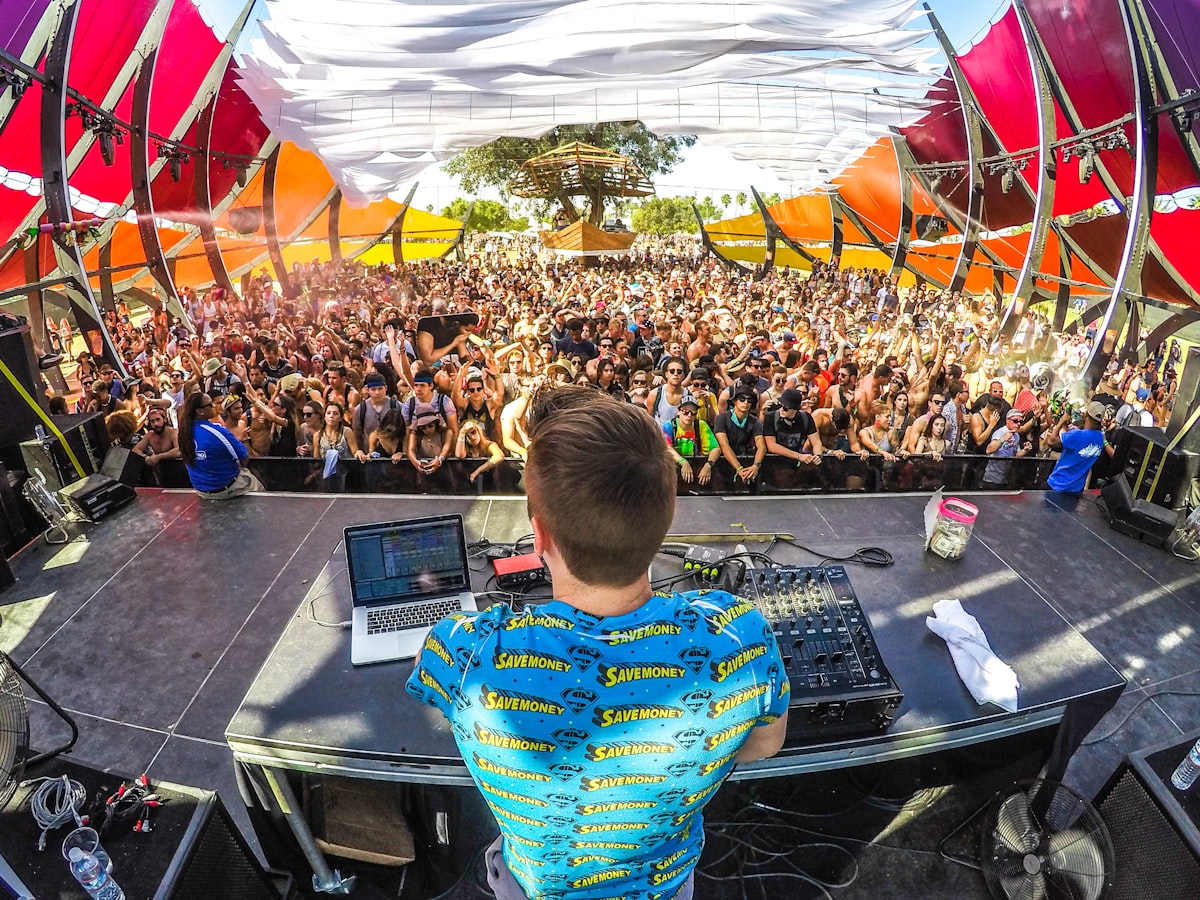
There is a particular hour, just before a club fills, when a DJ booth is the quietest place in the building. The lights are still being tested. The sound engineer is chasing a hum. And the person who will soon hold a room of strangers together stands alone with a pair of headphones, listening for the first track in his head. On the night of 25 June, that booth will belong to a Kenyan, and the building will be JustMe Club in Milan.
The DJ is Jack Rooster, the Nairobi-born producer and self-described cultural curator, and he is scheduled to open for Uncle Waffles, the South African artist whom Billboard once crowned the "Princess of Amapiano." For a man who began his career introducing songs on a Nairobi radio show, the booking is the kind of milestone that arrives quietly and then, on reflection, looks enormous. "This is more than a gig," he told the Kenyan outlet Tuko. "From the clubs of Nairobi to the rooftops of Rome and now Milan alongside Uncle Waffles, I can't wait to share that Kenyan-Italian fire with the audience."
A Booth in Nairobi, a Stage in Milan
Before Europe, there was the airwave. Rooster built his early reputation on the Caffè Mocha radio show on HBR 103.5 FM, the Nairobi station better known to a generation of listeners as Homeboyz Radio, and through his Deeper Sounds of Nairobi podcast. Those were the years when Afro-House in Kenya was less a scene than a hunch, a suspicion among a handful of producers that the continent's electronic music could carry weight beyond the dance floor.
His 2019 debut album, Nyumba, the Swahili word for home, made the argument in full. It folded Kenyan musical textures into the architecture of international house, and it gave Rooster a profile that reached past the capital. The title was not incidental. Much of what he has done since has been an extended meditation on what home sounds like when you carry it somewhere else.
The Long Road Through Europe's Nightlife
Rooster relocated to Italy five years ago, and the move was less a single leap than a slow accumulation of nights. From a base that has shuttled between Rome and the wider European circuit, he built a touring presence the way most working DJs do, one booking and one room at a time. Along the way he shared stages with names that carry real authority in the genre, among them the South African pioneer Black Coffee, the producer Shimza, and Tyler ICU, one of the architects of Amapiano's global crossover.
Kenyan newspapers have begun to treat his trajectory as a story worth telling in its own right. Both the Daily Nation and Business Daily have run features framing his European success as a leap of faith rather than a lucky break, charting the unglamorous middle stretch that rarely makes the highlight reel: the half-empty early sets, the long drives between cities, the work of becoming known in a market that owed him nothing. The Milan show is his first performance in that particular city, and it places him beside one of the most in-demand performers in contemporary African music.
What Afro-House Carries Abroad
It is tempting to read a booking like this purely as personal triumph, and it is that. But it also sits inside a larger shift. African electronic music, and Amapiano above all, has spent the past several years moving from regional phenomenon to global export, filling clubs in London, Lisbon, Berlin and now Milan with sounds that did not exist in their current form a decade ago. Afro-House, the slower, deeper cousin that Rooster helped seed in Kenya, has travelled in the same current.
For the artists riding that wave, the diaspora is both audience and amplifier. Kenyans abroad have long served as the first, most loyal crowd for musicians from home, the people who buy the early tickets and post the clips that travel further than any press release. A Kenyan DJ on a Milan stage is, in a small way, a node in that network, a reminder that the country's cultural exports now move through the same channels as its people.
The Diaspora as First Audience
That dynamic is easy to romanticise and worth examining honestly. The reach of African music in Europe is real, but it is uneven, and it is built on the labour of performers who often spend years on modest fees before a marquee booking arrives. Rooster's own account, that the Milan date is "more than a gig," reads less as marketing than as the relief of someone who has done the unglamorous work and can finally point to a result.
His schedule suggests the momentum is real. He has new residencies planned in Ibiza, the Mediterranean island that functions as a global summer capital for electronic music, and in Rome, the city that has become his European home base. Residencies matter in this industry in a way single shows do not; they signal that a venue is willing to bet on a name week after week, not just for one headline night. For a Kenyan artist, that kind of standing footprint in the European club calendar is still rare enough to be notable.
A Night Still to Come
The Milan booking also carries a quiet subtext for anyone who follows Uncle Waffles. Her own relationship with East African audiences has not always been smooth. A previous performance in Kenya, at Nairobi's ASK Dome, was disrupted by overcrowding and crowd-control problems severe enough that she paused her set, and police later dispersed parts of the crowd with tear gas. Organisers of the Milan event are promising a better-managed night, the kind of professionally run room that lets the music, rather than the logistics, define the evening.
For Rooster, the stakes are simpler and more personal. An opening set is a particular art: warm the room without exhausting it, build the energy the headliner will inherit, leave the crowd wanting more than you gave them. Do it well and few people remember your name; do it badly and everyone does. He has spent the better part of a decade learning to read rooms, first in Nairobi and then across a continent that was not his own.
On 25 June, the booth at JustMe will go quiet for a moment before the lights come up. Then a Kenyan will reach for the first record, and a little of the sound that began in a Nairobi radio booth will fill a club in Milan. It is, as he said, more than a gig. It is the distance between a hometown and a stage, measured in years and miles and a single opening track.