Three-Tenths of a Second: Faith Kipyegon's Streak Ends in Eugene, and Monaco Gets the Reply
Nikki Hiltz outkicked the greatest miler of her generation on July 4 at Hayward Field. Kipyegon, nursing a hamstring since Shanghai, has already chosen her answer: a loaded 3,000m in Monaco on Friday.
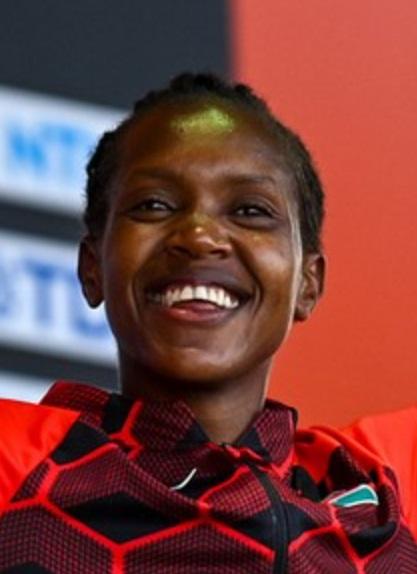
For five years, the final hundred metres of a women's mile has been a formality. Faith Kipyegon in front, the field strung out behind her, the clock the only real opponent left. On the evening of July 4 at Hayward Field in Eugene — the same track this site previewed as a Kenyan Fourth of July — the formality broke. American Nikki Hiltz came off the last bend with a kick Kipyegon could not answer, and the greatest miler of her generation crossed the line third, beaten over her own distance for the first time in a Diamond League race since 2021.
The stadium noise told the story before the scoreboard did. Hiltz stopped the clock at 4:17.49, a meeting record and world-leading time. Kenya's Dorcus Ewoi split the two stars, taking second in a personal best of 4:17.62. Kipyegon followed at 4:17.80 — a time that would have won most miles ever run, and on Saturday was only good enough for bronze.
How the Race Slipped Away
The tactics, in hindsight, wrote the upset. Kipyegon went to the front, as she almost always does, but the pace she set was measured rather than punishing. A slower tempo is an invitation: it kept Hiltz and the chase pack within striking distance at the bell, turning a rhythm race into a sprint — and a sprint is the one lottery even Kipyegon cannot always win. Hiltz, who had sensed from the pre-race press conference that the pace might be soft, timed the pounce perfectly.
Afterwards, Kipyegon offered the context that reframed the result. She revealed she had been managing a hamstring problem since her outing in Shanghai, and that only in the past two weeks had training turned back in the right direction. Champions rarely announce their injuries in advance; they absorb them, race through them, and explain later. Saturday was the bill arriving.
A Defeat Measured in Perspective
It says everything about Kipyegon's career that a third-place finish in 4:17 is international news. The three-time Olympic champion has spent a decade converting the 1500m and mile into personal property: world records, four world 1500m titles — the most recent claimed in Tokyo last September alongside a 5,000m silver — and a winning streak so long that an entire cohort of fans has never seen her lose one.
Streaks, though, are made to be instructive when they end. The mile in Eugene was not a collapse; it was three-tenths of a second, surrendered by a woman running on a repaired hamstring against an opponent in the form of her life. Kenyan athletics has seen this movie before — legends briefly beaten, then ruthless in response.
And the night was hardly a Kenyan failure. Ewoi's personal best announced a new contender in the deepest event Kenya owns, and the prize money flowing to Kenyan finishers across the Eugene programme made headlines at home, a reminder that even a bruising weekend in Oregon pays in shillings. For the Kenyan community in the Pacific Northwest that filled Hayward's stands over the holiday weekend, the sight of two green vests in the mile's top three was consolation with a future attached.
The Answer Is Already Scheduled
What elevates this from a result into a story is what Kipyegon did next: she picked a harder race. According to Kenyans.co.ke, she is confirmed for the women's 3,000m at the Herculis EBS meeting in Monaco on Friday, July 10 — six days after the defeat, at Stade Louis II, the stadium where she set her mile world record of 4:07.64 in 2023. Monaco has been kind to her; it is where her legend does some of its best work.
The field waiting there is ferocious. Compatriot Agnes Ngetich — the world cross country champion who in June ran 30:06 at the New York Mini 10K, the fastest women's 10K ever recorded on American soil — headlines the entry list alongside Italy's Nadia Battocletti, Australia's Jessica Hull, Japan's Nozomi Tanaka and a phalanx of Ethiopian talent led by Freweyni Hailu. It is, on paper, one of the most anticipated races of the Monaco meeting.
The Longer Game
The 3,000m is not a detour; it is the plan. Kipyegon has spoken openly in recent seasons about stretching herself beyond the 1500m as her career matures — toward the 3,000m, the 5,000m and eventually the roads. The Tokyo silver over 5,000m was the first public evidence that the transition is real. Monaco is the next data point: a chance to measure her endurance against specialists while the hamstring rounds back into shape, with nothing at stake except information.
That is what makes the coming Friday compelling rather than anxious. If she wins, the Eugene result becomes a footnote — the blip before the expansion. If she is beaten again, the questions get louder but more interesting: about age, about distance, about how the greatest middle-distance runner ever manages the second act every great career eventually demands.
Why the Diaspora Watches
For Kenyans abroad, Kipyegon is more than an athlete; she is a Sunday-morning appointment, the reason a Kenyan nurse in New Jersey streams a track meet on a phone between shifts. Her races are one of the few events that synchronise the scattered nation — Eldoret and Dallas and Doha all shouting at the same screen. Saturday's silence after the finish line was shared across those time zones too.
Which is why Monaco matters beyond the result. The mark of Kipyegon's career has never been that she doesn't lose; until Saturday, it was simply that nobody could remember the last time. Now everyone will remember Eugene — and if history is a guide, they will remember even more clearly what she did six days later.