The Tent the Diaspora Did Not Ask For: How a US Ebola Plan in Kenya Is Quietly Rewriting Every Trip Home
Washington wants to house Ebola-exposed Americans in a makeshift facility on Kenyan soil. For a diaspora that flies home to bury parents and meet new grandchildren, the plan is no longer abstract.

A Kenyan grandmother in suburban Ohio, holding a late-June ticket to meet a new grandchild in western Kenya, was on the phone to her travel agent before sunrise on Wednesday. She had read the headline on a relative's WhatsApp the night before. The United States, the story said, planned to house Americans exposed to Ebola at a facility inside Kenya, not on US soil. To her, that single sentence rearranged a decade of plans built around the routine certainty of a Nairobi landing.
For most of the Kenyan diaspora, the news from Washington on Tuesday landed somewhere between abstract policy and a tight stomach. The Wall Street Journal first reported that the Trump administration is preparing a quarantine facility on Kenyan soil for Americans exposed to the rare Bundibugyo strain of Ebola now spreading through the Democratic Republic of the Congo and into Uganda. By Wednesday morning, the Nation in Nairobi had framed the development as a secret Ebola deal, even as the Kenyan government issued its own measured statement. By the time US East-Coast offices opened on Wednesday, the diaspora had already begun a quieter recalculation of every flight home this summer.
A facility, not a flight
For more than a decade, the American response to Ebola exposures has rested on a single instinct: bring the patient home. After the 2014 West African outbreak, American aid workers and journalists were flown into specialized biocontainment units at Emory University Hospital in Atlanta, the Nebraska Medical Center in Omaha, and the National Institutes of Health Clinical Center outside Washington. The choreography was familiar to diaspora viewers: a special jet, a sealed gurney, a parking-lot press conference at the receiving airport.
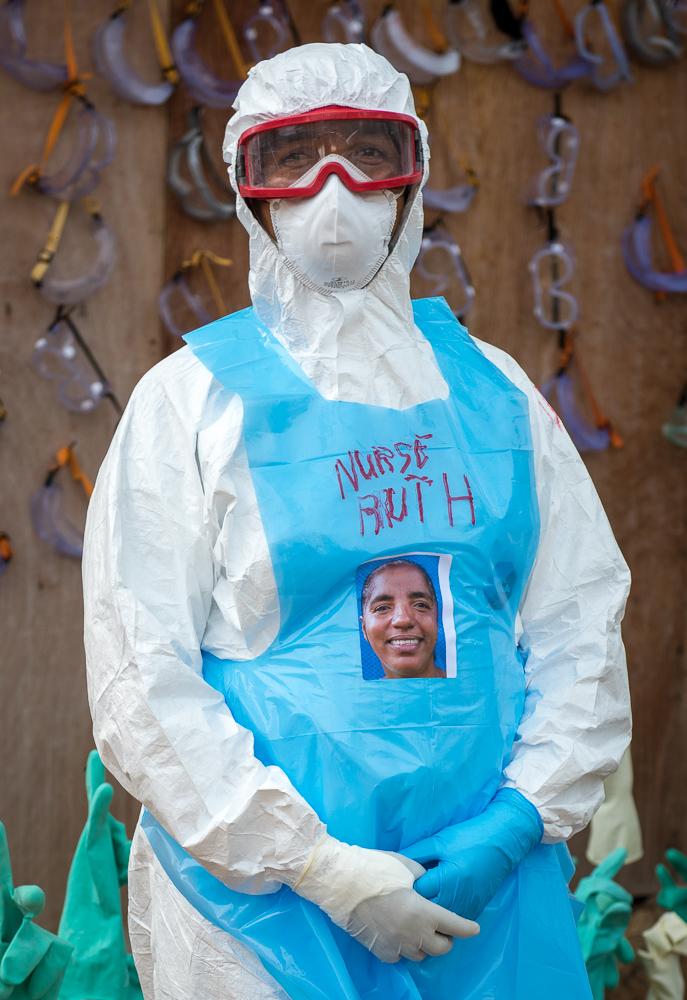
What is being proposed now is a sharp break from that posture. According to the Wall Street Journal, with confirming coverage at the Washington Post and NBC News, US public health officers would instead be deployed to staff a makeshift facility inside Kenya. Initial reports describe a fifty-bed unit that could be stood up within a week, with capacity to expand toward roughly two hundred and fifty beds if cases grow. The plan as described would cover both Americans confirmed to be infected and those judged at high risk of testing positive, including aid workers, journalists, and US officials moving between the affected zones.
As of midweek the facility was pending approval from the Kenyan government. The Ministry of Health in Nairobi, breaking what local outlets had called an unusual silence on the rumors, confirmed that talks with US counterparts were under way but stressed that no agreement had been signed.
Why Kenya, and why now
The choice of Kenya is not arbitrary. Jomo Kenyatta International Airport in Nairobi is the busiest aviation hub in East Africa and the natural overland exit for foreign personnel working in eastern DRC and western Uganda. Kenya already hosts a deep bench of US public health partnerships through the Walter Reed Army Institute of Research in Kericho and Kisumu and through long-running CDC programs on HIV, tuberculosis, and influenza surveillance. The country's high-containment laboratory capacity, while limited, is more developed than that of its neighbors closest to the outbreak.
The outbreak itself is the third largest of its kind on record. The World Health Organization declared the Bundibugyo outbreak in DRC and Uganda a Public Health Emergency of International Concern on May 17. Confirmed and probable cases have since climbed past one thousand, and the death toll is now reported at more than two hundred. Bundibugyo, one of six known Ebolavirus species, has historically carried a case-fatality rate of between twenty-five and forty percent. No licensed vaccine or therapeutic exists for this strain; the products developed during the 2014 and 2018 outbreaks were designed against the Zaire ebolavirus species, not Bundibugyo.
For the United States, the prospect of returning exposed Americans to one of three domestic biocontainment units, each with only a handful of beds, was always tight. A regional facility in Kenya, even a tented one, addresses that limit without filling a US ward.
What this means at JKIA
The diaspora's most immediate questions are about its own airports. There is no indication, in any of the credible reports, that the United States is planning to redirect Kenyan citizens or Kenyan-American travelers from their normal routes home. The facility described in the Journal is intended for Americans, not Kenyans, and it is conceived as a forward staging point rather than a screening barrier for ordinary passengers.
What may change, however, is the texture of arrivals. Kenya has been here before. During the 2014 West African outbreak, the Ministry of Health installed thermal scanners at JKIA, deployed isolation tents at Kenyatta National Hospital, and updated questionnaires for arriving passengers. The same playbook is likely to be dusted off, even if the new outbreak is centered far from Nairobi. Diaspora travelers connecting through Addis Ababa, Kigali, Entebbe, or Dubai should expect additional screening questions, occasional temperature checks, and the slow administrative friction that any health emergency adds to a long-haul itinerary.
Kenya Airways diaspora routes through London, Paris, Amsterdam, New York, Mumbai, and Bangkok are not under direct threat, but the carrier has been quietly briefing crews, and travel insurers serving Kenyan customers abroad have begun reminding policyholders to read the small print on pandemic and outbreak exclusions before booking.
The diaspora workforce gets pulled in
Beyond the airport, the new policy ripples into diaspora professional life. Kenyan-born nurses, physicians, lab technicians, and public health officers form a significant share of the African workforce inside CDC field stations, NIH-funded studies, NHS trusts in the United Kingdom, and the global staff of organisations like the WHO, IFRC, and Medecins Sans Frontieres. Several will end up rotating through any US-staffed facility in Kenya, either as deployed clinicians or as cultural and linguistic bridges to local communities.
Kenyan diaspora medical associations in Atlanta, Dallas, Manchester, and Toronto have so far been cautious in their public statements, mindful that the announcement is still in a pre-approval phase. Privately, several leaders said the plan, if implemented well, could be a chance to demonstrate the operational value of African-trained clinicians inside a US-led response, after years in which their work has been visible mostly during patient handoffs.
There is also a quieter anxiety. A US-funded biocontainment site on Kenyan soil, even a temporary one, will inevitably become a domestic political symbol. Opposition voices in Nairobi are likely to ask why Kenya should host a facility that is, by design, not intended to treat Kenyans.
The summer ahead
For now, the practical advice from public health agencies is unchanged. Routine travel to Kenya remains safe. The outbreak is centered hundreds of kilometers from Nairobi, in DRC's Ituri and North Kivu provinces and in adjoining districts of western Uganda. The CDC's current travel notices do not advise against tourist or family travel to Kenya itself. Diaspora families planning weddings, burials, or graduations in Nakuru, Mombasa, or Eldoret have no reason at present to cancel.
What has changed is the backdrop. The diaspora is being asked to absorb, in the middle of a busy travel season, a story in which Kenya is not just the destination of a flight home but the receiving end of an American policy decision about disease. That asymmetry will shape WhatsApp threads, sacco meetings, and church-hall fundraisers for weeks. It will also shape the next phase of negotiations between Nairobi and Washington, which will need to land an agreement that protects Kenyan public confidence as much as it protects Americans in the field.
The grandmother in Ohio has not cancelled her June ticket. By Wednesday afternoon, she had texted home: still coming, just watching the news. For now, that may be the most honest diaspora response on offer.