A Cold Virus in an Oxford Freezer: How a Rushed Bundibugyo Vaccine Could Reach East Africa Before the Outbreak Does
A team at Oxford is rebuilding its COVID-era platform to chase a rare Ebola strain killing one in three. For the Kenyan diaspora watching the border with the DRC, the timing matters.
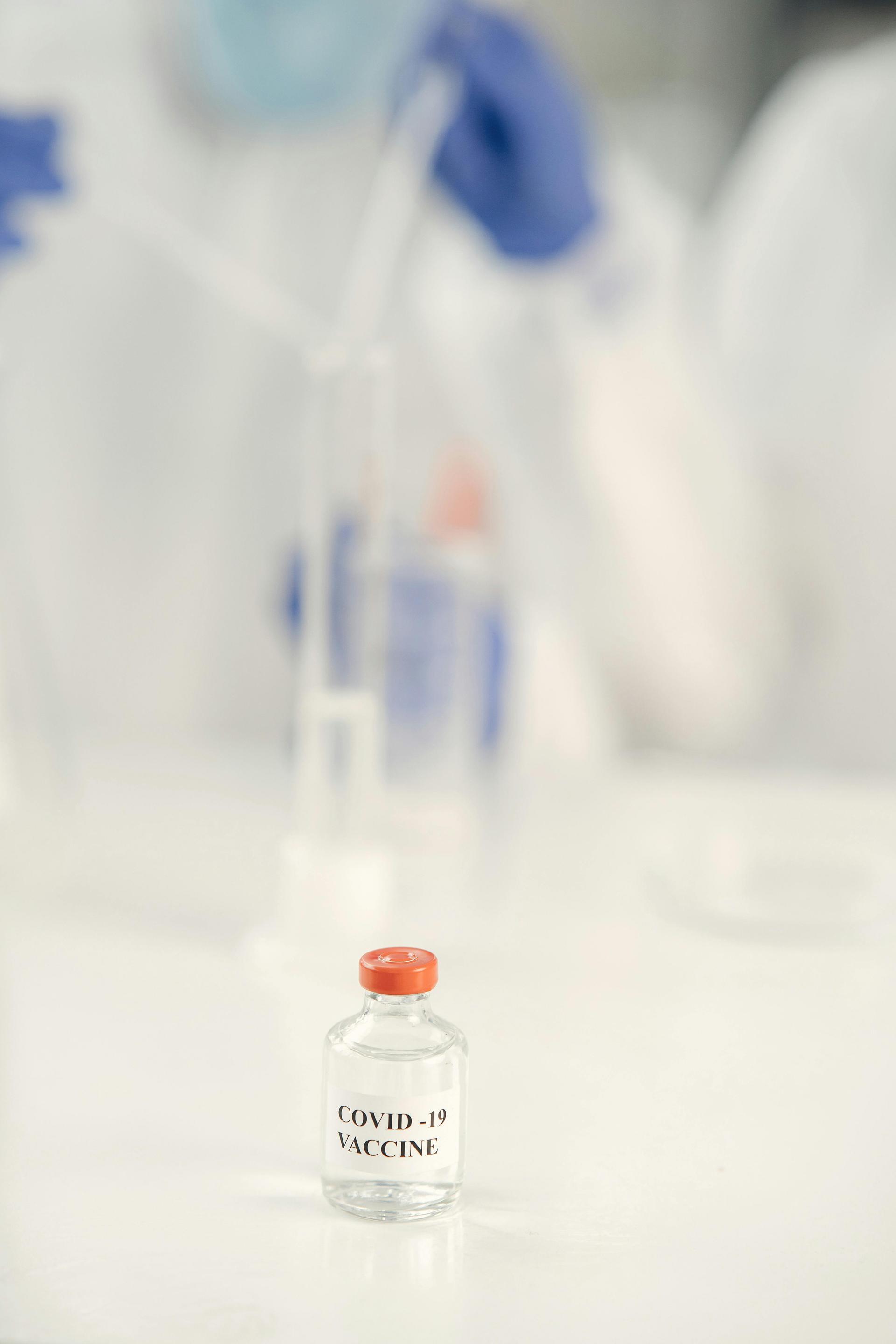
On a quiet weekend at the Jenner Institute in Oxford, a freezer hums above a row of small glass vials. Inside is a chimpanzee cold virus, genetically rewritten so it can no longer cause illness in humans but can still carry instructions to the immune system. The instructions, this time, are not for the spike protein of COVID-19. They are for the Bundibugyo strain of Ebola, a rare cousin of the more familiar Zaire virus that kills roughly one in three people it infects and, until this month, had no proven vaccine of any kind.
That freezer matters in Kisumu, in Nakuru, in the immigration queues at Heathrow, and in the WhatsApp groups Kenyan nurses run from Manchester and Toronto. The outbreak that pushed Oxford to dust off its ChAdOx1 platform is not in Europe. It is centred on the Democratic Republic of Congo, where the World Health Organization has now logged 750 suspected cases and 177 deaths and upgraded its national risk assessment from "high" to "very high." The wider region, including Uganda and the Kenyan border, sits at high risk. International risk remains low. The vaccine being built in Oxford is meant to keep it that way.
A platform that already knows how to move fast
The technology in the Oxford lab is not new to most diaspora readers; many took two doses of it during the pandemic. ChAdOx1 is an adenovirus borrowed from chimpanzees and stripped of its ability to replicate. During COVID-19, scientists loaded it with genetic code from the SARS-CoV-2 spike. This time, the same delivery vehicle has been re-engineered to carry the genetic blueprint of a Bundibugyo Ebola protein. The vaccine itself does not cause Ebola or any of its symptoms; it teaches the immune system what to look for.
Professor Teresa Lambe, the Calleva Head of Vaccine Immunology at the Oxford Vaccine Group, told BBC News the priority is speed. Animal testing is now under way in Oxford. If the data holds, doses could be available for clinical trials in two to three months. A second experimental Bundibugyo vaccine, being developed elsewhere, is expected to take six to nine months to reach a trial-ready dose. Both timelines are unusual for vaccine development, where the typical clinic-to-shelf horizon is measured in years, and neither is a guarantee.
The Serum Institute of India is already on standby to mass-produce the Oxford candidate once a medical-grade starter material is ready. "Once we get starting material to them they can go fast and they can go big," Lambe said. That phrase, for anyone who remembered the AstraZeneca-Serum supply line that delivered hundreds of millions of COVID doses to low- and middle-income countries, will sound familiar. It is the same machine, switched on for a different pathogen.
Why the diaspora is paying close attention
For Kenyans abroad, an Ebola story rarely stays an Ebola story. It is, in turn, a story about parents in Western Kenya, about a sister training to be a clinical officer in Eldoret, about whether a planned trip home in August will still feel sensible. Bundibugyo has only ever caused two known outbreaks before this one — one in Uganda in 2007 and one in the DRC in 2012. Both were close to the same lake systems and trade corridors that connect western Uganda to eastern DRC and, through long-distance bus routes, to western Kenya.
When the WHO declared a public health emergency of international concern last weekend, it stressed two things at once: that this outbreak is not a pandemic, and that complacency is dangerous. For the millions of Kenyans living in the United States, the United Kingdom, Canada, the Gulf, and Australia, that careful framing has been a recurring text from family at home and a recurring search query on phones in Doha, Atlanta, and Reading. A vaccine — even one still in animal studies — changes the shape of those conversations.
Ring vaccination, not mass campaigns
If the Oxford vaccine reaches deployment, it will not be rolled out the way COVID-19 vaccines were. Ebola immunisation programmes use a strategy called ring vaccination. Rather than queue an entire country, public-health teams identify confirmed cases, then vaccinate the close contacts of those cases, then the contacts of those contacts. Healthcare workers caring for sick patients are also vaccinated as a priority group because their exposure to body fluids puts them at the highest risk.
The strategy works only if there are doses to ring. That is why the Oxford timeline matters. The Zaire strain of Ebola already has an approved vaccine that has been used in DRC outbreaks since 2018. Bundibugyo has had nothing. The current outbreak has, in effect, been ringed with prevention measures that did not include an injection — until now, perhaps. Kenyan public-health officials, who have spent the last week reviewing surveillance plans at the western border, have made clear that any vaccine doses that become available will be discussed at the East African Community level, not unilaterally.
What "in two to three months" really means
The phrase has been repeated in headlines, sometimes without the qualifiers. Lambe and the WHO have both been careful to attach the same caveats. The animal data has not yet been published. The vaccine has not been tested in a single human. Manufacturing-grade material, regulatory submissions, and ethical approvals for a Phase 1 trial each take their own time. A two-to-three-month figure refers to the earliest possible date that a research dose could exist; it does not refer to a vaccine on shelves.
For the diaspora, this is a familiar distinction. Many Kenyans abroad lived through the same kind of headline cycle in early 2020, when "a vaccine is being developed" carried very different weight depending on whether one was reading the Daily Nation, BBC News, or a forwarded WhatsApp post. The most reliable signal in the next few weeks will not be promotional press releases but the publication of pre-clinical immunogenicity data and a Phase 1 trial registration on the UK clinical-trials registry.
What to watch from London, Nairobi and Kinshasa
Three things are worth tracking. First, the WHO situation reports, which are updated regularly and will signal whether the case count in DRC stabilises or continues to climb. Second, the Oxford team's pre-clinical results, which will determine whether the candidate moves into humans. Third, decisions inside the Kenyan Ministry of Health on whether to step up screening at the Busia, Malaba and Lokichoggio crossings. None of those three things are visible from a kitchen in Aurora, Colorado or a hospital ward in Birmingham. But each is being watched, in real time, by Kenyans who built lives abroad and still carry a phone number for someone whose drinking water comes from Lake Albert.
A small freezer in Oxford does not solve any of that. But the fact that it now holds, on paper, a possible answer to a strain that has killed roughly a third of the people it has touched is the kind of detail the Kenyan diaspora reads twice. It is the difference between a story about a far-off outbreak and a story about a tool that, if everything moves as fast as scientists hope and as carefully as patients deserve, might travel from a bench in England to a clinic in eastern DRC inside a year. For now, it is animal trials in Oxford, a chimpanzee virus emptied of its danger, and a borrowed delivery system that the diaspora already knows by another name.