The Strait and the Shilling: How a US-Iran Truce Reaches Kenya's Fuel Pumps and Its Diaspora
A 14-point deal to reopen the Strait of Hormuz sent crude tumbling. In Nairobi and abroad, Kenyans are doing the maths on what cheaper oil means for fuel, food and the money sent home.
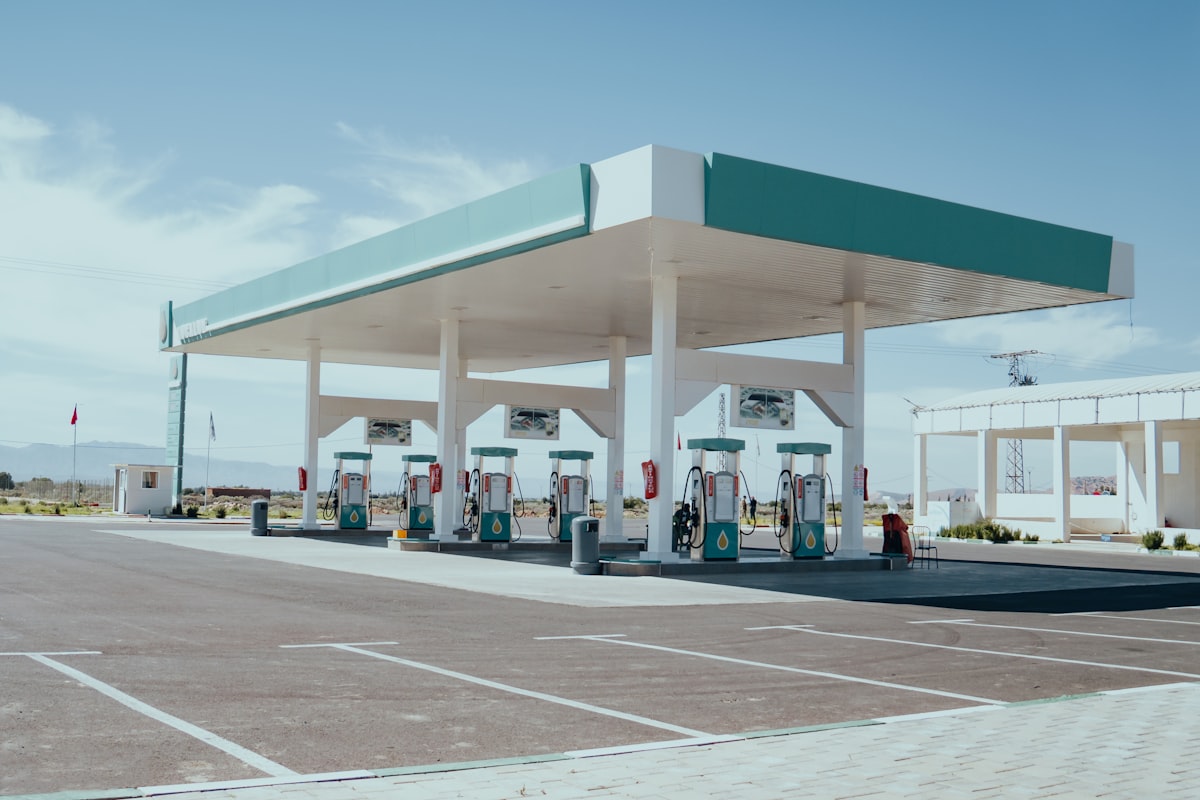
On a Friday evening in Nairobi, the queue at a petrol station along Jogoo Road moves slowly, and a matatu driver watches the price board the way other men watch the weather. For most of the year the numbers on that board have climbed, each shilling shaving something from a day's takings. This week, for the first time in months, one of the figures slipped downward. The reason had nothing to do with Kenya. It was written, instead, into a fourteen-point document agreed thousands of kilometres away, between Washington and Tehran.
The understanding that the United States and Iran reached in mid-June to wind down more than a hundred days of conflict was, on its face, a story about warships and a narrow stretch of sea. But one of its first measurable effects on ordinary life arrived not in the Gulf but at fuel pumps and kitchen tables far from the fighting — including in a country that sent no soldiers and signed no treaty, yet feels the price of crude in almost everything it buys.
A deal measured in barrels
The arithmetic is unusually direct. Under the preliminary memorandum, mediated by Pakistan and signed by the American and Iranian presidents, the two governments agreed to begin lifting a naval blockade, to allow the safe passage of commercial vessels through the Strait of Hormuz at no charge for an initial period, and to open a sixty-day window for talks on sanctions and Iran's nuclear programme. The text also commits Washington to issue waivers for the export of Iranian crude oil and petroleum products. The strait is the channel through which a large share of the world's seaborne oil passes; when it is contested, traders price in the risk, and the cost ripples outward. When the threat eases, the same mechanism runs in reverse.
It did so quickly. Murban crude, a benchmark closely watched in East Africa, fell to about 74 dollars a barrel in the week ending 18 June, down from roughly 85 dollars a week earlier. Energy prices broadly softened and global commodity costs eased as the geopolitical temperature dropped. For oil-importing economies, a ten-dollar move in the space of days is not a footnote. It is the difference between a budget that holds and one that does not.
Where a distant truce meets a Kenyan pump
Kenya imports virtually all of its fuel, and the pump price is reset each month by the energy regulator using a formula tied to global costs and the strength of the shilling. In the cycle running from mid-June to mid-July, the regulator trimmed diesel by about ten shillings a litre and nudged petrol down marginally, leaving a litre of petrol in Nairobi at roughly 214 shillings and diesel near 223. Those are not low numbers. Diesel still sits well above where it stood in March, before the conflict pushed crude higher. But the direction has changed, and direction is what households watch.
Fuel matters so much in Kenya because it sits underneath nearly every other price. Diesel moves the lorries that carry maize and vegetables to market; it runs the generators and the matatus; it shapes the cost of a bag of cement and a kilo of sugar. When diesel falls, the relief spreads, slowly and unevenly, into the wider cost of living. When it rises, the squeeze is felt first by the people with the least room to absorb it.
The diaspora's quiet stake
For Kenyans abroad, a story about oil and the Strait of Hormuz is not as distant as it looks. Remittances sent home by the diaspora are among the country's largest sources of foreign exchange, and much of that money is spent not on luxuries but on the ordinary defence of a household budget — school fees, rent, food, fuel. When the cost of living at home climbs, relatives abroad are often asked to send more, and to send it more often. When prices ease, the same transfers stretch further.
A fall in global crude, in other words, lands twice on a single Kenyan family: once at the pump in Nairobi, and once in the phone of a son in Dallas or a daughter in Doha who has spent the year topping up the difference. The diaspora rarely features in headlines about Middle East diplomacy, but the people who send money home keep a careful, private ledger of exactly the costs that such diplomacy moves.
The Gulf, where many live the story directly
There is a second, more immediate connection. Hundreds of thousands of Kenyans work across the Gulf — in Saudi Arabia, the United Arab Emirates, Qatar and beyond — as nurses, drivers, domestic workers and labourers. For them the conflict was not an abstraction on a news ticker but a shadow over the region where they earn their living. A de-escalation that reopens shipping lanes and steadies Gulf economies is, for those workers, a question of job security as much as of oil prices.
The World Bank has warned that the fighting battered regional growth, cutting its forecast for Gulf economies sharply for the year and trimming its outlook for the global economy to the weakest since the pandemic. A durable calm would matter to the Kenyan remittance economy precisely because so much of it now flows from that part of the world. The understanding is preliminary, and the sixty-day clock could yet run out badly; but for a Kenyan working a contract in Riyadh, even a fragile pause is worth more than another month of dread.
A relief that no one should bank on
None of this guarantees lasting respite. Analysts have been quick to note that oil's slide may not go much further, that the agreement is a framework rather than a settlement, and that the Strait of Hormuz has been a flashpoint before. Kenya's pump prices answer to more than crude — the shilling, taxes and freight all pull at the formula, and a new finance law is reshaping the cost of many things at once.
Still, for one week in June, the price board on Jogoo Road told a small, hopeful story. The matatu driver did the only arithmetic that mattered to him, subtracting a few shillings a litre and multiplying by the kilometres he drives each day. Somewhere abroad, a relative who helps keep that household afloat was, without knowing it, doing the same sum. An understanding reached between two distant capitals had travelled, by the long route that oil always takes, all the way to a fuel queue in Nairobi.