The Stamp at the Gate: How a Quiet UAE Rule Change Eases the Journey for Kenya's Globe-Spanning Diaspora
A new visa-on-arrival policy for Kenyans holding Western residence permits removes a small but persistent hurdle for a community that lives between continents.
For a Kenyan nurse in Manchester, the hardest part of a holiday has rarely been the flight. It has been the paperwork that comes before it. A trip to see cousins in Nairobi often runs through Dubai, and until this week a stopover in the Emirates meant another form, another fee, another wait for approval that had to be secured before she ever left England. For thousands of Kenyans who have built lives in distant cities, that quiet pile of admin has long been the unglamorous tax of belonging to two worlds at once.
On Thursday, one small piece of that burden was lifted. The United Arab Emirates announced a visa-on-arrival arrangement for eligible Kenyan citizens, a change that took effect immediately and that, for a specific slice of the diaspora, removes a step that had to be completed before boarding. It is not a sweeping reform, and it does not open the Gulf to every Kenyan passport. But for the people it touches, it changes the texture of travel in a way that headlines about trade deals seldom do.
A Smaller Hurdle, Quietly Removed
The notice came from the UAE Embassy in Nairobi, dated 25 June 2026. In the words quoted by The Kenya Times, the embassy said that "effective June 25, 2026, the United Arab Emirates will grant visas on arrival to ordinary passport holders from the Republic of Kenya and their accompanying family members." The phrasing matters. This is not a blanket visa waiver of the kind extended to wealthy nations, but a conditional easing aimed at travellers who can already demonstrate settled status somewhere else.
In practice, that means the change is felt most keenly not in Kenya itself but in the diaspora. The Kenyan who lives in London, Toronto or Sydney and once had to plan a UAE visa around an already complicated itinerary can now, in principle, arrive and be processed at the airport. The pre-departure application, with its photographs and supporting letters, gives way to a stamp at the gate.
What the Directive Actually Says
According to the embassy notice carried by Mwakilishi, eligibility is tied to holding a valid residence permit from one of a defined group of countries: the United States, the United Kingdom, Canada, Australia, New Zealand, Japan, Singapore and South Korea. The Kenya Times reported that residents of European Union member states are also covered. Accompanying family members travelling with an eligible person may benefit as well, provided they meet the stated conditions.
The common thread is residency in a high-income economy. A Kenyan passport alone does not unlock the arrangement; the document that does the work is the residence card from the host country. That design quietly tells you who the policy is built for. It is aimed squarely at the established diaspora, the people who have already cleared the high bar of long-term residence abroad and who travel frequently enough that pre-clearance friction is a recurring cost.
The embassy framed the move as part of the UAE's broader ambition to cement its standing as a global centre for tourism, trade and investment. For Abu Dhabi, easing entry for mobile, credit-worthy travellers is less a favour than a strategy.
Why Dubai Matters to Kenyans Abroad
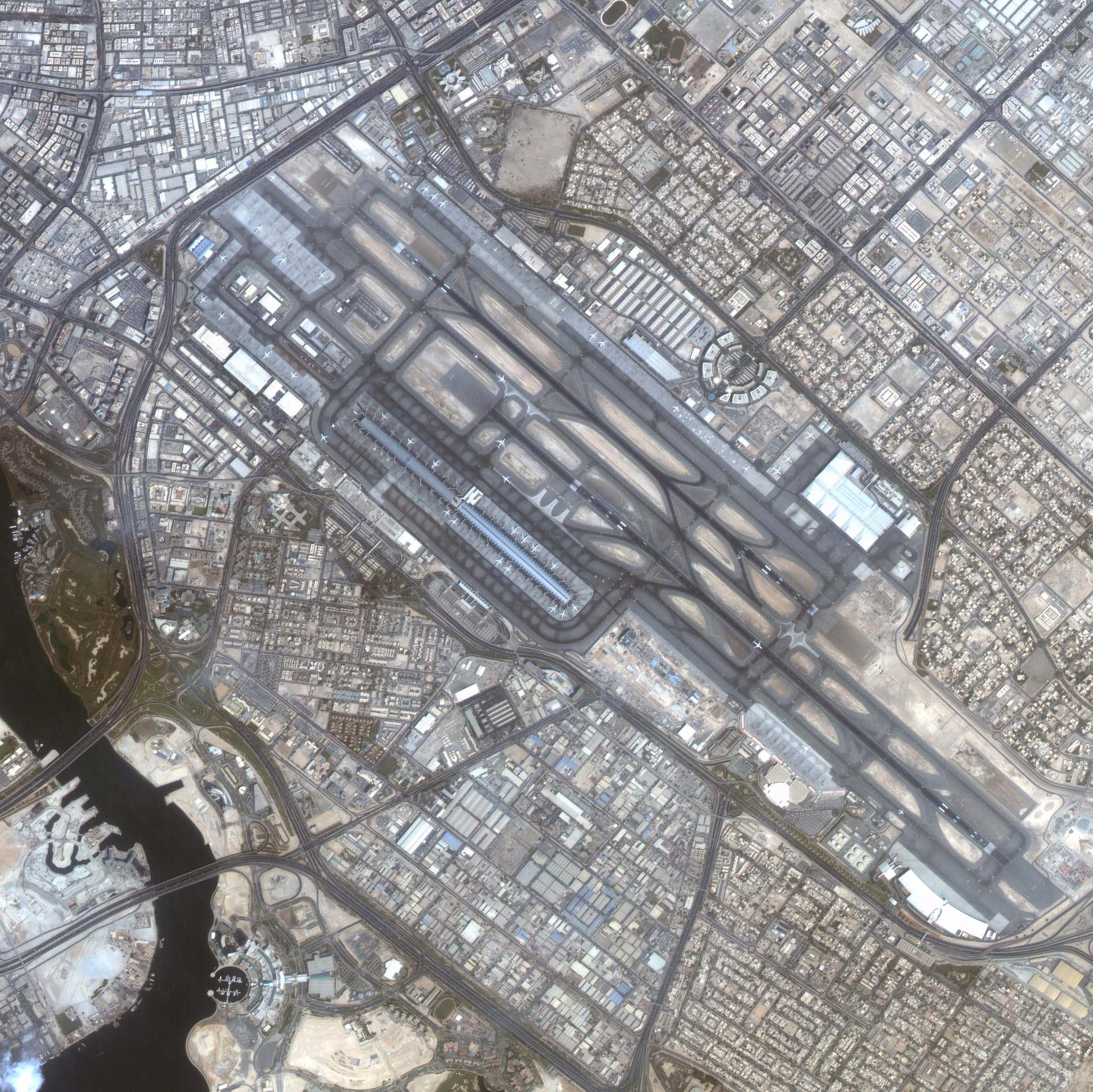
To understand why a visa tweak lands as real news in diaspora WhatsApp groups, it helps to look at the map. Dubai and Abu Dhabi sit at one of the busiest crossroads in global aviation, the point where routes from Africa, Europe, Asia and North America converge. For a Kenyan flying from the American Midwest or the English north to Nairobi, the Gulf is frequently the natural waypoint, the place where one long flight becomes two.
That geography turns a visa rule into a lifestyle question. A smoother stopover means a family can break a punishing journey, spend a day or two in the Emirates, and continue home without a separate bureaucratic project attached to the layover. It also matters to the many Kenyans for whom the UAE is a destination in its own right, whether for work, business, or visiting relatives who form one of the larger Kenyan communities in the Gulf.
The change does not alter the fundamentals of that relationship, but it lowers the activation energy. Travel that was once worth weighing against the hassle becomes a little easier to say yes to.
The Diplomacy Behind the Door
The announcement does not arrive in a vacuum. It sits on top of a steadily warming relationship between Nairobi and Abu Dhabi. President William Ruto and the UAE president, Sheikh Mohamed bin Zayed Al Nahyan, have held a series of meetings in recent years, and the two governments have widened their cooperation across trade, aviation and investment. A visa-on-arrival facility for a segment of Kenyan travellers fits neatly into that arc, a small civic dividend of bigger state-level dealmaking.
It also reflects a pattern visible across the Gulf, where governments increasingly compete to attract mobile professionals and the spending they bring. By extending easier entry to Kenyans who already hold Western residency, the UAE is effectively borrowing the vetting that other countries have already done. The residence permit becomes a proxy for trust, and the traveller reaps the convenience.
What Still Has to Be Checked
For all the welcome it has received, the policy rewards careful reading rather than celebration. The embassy was explicit that the arrangement is limited to Kenyan citizens who hold residence permits from the specified countries. Those who do not meet that condition must continue to follow the existing visa application process, with its forms, photographs and supporting documents.
There are practical questions the notice leaves to the fine print. Travellers will want to confirm the permitted length of stay, any costs charged on arrival, and the exact documents that border officers will expect to see, since a residence card that is close to expiry or a passport with insufficient validity can still derail a trip. As with any newly introduced rule, the gap between the announcement and the experience at the desk is where uncertainty lives, and the safest course for any traveller is to verify the current requirements directly with the embassy or an airline before flying.
The advice that circulates fastest in diaspora circles is also the soundest: read the conditions, carry the paperwork, and do not treat a convenience as a guarantee.
A Diaspora That Lives in Transit
Step back from the detail and the story is really about a community defined by movement. Kenyans abroad are, by necessity, expert travellers, fluent in the language of layovers, residence cards and connecting gates. Their lives are stitched together across time zones, and the small rules that govern crossing borders shape how often they can hold a parent's hand, attend a wedding, or simply go home for a while.
Seen that way, a visa-on-arrival notice is more than an administrative footnote. It is one of the countless quiet adjustments that determine how connected the diaspora can stay to the country it left. For the nurse in Manchester weighing a December trip, the change will not make the flight shorter or the ticket cheaper. But it removes one more thing standing between her and the gate, and for a community that lives in transit, that is rarely a small thing.