The Plane That Came Home First: How Kenya Airways' Returning 777 Reopens the Diaspora's Road to London
A decade after it was leased away, Kenya Airways' largest jet returns to the Nairobi–London route on July 17, adding seats on the corridor that carries the UK diaspora home.
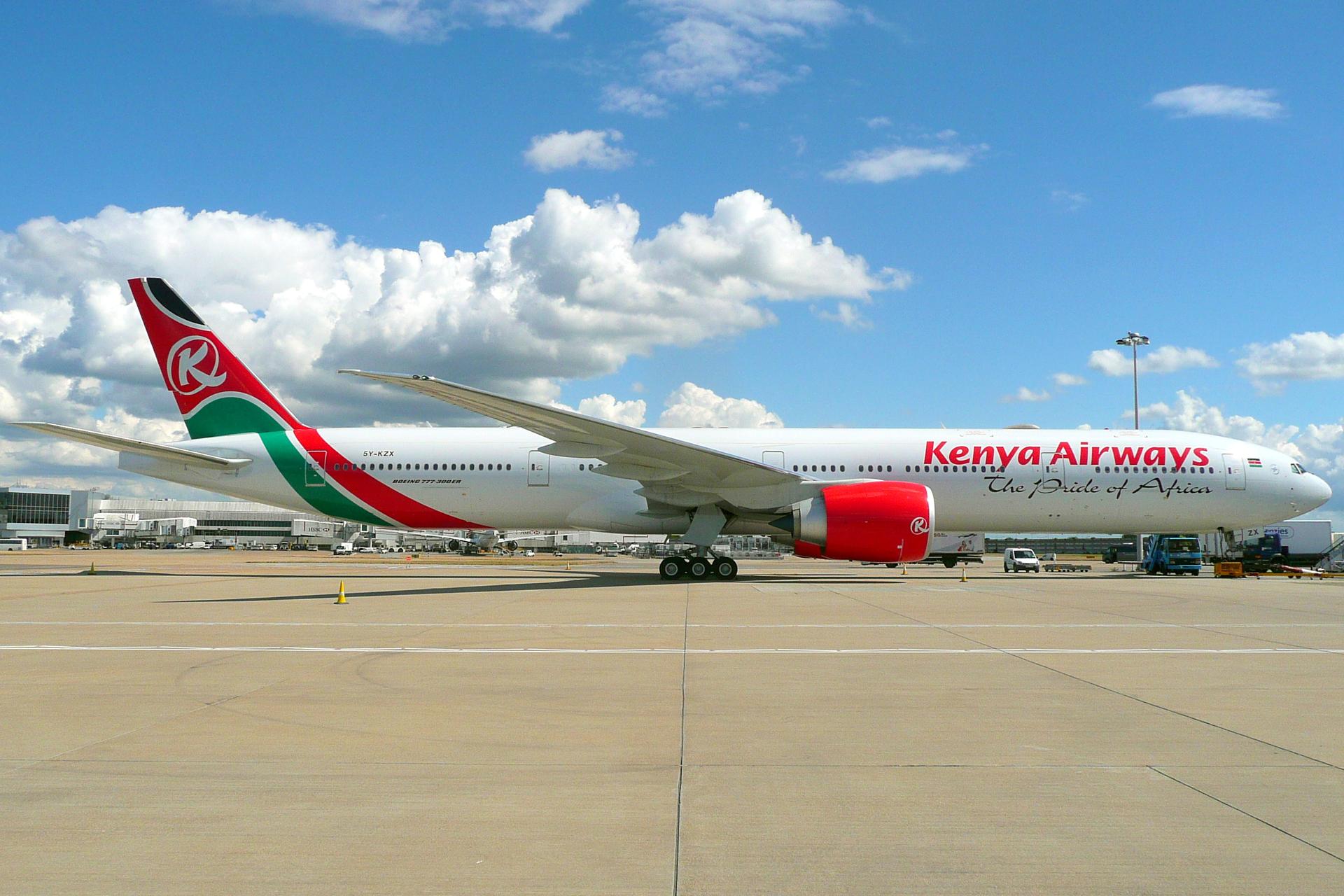
For the Kenyan who has spent the year in a flat in Croydon or a shared house off a Manchester ring road, the journey home usually begins long before the airport. It begins in the quiet arithmetic of a fare, a date, and a seat that may or may not exist on the night the family back in Nairobi expects to see a face at arrivals. For much of the past decade, that calculation on the Nairobi–London corridor has been shaped by one stubborn fact: there were only so many seats to go around, and in the high season they ran out.
On Wednesday, that arithmetic shifted. Kenya Airways announced that its largest aircraft, the 400-seat Boeing 777-300ER, is returning to passenger service after nearly ten years away, and that from July 17 it will fly the route between Nairobi and London Heathrow. For a diaspora that measures its ties to home in graduations missed and funerals reached just in time, the news is about more than an aeroplane.
A jet returns after a decade away
The 777-300ER is the biggest plane Kenya Airways has ever operated, and for years it has not flown for the airline at all. Delivered between 2013 and 2014 under an ambitious expansion plan, the wide-bodies were subleased to Turkish Airlines in May 2016 as the carrier scrambled to stabilise its finances during a painful restructuring. They became, in effect, a symbol of a national airline that had reached too far, too fast.
Their recall, then, carries a weight that a routine fleet announcement would not. In a video message on June 24, acting chief executive George Kamal framed the moment in the language of recovery rather than logistics. He called the aircraft's return "a symbol of our resilience, our ambition and the progress we continue to make as Kenya's national carrier," according to Kenyans.co.ke, which first reported the rollout. The airline said the jet would first carry passengers domestically, on the Nairobi–Mombasa route, before resuming international service.
A discount before the long haul
To mark the homecoming, Kenya Airways is offering a steep discount on selected Nairobi–Mombasa flights between July 13 and July 16. Economy seats that ordinarily start at Ksh13,245 will sell for as little as Ksh6,600, the airline said, while business-class fares drop from Ksh24,585 to Ksh12,335 on chosen departures.
The choice to debut the aircraft at home, on a short coastal hop, was deliberate. Kamal said the airline wanted "to begin this journey on the Nairobi–Mombasa route, giving Kenyans the first opportunity to experience one of the most iconic aircraft in our fleet before it returns to international operations." It is a piece of theatre with a practical edge: a full-size wide-body is easier to fill and fine-tune on a busy leisure route than on an overnight long-haul, and the discount guarantees the cabin will not fly empty during its first days back in the air.
The corridor that carries a community
London Heathrow is no ordinary destination on the Kenya Airways map. The United Kingdom is home to one of the oldest and largest Kenyan communities abroad, and it ranks among the country's biggest sources of diaspora remittances, the foreign-exchange lifeline that the Central Bank of Kenya counts as the single largest contributor of hard currency, ahead of tourism and tea. Every seat on the route is, in some sense, a thread between two economies.
That is why capacity, not glamour, is the real story. From July 17, the 777-300ER is set to replace the smaller Boeing 787-8 Dreamliner on most of the seven weekly rotations between Nairobi and Heathrow. The airline's statement put the figure at five of the seven flights; published schedule data tracked by aviation monitors such as AeroRoutes indicated four, a discrepancy that may yet be settled as the timetable firms up. Either way, the swap matters: the 777-300ER carries roughly 400 passengers in Kenya Airways' configuration, with 28 business-class seats and 372 in economy, well above the Dreamliner's smaller cabin. On a corridor where peak-season seats vanish months ahead, hundreds of additional places each week is the difference between booking the flight you need and settling for the one you can find.
What it means for the traveller
For the family in Birmingham planning a December burial in Kisii, or the student in London hoping to be home for a sibling's wedding, more seats can mean more than convenience. Tight capacity has long given fares on the route a stubborn floor, especially in the months when the diaspora most wants to travel. A larger aircraft does not guarantee cheaper tickets, and Kenya Airways has been candid that the move is partly about matching capacity to "rising demand" during the busy travel season. But more inventory tends to ease the worst of the price spikes and the dreaded sold-out screen, and it gives latecomers a fighting chance.
There are caveats worth keeping in view. The introductory discount applies only to the domestic Mombasa flights in mid-July, not to London fares. The 777's deployment depends on the aircraft staying serviceable and on demand holding up. And a single jet, however large, does not by itself undo years in which Kenya Airways thinned its network to survive. Travellers would still do well to book early and read the fare rules closely.
A national carrier still rebuilding
The bigger picture is of an airline slowly knitting itself back together. The return of the 777 follows the recent reintroduction of a Boeing 787-8 Dreamliner to operations earlier this year, and reporting on the carrier's fleet plans suggests it is also weighing narrow-body additions to feed its regional network. After years of losses, state bailouts and the indignity of leasing out its flagships, Kenya Airways is again talking about growth — cautiously, and with the scars of the last expansion still visible.
For the diaspora, that recovery is not an abstraction on a balance sheet. The national carrier is the aircraft on whose schedule weddings are timed and farewells are made; it is the green tail spotted through a terminal window that tells a traveller, after months away, that the last leg home has begun. When the 777-300ER lifts off for Heathrow on July 17, it will carry the usual freight of suitcases stuffed with gifts and the less visible cargo of people trying to be in two places at once. A bigger plane will not close the distance the diaspora lives with. But for a few hundred more passengers each week, it will make the crossing a little easier to book — and that, for now, is news worth the wait at the gate.