The Oath She Took in Vienna: How Monica Juma's New UN Post Carries Kenya to the Centre of the World's Fight Against Crime
Sworn in before António Guterres, Kenya's former defence and foreign affairs minister now heads two UN institutions — among the most senior roles a Kenyan has ever held in the system.
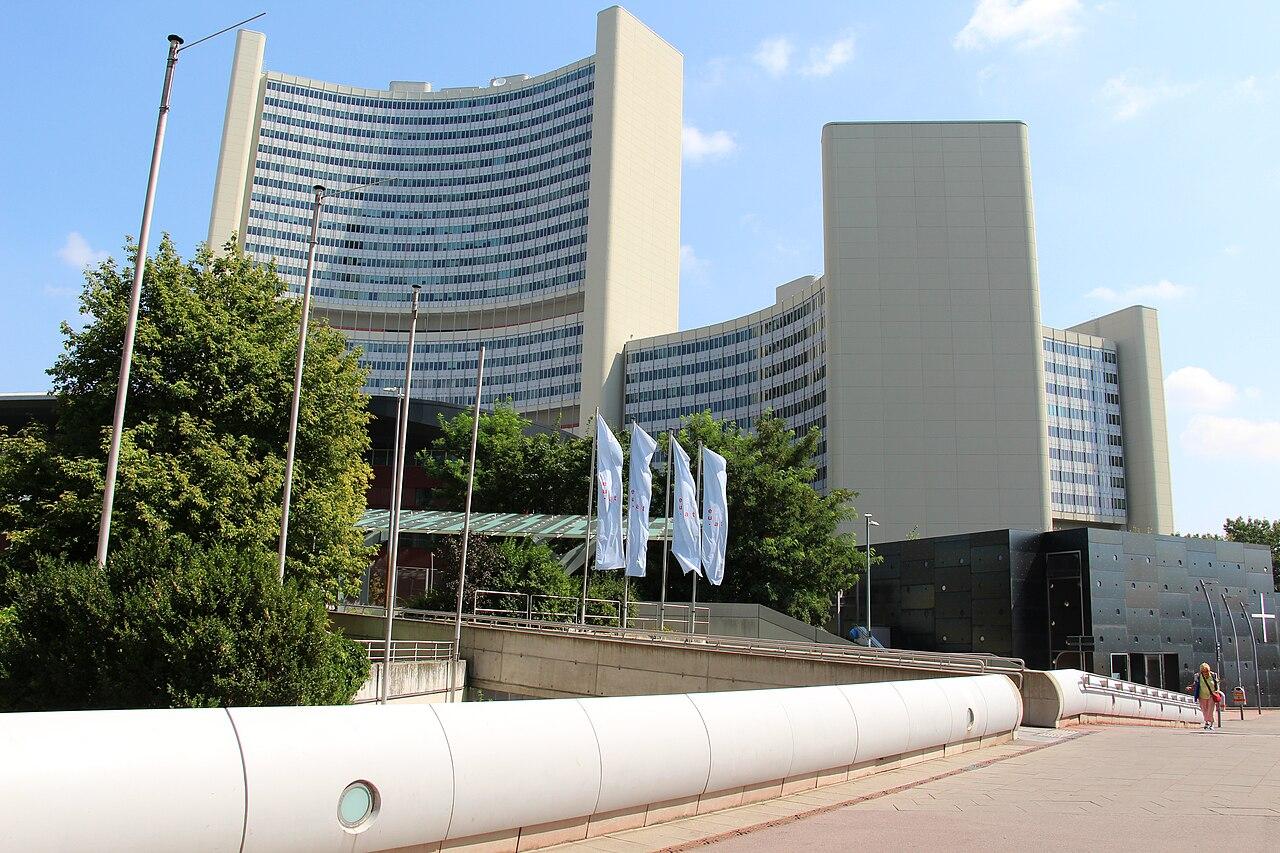
The declaration is short, and every senior official of the United Nations must make it: a promise to exercise their functions with integrity and impartiality, loyal above all to the purposes and principles of the Charter. On Thursday, inside the UN's curved-glass complex on the banks of the Danube, those words were spoken in a Kenyan voice. Monica Kathina Juma took her oath of office before Secretary-General António Guterres, formally becoming Director-General of the United Nations Office at Vienna and Executive Director of the United Nations Office on Drugs and Crime — one of the most senior leadership positions a Kenyan has ever held inside the UN system.
"Today, I had the honour of taking my oath of office before Secretary-General António Guterres as Director-General of the United Nations Office at Vienna and Executive Director of UNODC," Juma said in a statement shared on X after the ceremony. "In taking this oath, I am reminded that international civil service is, above all, a commitment to people."
For the thousands of Kenyans who follow the country's quiet expansion into the corridors of international institutions — and for a diaspora that has long measured its progress in nurses hired, students admitted and engineers promoted — the moment lands differently. This is not a Kenyan joining the system. This is a Kenyan running a substantial part of it.
A Career Built Across Borders
Juma did not arrive in Vienna by accident. Her résumé reads like a map of Kenya's foreign policy over the past two decades. Before joining the United Nations, she served as Kenya's National Security Adviser and Secretary to the National Security Council, the discreet machinery at the heart of the presidency. She held three Cabinet portfolios — Defence, Foreign Affairs and Energy — a sequence few Kenyan public servants of any generation can match.
Her diplomatic assignments took her to Addis Ababa and Djibouti as Kenya's ambassador, and to the African Union as Permanent Representative, where the continent's collective positions are negotiated line by line. It is the kind of career that teaches a person two things at once: how states think, and how slowly institutions move unless someone pushes them.
Secretary-General Guterres announced her appointment in March. She assumed office in May, and Thursday's oath made the transition formal — the public, ceremonial seal on a job she has already begun to do.
What She Will Run From Vienna
The Vienna International Centre is one of the United Nations' major headquarters, alongside New York, Geneva and Nairobi. From its towers, the UN administers some of its most consequential and least glamorous work: the global fight against drug trafficking, organised crime, corruption and terrorism, led by the UN Office on Drugs and Crime.
As UNODC Executive Director, Juma now oversees the institution that supports member states in strengthening criminal justice systems, promoting the rule of law and coordinating responses to threats that ignore borders by design. Trafficking networks, smuggling routes, financial crime, the corruption that hollows out public institutions — these are the files that will cross her desk.
"As I solemnly declared my dedication to carry out these functions with integrity, impartiality, and the utmost regard for the purposes and principles of the United Nations, I reflected on the responsibility that comes with this trust," she said.
She takes office at a moment when those transnational threats are not abstractions for East Africa. The region sits along smuggling and trafficking corridors that run from the Indian Ocean coast to the Gulf and Europe, and the institutions Juma now leads are among the few with a mandate to confront them at the global level.
Why This Matters to Kenyans Abroad
For the Kenyan diaspora, UNODC's portfolio is not distant policy. It is the agency whose work touches the recruitment pipelines that carry Kenyan domestic workers to the Gulf — pipelines that, when they go wrong, produce the stories of exploitation and disappearance that this community knows too well. It is the agency concerned with the fraud syndicates that target remittances, the trafficking networks that prey on job seekers, and the cross-border criminal economies that make migration more dangerous than it should be.
Having a Kenyan at the head of that institution does not change any of this overnight. International civil servants serve the Charter, not their home countries, a point Juma's own statement was careful to underline. But representation at this altitude matters in quieter ways. It shapes which problems are understood from lived proximity rather than briefing notes. A diplomat who has served as ambassador in the Horn of Africa, and who sat in Kenya's national security council as the country negotiated labour agreements and repatriations, does not need the geography of these crises explained.
It also matters as a signal. Kenya has spent years arguing that Africans should not merely be the subjects of multilateral decisions but the authors of them. Nairobi hosts the only UN headquarters in the global South; Kenyan professionals staff missions, agencies and tribunals across the world. Juma's oath in Vienna extends that argument to one of the system's commanding heights.
With Humility, and a Sense of Duty
Juma's own framing of the moment was personal rather than triumphant. "I step into this role with humility, gratitude and a profound sense of duty," she said, "and look forward to working with colleagues and partners across the UN system, and the world to advance peace, security, justice and the rule of law, for a more prosperous and dignified future for all."
It is the language expected of an incoming UN official. But beneath the formality sits a harder job description. UNODC operates in a world where the money behind organised crime moves faster than the treaties designed to stop it, where member states disagree about drug policy as a matter of principle, and where the agency's budget is perpetually thinner than its mandate. Running it requires precisely the skills her career suggests: patience with institutions, fluency in security, and the ability to bring sceptical states to a common text.
The Measure That Comes Later
Oaths are beginnings, and beginnings are easy to celebrate. The harder measure of Juma's tenure will come in the years ahead: whether the conventions against trafficking grow teeth, whether criminal justice cooperation reaches the regions that need it most, and whether the millions who live along the world's smuggling corridors — including many who left Kenya looking for work — find the system slightly more on their side than before.
For now, what stands is the image of a Kenyan diplomat making the international civil servant's oldest promise in front of the Secretary-General, and meaning for it to reach far beyond the room. The diaspora has long known that Kenyans can go anywhere. Vienna is now a reminder that they can also be in charge when they get there.