The Patch on the Shoulder: How a Borrowed British Uniform in Nanyuki Became a Diplomatic Incident
A viral photo of an arrest by a man in British Army fatigues forced London into a rare public rebuke over a deadly protest crackdown — and Nairobi has yet to answer.
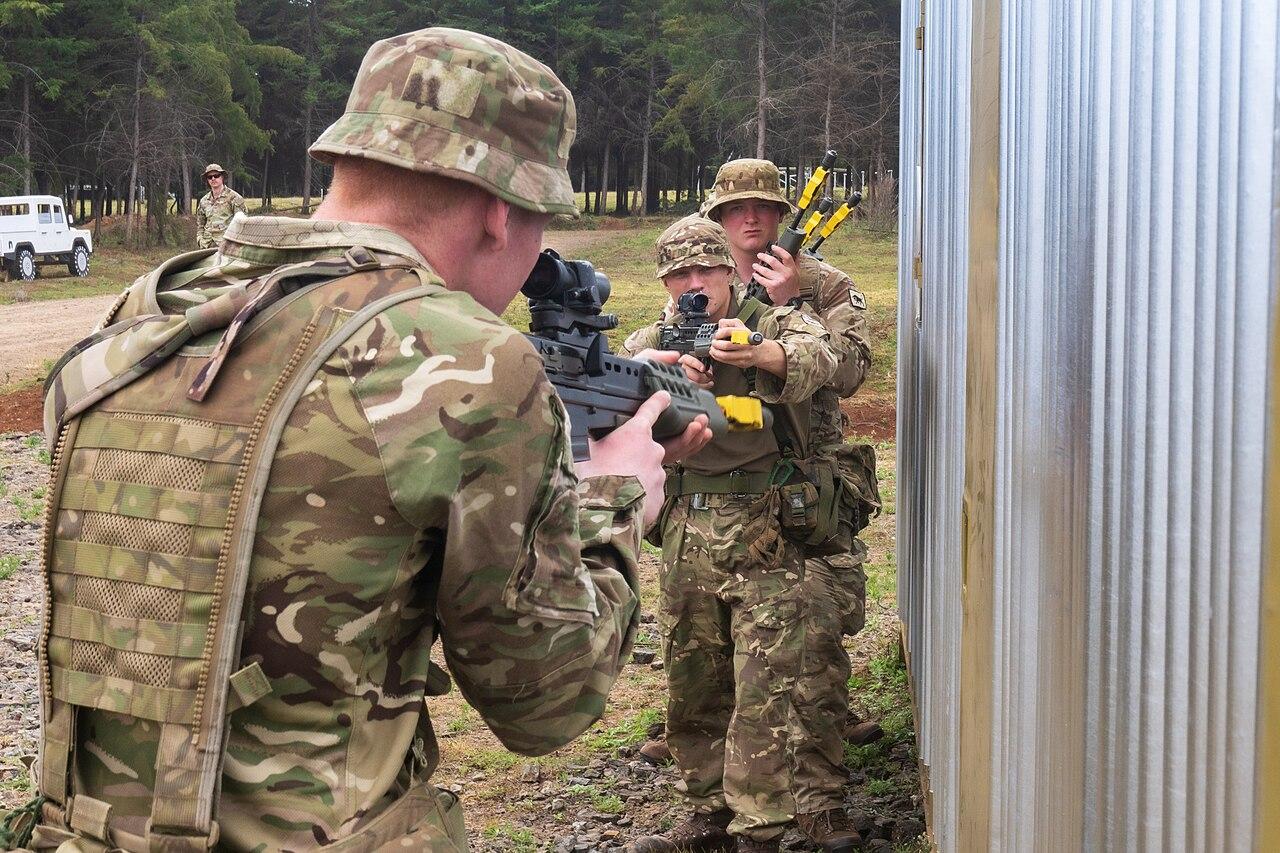
The photograph is grainy, taken in the chaos of a street confrontation, but the details are unmistakable. A protester, draped in a Kenyan flag, is being wrestled toward the ground by two armed men. One of them wears a camouflage jacket that does not belong to any Kenyan service. On its shoulder sits a small rectangular patch: the Union Jack.
Within hours of the June 9 demonstrations in Nanyuki, that single image had travelled from Laikipia County's WhatsApp groups to Kenyan timelines in London, Manchester and Birmingham, carrying with it an explosive question. Had British soldiers helped police a Kenyan protest in which a demonstrator was shot dead?
By Thursday, the question had forced one of the more unusual statements the British High Commission in Nairobi has ever had to issue — a flat denial, paired with something close to a public complaint against its host government.
A Fact-Check From the High Commission
"FACT CHECK: No BATUK personnel policed protests in Nanyuki on 9 June," the High Commission said in a statement circulated on its official channels on Thursday. "The British military uniforms seen were misappropriated. We have raised concerns with the Kenyan authorities."
The language was diplomatic, but the implication was not. If no British soldier was inside that jacket, then someone else was — and the High Commission's statement pointed directly at Kenya's own security services. Tuko, which reported the British response on Thursday afternoon, noted that the embassy's statement suggested the uniforms "may have been improperly used by Kenyan officers," and that the matter had been flagged for investigation.
Capital FM reported that London has gone further than expressing concern, demanding a formal response from the Kenyan government over how British military clothing ended up in a domestic policing operation. As of Thursday evening, according to the broadcaster, Nairobi had issued no comprehensive reply — not on the uniform, not on the shooting, and not on the arrests.
The Protest Behind the Picture
The June 9 demonstrations were not about Britain at all. Residents of Nanyuki and surrounding Laikipia County were protesting against a proposed quarantine and treatment facility for Ebola, linked to the United States and earmarked for land near the Laikipia Air Base.
Opposition to the project has been building for weeks. Local leaders have questioned why a facility designed around a haemorrhagic fever should sit close to schools, businesses and homes, and have demanded transparency over its approvals and safety protocols. The county government has gone to court to halt the project, citing governance, health and economic concerns.
On June 9, those grievances spilled into the streets. The response was severe. Police reportedly opened fire during clashes with demonstrators; human rights groups say one protester was killed and at least nineteen people were arrested. The Kenya Human Rights Commission said it documented officers dispersing crowds from motorcycles and unmarked or partially concealed government vehicles, with some wearing masks or hoods that hid their identities. The rights organisation Vocal Africa described the fatal shooting as a dangerous escalation.
It was in the middle of this crackdown that the man in the British jacket was photographed.
What BATUK Is — and Is Not — Allowed to Do
The British Army Training Unit Kenya is the British Army's largest permanent deployment in Africa, based near the same Laikipia Air Base that the contested Ebola facility would neighbour. Its presence is governed by a Defence Cooperation Agreement between Nairobi and London, which confines the unit to training, logistics and capacity-building exercises alongside the Kenya Defence Forces.
Domestic policing sits far outside that mandate. A British soldier restraining a Kenyan protester would represent not just a scandal but a likely breach of the agreement itself — which is precisely why the viral image demanded an urgent answer, and why the High Commission moved so quickly to provide one.
The unit's history in Laikipia gives the episode an added charge. BATUK has spent years under scrutiny in both countries, most painfully over the 2012 killing of Agnes Wanjiru, a Nanyuki woman whose death — and the long fight by her family for accountability from the British soldier suspected of killing her — became a symbol of the imbalance in the two countries' defence relationship. Against that backdrop, any image that appears to show British camouflage enforcing order on Kenyan streets touches a nerve that runs deeper than one protest.
How the Row Reads From Britain's Kenyan Diaspora
For the estimated quarter of a million people of Kenyan heritage living in the United Kingdom, the affair lands at an uncomfortable intersection. Many have spent years pressing British institutions — Parliament, the Ministry of Defence, the press — to take BATUK accountability seriously. The Wanjiru case was kept alive in part by diaspora voices who refused to let it disappear from British headlines.
Now the same community watches a strange inversion: London issuing the denials and demanding answers, while Nairobi stays silent. The High Commission's statement, whatever its motives, concedes a fact that Kenyan authorities have not yet addressed — that British military uniforms were worn, by someone, during an operation in which a protester died.
For diaspora families with relatives in Laikipia, the questions are more immediate. Who fired the fatal shot? Who are the nineteen people arrested? And if officers were operating in borrowed foreign uniforms, masks and unmarked vehicles, as the KHRC alleges, how would anyone identify those responsible?
The Questions Nairobi Has Not Answered
Rights groups are now calling for independent investigations into the conduct of the entire June 9 operation, including how British military clothing entered the picture. The British High Commission says it has raised its concerns with Kenyan authorities. The county's court case against the Ebola facility continues. And the government in Nairobi, as of Thursday evening, had said nothing at all.
That silence may not hold. A deadly crackdown, a diplomatic protest from Kenya's oldest military partner, and a viral photograph that fuses both into a single frame — it is a combination that tends to demand answers eventually. The patch on the shoulder was small. The questions it has raised are not.