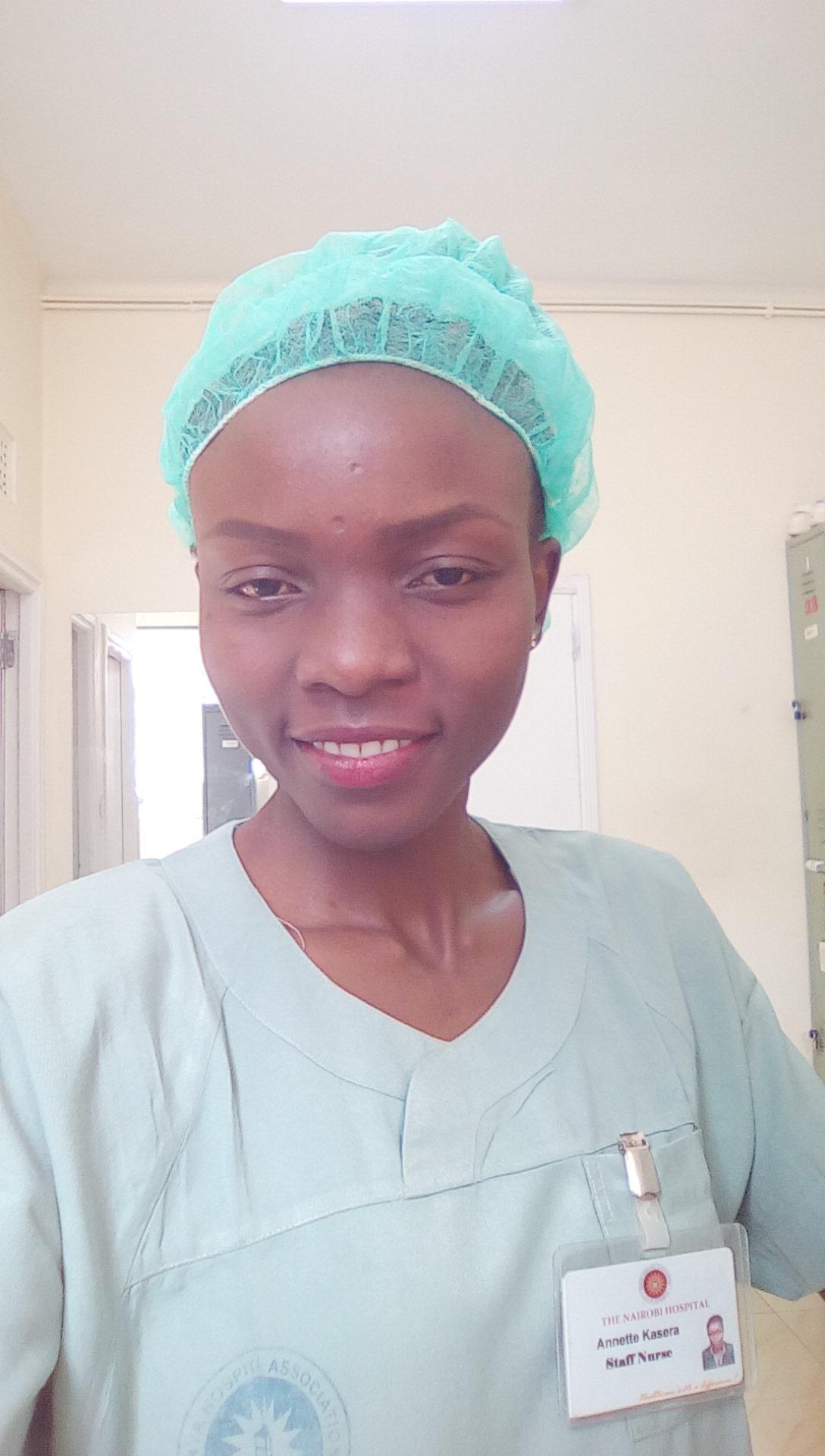
The Licence That Waits in Line: How America's Stalled Green Cards Strand Kenya's Exam-Ready Nurses
Kenya's nurses pass America's hardest exams, then wait years for a green card that keeps slipping further out of reach. This month's visa bulletin moved the line again.

Somewhere in Nairobi tonight, a nurse who passed America's licensing exam two years ago is refreshing a single web page. It is not a job board or a flight tracker. It is the United States Department of State's monthly visa bulletin, a dense grid of dates and country columns that, for thousands of trained Kenyan health workers, has quietly become the most important document in their lives. She scrolls to the employment-based third preference, the line that covers most foreign nurses, and finds the column for "all chargeability areas." The date there is the one that decides whether she packs a suitcase this year or waits another.
For June 2026, that date is June 1, 2024. To move now, her place in the queue — her priority date — must fall before it. Hers does not. So she waits, as she has waited, while the qualification she earned sits idle and the hospital that wants her keeps the post open a little longer.
The Exam Was the Easy Part
Becoming a nurse who can legally work in America is, for a Kenyan, a years-long act of endurance long before any visa enters the picture. It means clearing the NCLEX-RN, the same national licensing examination American graduates sit, often after months of self-funded study squeezed around hospital shifts in Nairobi, Eldoret or Mombasa. It means an English-language assessment, a credentials evaluation that translates a Kenyan diploma into terms a US board recognises, and a state licence application.
Staffing firms that recruit international clinicians describe the full journey, from first application to a first American shift, as commonly taking between roughly one and two years. Yet veterans of the process will tell you the examinations are the predictable part. You study, you sit, you pass. What no amount of preparation can shorten is the part that comes after the offer letter: the wait for a number.
A Line That Moves Backwards
Most Kenyan nurses enter the United States on an employment-based green card in the third preference category, known as EB-3, reserved for skilled workers and professionals. Like every green-card category, EB-3 is capped each year, and the caps are sliced further by country of birth. Applicants from nations that send very large numbers — India, China, the Philippines, Mexico — get their own columns and their own, often painful, backlogs. Everyone else, Kenya included, is grouped under "all chargeability areas," sometimes called the rest-of-world line.
For years that rest-of-world line was effectively current, meaning a qualified nurse could move almost as soon as the paperwork was ready. That is no longer reliably true. The June 2026 bulletin holds the EB-3 final action date for all other countries at June 1, 2024 — a backlog, not an open door. Immigration analysts at firms such as Fragomen and Ogletree, parsing the same bulletin, noted that the State Department again flagged heavy demand and warned that some categories could retrogress further, or even go temporarily unavailable, to keep within the annual ceiling.
There is a second, quieter twist this month. US Citizenship and Immigration Services designated the stricter "Final Action Dates" chart, rather than the more generous "Dates for Filing" chart, as the one applicants must use for employment-based adjustments in June. In practice, that means some people who could have filed paperwork under the looser chart cannot file at all this month. For a nurse counting on every small administrative step, a closed filing window is another season lost.
Why America Still Needs Them
The cruelty of the backlog is that it runs directly against America's own arithmetic. The United States is not turning Kenyan nurses away because it has enough nurses. By widely cited industry projections, the country needs on the order of hundreds of thousands of new registered nurses each year through the end of the decade simply to replace those retiring and to staff an ageing population's care. Bedside vacancies persist across rural hospitals, nursing homes and dialysis units.
Recruiters say the demand is real but the hiring has grown choosier than it was during the pandemic's emergency years, with employers now prizing recent bedside experience and strong spoken English — both of which many Kenyan candidates have in abundance. The bottleneck, in other words, is not appetite or aptitude. It is a numerical cap written into immigration law decades ago, indifferent to this year's ward rosters.
The Canadian Door, Slightly Ajar
It is no accident that more Kenyan health workers now talk about Canada in the same breath as the United States. Ottawa has spent 2026 signalling that it wants exactly the workers Washington is keeping in line. Canada's Express Entry system began running draws aimed specifically at healthcare and social-services occupations earlier this year, the first such category draw issued in late February, offering nurses and allied professionals a faster, points-based route to permanent residence.
The contrast is not lost on Kenyan applicants weighing where to spend their one-and-only set of original transcripts and police clearances. A green card that might clear in an unknowable number of years, against a Canadian pathway advertising a quicker, more predictable timeline, reshapes the calculation for a young nurse with student loans and a family watching the remittances. The western door has not closed; it has simply developed a faster lane that runs through Toronto rather than Texas.
What the Wait Costs
Behind each date on the bulletin is a household holding its breath. The wait splits families across hemispheres, keeps qualified hands away from beds that need them, and slowly erodes the value of a licence that has an expiry of relevance if not of law. Skills sharpen with use and dull with idleness; a nurse who trained for the American system but cannot reach it spends the wait either marking time at home or retraining for somewhere else entirely.
For Kenya, the stakes cut both ways. The diaspora's nurses are among the country's most reliable senders of money home, and their migration is both a personal ambition and, uncomfortably, an export the economy has come to rely on. Every month the line fails to move is a month of deferred remittances and deferred reunions — and, for the wider health system that trained them, a reminder that Kenya educates clinicians for a global market whose doors it does not control.
The nurse in Nairobi will close the bulletin tonight and open it again on the eleventh of next month, when the July edition posts. She has learned, as the whole community has, to read a government grid the way an earlier generation read the weather: hoping the numbers tilt in her favour, knowing they answer to forces far beyond her ward.