The Hill Beneath the Handshake: What a $62 Billion Minerals Deal With Washington Asks of Kenya's Diaspora
Ruto says the rare earths under Kwale's Mrima Hill will be refined at home, not shipped raw. For Kenyans abroad, the promise and the old doubts arrived together.
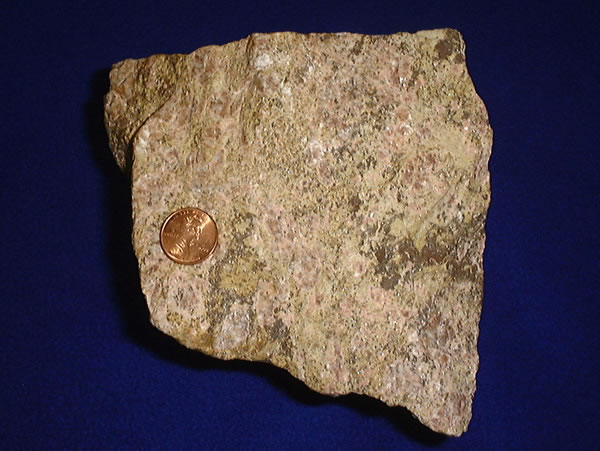
For the families who live in the villages ringing Mrima Hill, on the coast of Kwale County, the forested rise has always been less a treasure than a boundary. Its slopes are a sacred kaya, protected woodland that elders have guarded for generations, and the road to Mombasa runs past it without pausing. This week the hill acquired a second identity, announced not in Kwale but more than six thousand kilometres away, on the sidelines of a Group of Seven summit in France. President William Ruto told a camera that the rock beneath those trees would anchor a preliminary minerals agreement with the United States, and that, for once, the ore would not simply be dug up and shipped out.
For the roughly four million Kenyans living abroad who follow news from home on their phones between shifts, the announcement landed in a familiar place: somewhere between hope and the reflex to wait and see.
The numbers under the trees
The figures attached to Mrima Hill are the kind that are hard to hold in the mind. According to a report by Tuko.co.ke, the preliminary deal would grant the United States access to one of the world's largest unexplored rare earth reserves, valued at roughly $62.4 billion, or about 9.7 trillion Kenyan shillings. That single estimate is equivalent to about half of Kenya's annual economic output, and enough, on paper, to retire close to 90 percent of the country's public debt, which stands near 12.8 trillion shillings.
Beneath the hill, geologists believe, lie tens of millions of tonnes of rare earth elements and millions of tonnes of niobium. These are not household names. Niobium strengthens the steel used in jet engines, pipelines and spacecraft, which is why the United States military has described it as effectively non-negotiable for defence manufacturing. Rare earths such as neodymium, yttrium and lanthanum sit inside the magnets, missile guidance systems, electric-vehicle batteries and artificial-intelligence hardware that define the modern economy. The value, in other words, is not only in the ground. It is in what the ground makes possible elsewhere.
Why Washington came knocking
The timing was not an accident. Two days before Ruto spoke, G7 leaders had agreed to deepen cooperation aimed at reducing their dependence on China for critical minerals, including coordinated strategic stockpiles and an expanded role for the International Energy Agency. The backdrop is stark: by most estimates China controls around 70 percent of the world's capacity to process critical minerals, and a new Chinese minerals law that took effect this month gives Beijing a clearer legal mechanism to restrict access to materials it considers sensitive.
That contest is what makes a hill in Kwale matter in Washington. For the diaspora, particularly the large community in the United States, the deal is a window onto a relationship they navigate in far more personal ways, through visa queues, work permits and the steady tightening of immigration policy. The minerals announcement followed an earlier and more controversial sign of warming ties, a US-Kenya arrangement to host an Ebola response facility, and several observers read the two together. "Clearly, President Ruto has realigned with the US with some conviction," geopolitical economist Aly-Khan Satchu told Tuko.co.ke, pointing to the Ebola facility and describing the minerals alignment as "part of the pivot to the G7 and the US."
The two words the diaspora noticed
The detail that traveled fastest through diaspora WhatsApp groups was not the dollar figure. It was a phrase. "We have agreed that the minerals will be processed in Kenya," Ruto said in remarks circulated online. "We have agreed on what is mutually beneficial between Kenya and the US, and President Trump and the American administration are happy with it."
Processed in Kenya. For a continent whose modern economic story has so often been one of raw materials leaving on ships and finished goods returning at a premium, the promise of domestic refining is the part that could change lives rather than balance sheets. Processing plants mean engineers, technicians, metallurgists and laboratories, the kind of skilled work that many in the diaspora left precisely because it was scarce at home. Ruto framed the shift in exactly those terms, saying Africa no longer wants relationships built on extraction or dependency, and that future partnerships should be anchored in investment rather than handouts.
If the words become foundations and furnaces, they could begin, slowly, to alter the calculation that sends Kenyan nurses to Manchester, accountants to Dallas and graduates to the Gulf. That is a large if.
A community that has heard big numbers before
Skepticism is not cynicism; in this case it is experience. The Kenyan diaspora has watched mineral booms announced before, from titanium sands in the same Kwale County to oil in Turkana, and has seen how often the headline value of a resource outruns the jobs and revenue that actually reach ordinary people. The Institute of Economic Affairs has estimated that, fully exploited, Kenya's mining sector might generate around 400 billion shillings a year, a meaningful sum but a fraction of the trillions that make for a striking headline. The gap between a deposit's theoretical worth and a country's eventual earnings is where governance, contracts and transparency decide everything.
There is also the question of the hill itself. Mrima Hill is a protected forest and a sacred site, and any move from preliminary agreement to active mining will run into legitimate questions about the community that lives there, the kaya elders who protect it, and the environmental cost of pulling rare earths from beneath a woodland. None of that was settled in a summit corridor in France. For diaspora members who send money home to relatives in coastal counties, those questions are not abstract.
What to watch from abroad
For now, what exists is a preliminary agreement and a presidential announcement, not a signed and ratified contract with published terms. The diaspora's most useful posture is the one many have already adopted: attentive, hopeful and exacting. The questions worth tracking are concrete. Will the full text be made public and debated in Parliament? What share of revenue stays in Kenya, and what protections cover Kwale's residents and its sacred forest? Will the processing capacity Ruto promised actually be built on Kenyan soil, with Kenyan workers, or quietly negotiated away as projects move from speech to spreadsheet?
There is a version of this story in which Mrima Hill helps fund schools, hospitals and the kind of domestic opportunity that gives a young Kenyan a reason to stay. There is another in which it becomes one more line in a long ledger of promise. Which version arrives will be decided less by the size of the number under the trees than by the seriousness with which it is handled, in Nairobi and in Washington alike. The diaspora, as ever, will be watching from a distance, and counting.